Entryway micro zone
The Door, Mat, and Immediate Floor
The door, mat, and immediate floor, in the Entryway. Catch grit, water and road salt at the threshold so none of it reaches the rest of the floors. A coarse mat outside the door and an absorbent one inside, both lying dead flat with no curled corners, nothing whatsoever on the floor inside the door's swing, and a door that latches on the first push.
One session: 15-30 min, most of it in Shine, and honestly the mat is the whole job.
The short version
- Sort. Nothing is stored on this patch of floor, so the recycling bag
- Straighten. Two mats and only two, coarse outside to scrape, absorbent inside to dry
- Shine. Vacuum the inside mat on both faces, then take it outdoors, beat it
- Safety. A curled mat corner and a mat
- Standardize. Run a thin line of tape around where the mat should sit
- Sustain. The mat sits on the route back to the vacuum cupboard
Each step in full, with what to have on hand and what done looks like, below.
Where it is
Entryway
5 micro zones, one session each
- 1The Landing Spot
- 2The Coats and Outerwear
- 3The Shoes and Boots
- 4The Bench or Console
- 5The Door, Mat, and Immediate Floor
What done looks like
Catch grit, water and road salt at the threshold so none of it reaches the rest of the floors.
- A coarse mat outside the door and an absorbent one inside, both lying dead flat with no curled corners
- Nothing whatsoever on the floor inside the door's swing
- A door that latches on the first push
What done looks like
A coarse mat outside the door and an absorbent one inside, both lying dead flat with no curled corners, nothing whatsoever on the floor inside the door's swing, and a door that latches on the first push.
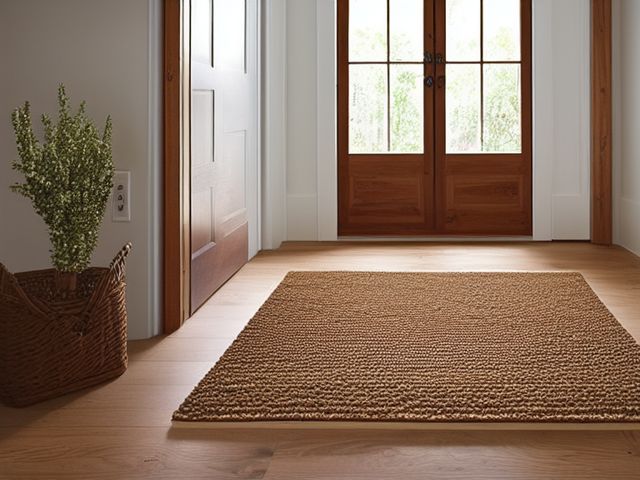
Common items here
- An outside scraper mat
- An inside absorbent mat
What belongs, and what strays in
Belongs here:
- A coarse mat outside the door
- An absorbent mat inside the door
Strays in and should leave:
- A recycling bag
- A parcel waiting to go back
- Sports kit left on the floor
- Anything stored on the floor inside the door's swing
Check these before you start
- FallA curled mat edge at a doorway catches the toe of someone stepping in with their eyes on their phone or their arms full. Flat edges, gripped or taped, checked every time you vacuum.
- Fall, cut, or crushA door with a loose hinge screw or a failing closer swings harder than expected and catches fingers against the frame. Tighten the hinge screws while you are down there with the cloth.
Which of these is true here?
Match what you are actually seeing in the door, mat, and immediate floor to why it keeps happening, then start at the pass that fixes that, not the top of the list.
The mat looks fine, but grit still gets past it onto the rest of the floors
- The inside mat is not long enough for both feet to land on it. Confirm in 30 seconds: Put back only what belongs here. If it still will not close, or still stacks four deep, the capacity is the problem, not the habit. If that checks out, start at Sort.
- The fibers have gone flat, so grit rides across the top instead of down into the pile. Confirm in 30 seconds: Find the last one of something you use daily. If nothing tells you it is the last one, you will find out at the worst possible moment. If that checks out, start at Standardize.
- Nothing marks when the outdoor mat last got hosed. Confirm in 30 seconds: Name the moment it happens. If the answer is "when I get round to it", there is no trigger and it will not survive a bad week. If that checks out, start at Sustain.
Something is stored on the floor inside the door's swing again
- Outgoing returns have no named spot anywhere else in the house. Confirm in 30 seconds: Ask where one specific item lives. If two people answer differently, or nobody answers, it has no home. If that checks out, start at Straighten.
- Recycling and sports kit pause here on the way to somewhere else. Confirm in 30 seconds: Stand where you use it and count the steps to where it is kept. More than two is the wrong cabinet. If that checks out, start at Straighten.
The mat corner has curled, or the door does not latch on the first push
- A slow curl or a loose hinge screw goes unnoticed until someone finds it the hard way. Confirm in 30 seconds: Ask someone who does not live here to name what looks out of place. If they see it instantly and you had stopped noticing, this is the cause. If that checks out, start at Sort.
- This threshold wears on a schedule set by the weather, not by a fixed check. Confirm in 30 seconds: Find the last one of something you use daily. If nothing tells you it is the last one, you will find out at the worst possible moment. If that checks out, start at Standardize.
Only have 15 minutes? Lift both mats, vacuum the floor underneath, and check both faces of the inside mat for a flattened line where grit is riding across instead of catching. Victory: Both mats lie flat with no curled corners, and the floor inside the door's swing is bare.
The six passes, in order
Work them in this order. Sorting after you have arranged things means arranging things you were about to remove.
This zone's full kit list is below, after the method. Skim it first if you would rather gather everything before you start.
Sort
Decide what stays. Everything else leaves the zone now.
Nothing is stored on this patch of floor, so the recycling bag, the parcel waiting to go back and the sports kit all move tonight. Give outgoing returns one named spot in another room and carry the rest to where they actually belong.
What to store it in, now that you know what you are keeping
Bins and shelves are for what Sort left behind, not a stand-in for it. Buying storage before sorting means buying a container for things you have not yet decided to keep.
- Scraper and absorbent entry mat set Stop grit and water at the threshold in two stages, one mat outside to scrape and one inside to soak, in the Shine, Safety and Sustain passes. Lay flat with no curled edge, which is a trip hazard at a doorway; shake the outside mat and dry the inside one on the same day.
Only if it applies to the door, mat, and immediate floor: 5 more
Not every home needs these for the door, mat, and immediate floor. Each one is here because some do, and the reason is next to it.
- Small Parts Drawer Cabinet Organize fasteners and hardware by type and size, in the Straighten, Standardize and Sustain passes. Do not overload; anchor wall-mounted or tall systems where required.
- Jewelry and Valet Tray Contain small personal items, in the Straighten, Standardize and Sustain passes. Do not overload; anchor wall-mounted or tall systems where required.
- Cable Management Kit Secure and label device cords, in the Straighten, Standardize and Sustain passes. Do not overload; anchor wall-mounted or tall systems where required.
- Controller Dock Charge and contain game controllers, in the Straighten, Standardize and Sustain passes. Do not overload; anchor wall-mounted or tall systems where required.
- Charging Dock Create one controlled device charging home, in the Straighten, Standardize and Sustain passes. Do not overload; anchor wall-mounted or tall systems where required.
Straighten
Give what stays a home, placed where the hand actually reaches.
Two mats and only two. Coarse outside to scrape, absorbent inside to dry. The inside mat needs to be long enough that both feet land on it while walking, and most are not, which is exactly how the grit gets past.
Shine
Clean it, and use the cleaning to inspect what you cannot see when it is full.
Vacuum the inside mat on both faces, then take it outdoors, beat it and wash it. Run a cloth along the bottom edge of the door and along the threshold strip, because that dark line is all the grit the mat never caught.
Surface by surface, all 7 of them, with what to use on each.
Safety
Make the zone safe for everybody who uses it, including the shortest person.
A curled mat corner and a mat that slides on hard floor are the two ways this threshold puts somebody down. Grip or tape the edges flat, and dry the floor immediately when someone comes in soaked rather than leaving it to evaporate.
Standardize
Write down the best way you know today, so it survives you forgetting.
Run a thin line of tape around where the mat should sit, so a mat kicked out of position is obvious to anyone walking in rather than only to you.
Sustain
Attach the reset to something that already happens, so it keeps itself.
The mat sits on the route back to the vacuum cupboard, so whoever ran the vacuum straightens and cleans it last, every time. Overnight the job is smaller: the last person in nudges it back inside its taped outline with a foot. Slip is visible before you reach the door, as a curled corner outside the tape or a gray line of grit along the threshold. Recovery is beating both mats outdoors, ten minutes, not a hall clean. Unlike the rest of this room, the zone degrades on a schedule set by weather rather than by habits.
The kit this zone called for
Everything above assumed you had these already. Types of thing, not brands: anything you already own that does the job is the right one to use.
- Color-coded microfiber cloth set ×12 Shine Wash by use color; avoid fabric softener.
- Neutral pH multi-surface cleaner Shine, Sustain Verify surface compatibility; lock around children and pets.
- Compact vacuum with attachments Shine Use appropriate attachment.
- Keep, Relocate, Donate, Recycle, Trash container set ×5 Sort Do not block exits.
- Portable cleaning caddy Straighten, Shine, Sustain Secure chemicals from children and pets.
- Portable label maker Standardize, Sustain Follow surface and adhesive guidance.
- Removable write-on labels Standardize Test on delicate finishes.
Only if it applies to the door, mat, and immediate floor: 1 more
- Floor-material-compatible cleaner Shine, Sustain Match cleaner to floor material.
When the mat is finished
A mat looks perfectly fine long after it has stopped working, and the decision being dodged is spending money to replace something that is not visibly broken. So test it instead of looking at it. Walk in from outside on a dry gritty day, wipe your feet the way you actually wipe them, then lift the mat and look at both the floor beneath it and the fibers themselves. A working mat holds grit down inside its pile and drops a clear line of dirt when you shake it out. A finished mat has fibers flattened all in one direction, and the grit sits on top of them and walks straight off on the next pair of shoes. If it fails that test, replace it this month rather than next winter. A worn mat is not saving you anything. It is quietly sanding the finish off every floor between this door and the kitchen.
Cleaning it properly, surface by surface
Work down, not across. Whatever comes off a high surface lands on the one below it, so cleaning the floor first means cleaning it twice.
Carry these in with you. Floor-material-compatible cleaner; Neutral pH multi-surface cleaner; Compact vacuum with attachments; Color-coded microfiber cloth set; Portable cleaning caddy; Streak-free glass and mirror cleaner (if the door has a glass panel; not in this zone's kit).
- The door face, top rail down to the kick plate
Dust the top rail first, then wipe the whole inside face of the door with a cloth dampened with neutral pH multi-surface cleaner, working top to bottom and paying the panels and the kick line at the base extra attention where shoes and bags mark it. - The door frame and the architrave
Wipe the frame and the architrave with a cloth dampened with the neutral pH multi-surface cleaner, working the top ledge where dust settles and the strike-side edge that hands push against. Clear the top corners where cobwebs gather. - The door handle, letterbox, and any glass panel
Wipe the handle and the letterbox flap with the multi-surface cleaner. Any glass panel in the door gets the streak-free glass cleaner misted onto a cloth, wiped in one direction, and buffed dry. - The bottom edge of the door and the threshold strip
Open the door and run a damp cloth along the very bottom edge of the door and into the threshold strip, lifting the dark grit line the mat never reaches. Dry the threshold after. - The inside mat, both faces
Vacuum the top face, flip it and vacuum the underside where grit sifts through, then take it outdoors, beat it against a wall or rail, and wash it if it is washable. Return it only once it is fully dry, or it just holds water against the floor. - The outside coarse mat
Lift it, shake or beat the grit and salt out of it, and hose it if it is the rubber-backed sort. Stand it up to dry before it goes back flat. - The immediate floor inside the door swing
With both mats up, vacuum the whole patch inside the door swing, including where the mats sat, then mop the sealed floor with the floor-material-compatible cleaner and let it dry before anyone steps on it.
How to clean anything else in the house, surface by surface.
Inspect as you clean. Cleaning is the only time you see the zone empty, so use it.
- A mat with a corner that has curled and stopped lying flat, or backing that has gone brittle and is shedding crumbs, both signs the grip is failing. Flag it.
- A hinge that has dropped so the door scrapes the frame, or a hinge screw standing loose in its hole. Note it.
- A swelling, a dark line, or a soft patch along the bottom of the door or the threshold where rain keeps sitting, the start of rot. Flag it.
- A door that no longer latches on the first push, or a threshold seal squashed flat so daylight and draft come under it. Note it.
- A water stain spreading on the floor just inside the threshold, where wet feet land before the mat. Flag it.
The standard that keeps it fixed
Nothing is stored on the floor inside the door's swing, ever, and both mats lie flat inside their taped outline.
Reset trigger. Whoever comes home last and locks the door straightens the mat with a foot before turning the key.
How much the door, mat, and immediate floor can actually hold
Two mats only: a coarse one outside long enough to scrape both feet, an absorbent one inside long enough that both feet land on it mid-stride, not just the first one.
If the inside mat is already the longest one that fits the doorway and a normal walking stride still lands past its far edge onto bare floor, the doorway itself is shorter than the stride it needs to catch, and a longer mat cannot fix a length the doorway does not have. Run the honest count.
When this does not describe your door, mat, and immediate floor
The passes above describe the ordinary case. Plenty of real households are not ordinary, and the fix is not to skip the method, it is to run it against a different starting shape.
- An apartment hallway with no room outside your own door for a mat
- Move the coarse, grit-catching mat just inside the door instead of outside it, and accept that the first three feet of your own floor does the job the outside mat usually would.
- A household with a dog or cat that tracks in mud alongside people
- A dedicated paw-wipe towel on a hook beside the mat, used before anyone crosses the threshold, keeps pet mud out of the same floor the people mat is already protecting.
The rest of the entryway
Each of these is one session on its own.
- The Landing Spot
- The Coats and Outerwear
- The Shoes and Boots
- The Bench or Console
- The Door, Mat, and Immediate Floor, you are here
The Entryway in full, with what each of the 5 zones is for
The entryway as a deck of 57 cards: the frictions people report in each zone, the root cause behind each one, and the timed action that clears it. Free to read or print.
Zones that do the same job, elsewhere in the house
Different room, different name, same real job. Each one is its own page because the room around it changes what actually works.
- The Floor and Circulation Path in the living room
- The Stair and Floor Path in the stair landing
- The Surface, Rail, and Safety Zone in the patio or deck
Related reading
- Still does not fit, even after the honest count?
- Does this zone keep running out of something?
- Does something in this zone actually get used somewhere else?
- Have you stopped noticing the clutter in this zone?
- Why the standard above names one home per category
Questions people ask about this zone
- How long does it take to reset the door, mat, and immediate floor?
- One session: 15-30 min, most of it in Shine, and honestly the mat is the whole job.
- What does a finished door, mat, and immediate floor look like?
- A coarse mat outside the door and an absorbent one inside, both lying dead flat with no curled corners, nothing whatsoever on the floor inside the door's swing, and a door that latches on the first push.
- What is the hardest call to make in the door, mat, and immediate floor?
- A mat looks perfectly fine long after it has stopped working, and the decision being dodged is spending money to replace something that is not visibly broken. So test it instead of looking at it. Walk in from outside on a dry gritty day, wipe your feet the way you actually wipe them, then lift the mat and look at both the floor beneath it and the fibers themselves. A working mat holds grit down inside its pile and drops a clear line of dirt when you shake it out. A finished mat has fibers flattened all in one direction, and the grit sits on top of them and walks straight off on the next pair of shoes. If it fails that test, replace it this month rather than next winter. A worn mat is not saving you anything. It is quietly sanding the finish off every floor between this door and the kitchen.
- How do you keep the door, mat, and immediate floor from getting cluttered again?
- Nothing is stored on the floor inside the door's swing, ever, and both mats lie flat inside their taped outline. Whoever comes home last and locks the door straightens the mat with a foot before turning the key.
- What do you need to clean the door, mat, and immediate floor?
- Floor-material-compatible cleaner; Neutral pH multi-surface cleaner; Compact vacuum with attachments; Color-coded microfiber cloth set; Portable cleaning caddy; Streak-free glass and mirror cleaner (if the door has a glass panel; not in this zone's kit).
- What do you clean first in the door, mat, and immediate floor?
- The door face, top rail down to the kick plate. Dust the top rail first, then wipe the whole inside face of the door with a cloth dampened with neutral pH multi-surface cleaner, working top to bottom and paying the panels and the kick line at the base extra attention where shoes and bags mark it.
- Is there a fall risk in the door, mat, and immediate floor?
- A curled mat edge at a doorway catches the toe of someone stepping in with their eyes on their phone or their arms full. Flat edges, gripped or taped, checked every time you vacuum.
- Is there a fall, cut, or crush risk in the door, mat, and immediate floor?
- A door with a loose hinge screw or a failing closer swings harder than expected and catches fingers against the frame. Tighten the hinge screws while you are down there with the cloth.
- Why does the door, mat, and immediate floor do this: The mat looks fine, but grit still gets past it onto the rest of the floors?
- The inside mat is not long enough for both feet to land on it, so start at Sort; The fibers have gone flat, so grit rides across the top instead of down into the pile, so start at Standardize; Nothing marks when the outdoor mat last got hosed, so start at Sustain.
- Why does the door, mat, and immediate floor do this: Something is stored on the floor inside the door's swing again?
- Outgoing returns have no named spot anywhere else in the house, so start at Straighten; Recycling and sports kit pause here on the way to somewhere else, so start at Straighten.
- Why does the door, mat, and immediate floor do this: The mat corner has curled, or the door does not latch on the first push?
- A slow curl or a loose hinge screw goes unnoticed until someone finds it the hard way, so start at Sort; This threshold wears on a schedule set by the weather, not by a fixed check, so start at Standardize.
Watch this zone
The same steps as above, done on camera, with captions. Nothing is sent to YouTube until you press play.
When you want it off the screen
Carry The Door, Mat, and Immediate Floor into the room
The method above is complete and free. The Whole House Print Pack puts The Door, Mat, and Immediate Floor and the other 113 micro zones on 684 printable cards, so the steps you just read are not stuck behind a phone screen while your hands are full.
The Print Pack, 19 dollarsOr draw a card free
If The Door, Mat, and Immediate Floor keeps fighting back, the real problem usually sits somewhere else in the room. A one hour virtual consult is 250 dollars: we find the function, the friction and the root cause together, and you keep a written standard for the space.
See what a consult covers, 250 dollars
Not ready to pay for that either? Ask which zone first, free