Entryway micro zone
The Bench or Console
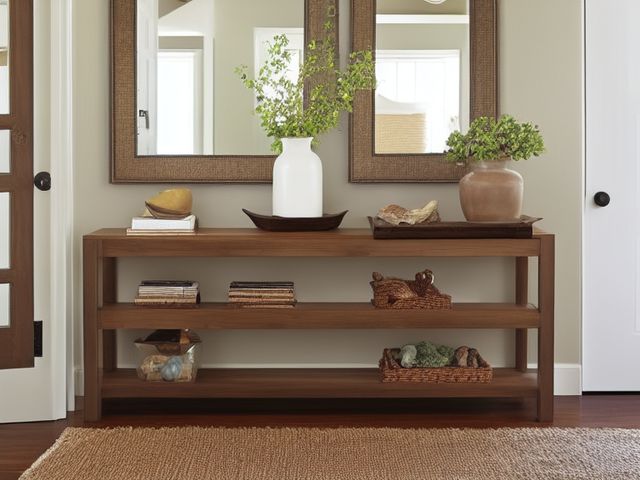
The bench or console, in the Entryway. Somewhere to sit while you lace a boot, and somewhere to set a bag down for thirty seconds. Three items or fewer on the top, a seat with nothing on it at all, and a drawer where every divided section has one named category and you can see the base of the drawer between things.
One session: 30-45 min, most of it in Sort, because the drawer holds far more than its size suggests.
The short version
- Sort. Tip the drawer out onto the bench
- Straighten. Divide the drawer into named sections and hold to them: dog lead and waste bags
- Shine. Take the drawer fully out and tip the sand and crumbs out of its corners
- Safety. Fix the console to the wall if it is taller than it is deep
- Standardize. Write the three permitted top items on a card and tape it inside the drawer
- Sustain. Whoever clears the dinner table carries the plates past the bench
Each step in full, with what to have on hand and what done looks like, below.
Where it is
Entryway
5 micro zones, one session each
- 1The Landing Spot
- 2The Coats and Outerwear
- 3The Shoes and Boots
- 4The Bench or Console
- 5The Door, Mat, and Immediate Floor
What done looks like
Somewhere to sit while you lace a boot, and somewhere to set a bag down for thirty seconds.
- Three items or fewer on the top
- A seat with nothing on it at all
- A drawer where every divided section has one named category and you can see the base of the drawer between things
What done looks like
Three items or fewer on the top, a seat with nothing on it at all, and a drawer where every divided section has one named category and you can see the base of the drawer between things.
Common items here
- Dog lead and waste bags
- Sun cream and insect spray
- A torch
- A pen
- Spare car charger
What belongs, and what strays in
Belongs here:
- Three items or fewer on the top
- A seat left clear
- A drawer with one named category per section
Strays in and should leave:
- Dead batteries
- Pens that do not write
- A single earbud
- Sunscreen from three summers ago
- Takeaway menus
- Anything you would not want while wearing outdoor shoes
Check these before you start
- Fall, cut, or crushA narrow console with drawers is a climbing frame to a three year old, and it comes over forwards with the drawers out. Strap it to the wall and keep the heaviest contents in the bottom drawer.
- Poison, choke, or strangleLoose button batteries, coins and small magnets roll into the back corners of this drawer and it opens at exactly the height a toddler can reach. Batteries go in a lidded tin or out of the room entirely.
Which of these is true here?
Match what you are actually seeing in the bench or console to why it keeps happening, then start at the pass that fixes that, not the top of the list.
The drawer fills back up within a month of being emptied
- It is the nearest place to set something down I do not want to carry further. Confirm in 30 seconds: Ask where one specific item lives. If two people answer differently, or nobody answers, it has no home. If that checks out, start at Straighten.
- The sections do not carry names, so anything fits anywhere. Confirm in 30 seconds: Ask two people in the house to describe this zone when it is finished. Two different answers means there is no standard to keep. If that checks out, start at Standardize.
- Half of what is in it genuinely has nowhere better to live yet. Confirm in 30 seconds: Pick up one piece. If your first thought is a verb (pay, sign, call, decide) rather than a place, it needs a decision, not a home. If that checks out, start at Sort.
There is more than three items on the top by the time I notice
- Whoever clears the table after dinner does not pass this way. Confirm in 30 seconds: Ask who resets this zone. If the honest answer is "whoever gets to it" or two names with no agreement, there is no owner. If that checks out, start at Sustain.
- It is the first flat surface anyone meets with their hands already full. Confirm in 30 seconds: Ask where one specific item lives. If two people answer differently, or nobody answers, it has no home. If that checks out, start at Straighten.
Batteries, coins, and small things end up loose in the back corners of the drawer
- There is no lidded tin, so loose things roll wherever the drawer tips. Confirm in 30 seconds: Look for the four: a blade your hand would meet, weight above shoulder height, heat beside something that burns, and an unsafe placement near a child's reach. If that checks out, start at Safety.
- Nothing in the drawer has a smaller container of its own. Confirm in 30 seconds: Ask where one specific item lives. If two people answer differently, or nobody answers, it has no home. If that checks out, start at Straighten.
Only have 15 minutes? Tip the drawer out onto the bench and take out anything you would not want while wearing your outdoor shoes. Victory: Three items or fewer sit on the top, the seat is empty, and every drawer section holds one named category.
The six passes, in order
Work them in this order. Sorting after you have arranged things means arranging things you were about to remove.
This zone's full kit list is below, after the method. Skim it first if you would rather gather everything before you start.
Sort
Decide what stays. Everything else leaves the zone now.
Tip the drawer out onto the bench. Dead batteries, pens that do not write, single earbuds, sunscreen from three summers ago and takeaway menus all go now. Anything you would not want while wearing your outdoor shoes belongs in a different room.
What to store it in, now that you know what you are keeping
Bins and shelves are for what Sort left behind, not a stand-in for it. Buying storage before sorting means buying a container for things you have not yet decided to keep.
Only if it applies to the bench or console: 8 more
Not every home needs these for the bench or console. Each one is here because some do, and the reason is next to it.
- Boot Tray Contain water, mud, and outdoor footwear, in the Straighten, Standardize and Sustain passes. Do not overload; anchor wall-mounted or tall systems where required.
- Umbrella Stand Contain umbrellas vertically and allow drying, in the Straighten, Standardize and Sustain passes. Do not overload; anchor wall-mounted or tall systems where required.
- Wall Hook Rail Create labeled hanging homes, in the Straighten, Standardize and Sustain passes. Do not overload; anchor wall-mounted or tall systems where required.
- Jewelry and Valet Tray Contain small personal items, in the Straighten, Standardize and Sustain passes. Do not overload; anchor wall-mounted or tall systems where required.
- Woven Basket Small ×2 Contain soft or decorative daily-use items, in the Straighten, Standardize and Sustain passes. Do not overload; anchor wall-mounted or tall systems where required.
- Over-Door Hook Rack Add reversible vertical storage, in the Straighten, Standardize and Sustain passes. Do not overload; anchor wall-mounted or tall systems where required.
- Charging Dock Create one controlled device charging home, in the Straighten, Standardize and Sustain passes. Do not overload; anchor wall-mounted or tall systems where required.
- Shoe Rack Contain active footwear and preserve floor paths, in the Straighten, Standardize and Sustain passes. Do not overload; anchor wall-mounted or tall systems where required.
Straighten
Give what stays a home, placed where the hand actually reaches.
Divide the drawer into named sections and hold to them: dog lead and waste bags, sun cream and insect spray, a torch, one pen. Bags and the vacuum go underneath the bench, never on the seat.
Shine
Clean it, and use the cleaning to inspect what you cannot see when it is full.
Take the drawer fully out and tip the sand and crumbs out of its corners. Wipe the seat itself, which collects the same grit as the floor because people sit on it in outdoor clothes.
Surface by surface, all 7 of them, with what to use on each.
Safety
Make the zone safe for everybody who uses it, including the shortest person.
Fix the console to the wall if it is taller than it is deep, because children climb open drawer fronts like a ladder. Move the box cutter and the scissors out of the shallow drawer that opens at toddler head height.
Standardize
Write down the best way you know today, so it survives you forgetting.
Write the three permitted top items on a card and tape it inside the drawer, so the cap survives everyone who did not read this book.
Sustain
Attach the reset to something that already happens, so it keeps itself.
Whoever clears the dinner table carries the plates past the bench and takes the top back to three on the way through, which adds nothing to a trip already being made. The seat is the signal, not the top: if you cannot sit down to lace a boot without lifting something, the bench has stopped being a bench. Recovery is one armful, carried into the house rather than deeper into the entryway. This surface fills faster than the tray beside it because it sits at the height of a hand already carrying something.
The kit this zone called for
Everything above assumed you had these already. Types of thing, not brands: anything you already own that does the job is the right one to use.
- Color-coded microfiber cloth set ×12 Shine Wash by use color; avoid fabric softener.
- Neutral pH multi-surface cleaner Shine, Sustain Verify surface compatibility; lock around children and pets.
- Compact vacuum with attachments Shine Use appropriate attachment.
- Keep, Relocate, Donate, Recycle, Trash container set ×5 Sort Do not block exits.
- Portable cleaning caddy Straighten, Shine, Sustain Secure chemicals from children and pets.
- Portable label maker Standardize, Sustain Follow surface and adhesive guidance.
- Removable write-on labels Standardize Test on delicate finishes.
What the drawer is for
This drawer becomes the second junk drawer within a month of being emptied. It happens every time, because it is the nearest place to set down something you do not want to carry any further. The decision being avoided is not what to throw away. It is admitting the drawer needs a job at all. The rule: this drawer serves the door and nothing else. One test question per item, would you need this while wearing your shoes, either on the way out or in the first ten seconds back in. Dog lead, yes. Sun cream, yes. Spare car charger, yes. The screwdriver, the birthday candles and the case for a phone you no longer own all fail, and they fail even though they genuinely have nowhere better to live. Find them somewhere better today, in another room, with a name on it. If you do not, they will be back in this drawer by the weekend and so will four of their friends.
Cleaning it properly, surface by surface
Work down, not across. Whatever comes off a high surface lands on the one below it, so cleaning the floor first means cleaning it twice.
Carry these in with you. Neutral pH multi-surface cleaner; Floor-material-compatible cleaner; Compact vacuum with attachments; Color-coded microfiber cloth set; Portable cleaning caddy; Small detail brush (not in this zone's kit).
- The wall and back edge behind the console
Wipe the wall behind the console top and the back edge of the surface with a barely damp microfiber cloth, clearing the dust line where the top meets the wall. - The console top
Clear it to three items or fewer, dust or vacuum it, then wipe the whole top with a cloth dampened with neutral pH multi-surface cleaner. Dry it off. - The seat
Vacuum the seat and its seams with the upholstery tool to lift the outdoor grit, then wipe a hard seat with the multi-surface cleaner, or spot-clean a padded one with a barely damp cloth. Let it dry before anyone sits. - The drawer, taken fully out
Pull the drawer right out of its runners, tip the sand and crumbs from the back corners over the bin, lift out any divider insert, and wipe the base and the sections with a damp cloth. A detail brush clears the corners the cloth misses. - The drawer runners and the empty cavity
With the drawer out, wipe both runner tracks with a barely damp cloth and vacuum the empty cavity, lifting the grit that has dropped down behind the drawer. - The drawer fronts and the legs
Wipe the drawer fronts and the console legs with a damp cloth, getting the handles and the kick line at the bottom where shoes scuff. - The floor beneath the console
Vacuum under and around the legs with the crevice tool, then wipe or mop the sealed floor with the floor-material-compatible cleaner.
How to clean anything else in the house, surface by surface.
Inspect as you clean. Cleaning is the only time you see the zone empty, so use it.
- A console that rocks or tips toward you when you lean on the top, the sign it is top-heavy and not yet held to the wall. Flag it.
- A drawer runner screw backing out so the drawer drops or drags when it is pulled open. Note it.
- A hairline split opening in the seat, or a splinter lifting on a wooden bench. Flag it before someone sits on it.
- A wobble in a leg joint or a cracked or seized caster. Note it.
- A dark water ring or swelling on the top where a wet umbrella or bag keeps landing. Flag it.
The standard that keeps it fixed
Three items on the top, an empty seat, and every drawer section holding one named category.
Reset trigger. You already open this drawer to put the dog lead back after a walk. While it is open, glance at the top and take it back to three.
How much the bench or console can actually hold
Three items or fewer standing on the top, and a drawer where each named section still shows its own base between things.
If the honest, daily-use set for this household is genuinely more than three items, or a named drawer section is packed flat with no base showing even after duplicates and expired items leave, the bench top or the drawer is smaller than the job asked of it. Run the honest count.
When this does not describe your bench or console
The passes above describe the ordinary case. Plenty of real households are not ordinary, and the fix is not to skip the method, it is to run it against a different starting shape.
- No console or bench fits the space at all
- A single wall hook at seat height plus a floor mat to sit on for a moment covers the console's real job, which is somewhere to pause, not somewhere to display objects. Do not let the floor mat become the new catch-all.
- The console doubles as the household's mail or paperwork spot
- Keep the drawer's paper section physically separate from the coat and shoe items sharing the same surface. Paper belongs to the Landing Zone's own tray and folder nearby, not spread across the console drawer, or the two systems compete for the same few inches of space.
The rest of the entryway
Each of these is one session on its own.
- The Landing Spot
- The Coats and Outerwear
- The Shoes and Boots
- The Bench or Console, you are here
- The Door, Mat, and Immediate Floor
The Entryway in full, with what each of the 5 zones is for
The entryway as a deck of 57 cards: the frictions people report in each zone, the root cause behind each one, and the timed action that clears it. Free to read or print.
Zones that do the same job, elsewhere in the house
Different room, different name, same real job. Each one is its own page because the room around it changes what actually works.
- The Landing Spot in the entryway
- The Landing Surface or Console in the stair landing
- The Bench and Transition Surface in the mudroom
Related reading
- Did this drawer become the second junk drawer already?
- Does everyone in the house agree what "done" looks like here?
- Does more than one person use this zone?
- Why the standard above names one home per category
- Is mail piling up on this exact surface?
Questions people ask about this zone
- How long does it take to reset the bench or console?
- One session: 30-45 min, most of it in Sort, because the drawer holds far more than its size suggests.
- What does a finished bench or console look like?
- Three items or fewer on the top, a seat with nothing on it at all, and a drawer where every divided section has one named category and you can see the base of the drawer between things.
- What is the hardest call to make in the bench or console?
- This drawer becomes the second junk drawer within a month of being emptied. It happens every time, because it is the nearest place to set down something you do not want to carry any further. The decision being avoided is not what to throw away. It is admitting the drawer needs a job at all. The rule: this drawer serves the door and nothing else. One test question per item, would you need this while wearing your shoes, either on the way out or in the first ten seconds back in. Dog lead, yes. Sun cream, yes. Spare car charger, yes. The screwdriver, the birthday candles and the case for a phone you no longer own all fail, and they fail even though they genuinely have nowhere better to live. Find them somewhere better today, in another room, with a name on it. If you do not, they will be back in this drawer by the weekend and so will four of their friends.
- How do you keep the bench or console from getting cluttered again?
- Three items on the top, an empty seat, and every drawer section holding one named category. You already open this drawer to put the dog lead back after a walk. While it is open, glance at the top and take it back to three.
- What do you need to clean the bench or console?
- Neutral pH multi-surface cleaner; Floor-material-compatible cleaner; Compact vacuum with attachments; Color-coded microfiber cloth set; Portable cleaning caddy; Small detail brush (not in this zone's kit).
- What do you clean first in the bench or console?
- The wall and back edge behind the console. Wipe the wall behind the console top and the back edge of the surface with a barely damp microfiber cloth, clearing the dust line where the top meets the wall.
- Is there a fall, cut, or crush risk in the bench or console?
- A narrow console with drawers is a climbing frame to a three year old, and it comes over forwards with the drawers out. Strap it to the wall and keep the heaviest contents in the bottom drawer.
- Is there a poison, choke, or strangle risk in the bench or console?
- Loose button batteries, coins and small magnets roll into the back corners of this drawer and it opens at exactly the height a toddler can reach. Batteries go in a lidded tin or out of the room entirely.
- Why does the bench or console do this: The drawer fills back up within a month of being emptied?
- It is the nearest place to set something down I do not want to carry further, so start at Straighten; The sections do not carry names, so anything fits anywhere, so start at Standardize; Half of what is in it genuinely has nowhere better to live yet, so start at Sort.
- Why does the bench or console do this: There is more than three items on the top by the time I notice?
- Whoever clears the table after dinner does not pass this way, so start at Sustain; It is the first flat surface anyone meets with their hands already full, so start at Straighten.
- Why does the bench or console do this: Batteries, coins, and small things end up loose in the back corners of the drawer?
- There is no lidded tin, so loose things roll wherever the drawer tips, so start at Safety; Nothing in the drawer has a smaller container of its own, so start at Straighten.
Watch this zone
The same steps as above, done on camera, with captions. Nothing is sent to YouTube until you press play.
When you want it off the screen
Carry The Bench or Console into the room
The method above is complete and free. The Whole House Print Pack puts The Bench or Console and the other 113 micro zones on 684 printable cards, so the steps you just read are not stuck behind a phone screen while your hands are full.
The Print Pack, 19 dollarsOr draw a card free
If The Bench or Console keeps fighting back, the real problem usually sits somewhere else in the room. A one hour virtual consult is 250 dollars: we find the function, the friction and the root cause together, and you keep a written standard for the space.
See what a consult covers, 250 dollars
Not ready to pay for that either? Ask which zone first, free