The deck
The Entryway Deck
89 cards that turn the method into something you can deal out on a table, 72 of them drawn so far. Twelve micro zones, the tools, skills, habits and wins that carry each one, one card at a time. Print it at home tonight and start with the twenty minutes that pay back fastest.
Why cards
A book tells you the method. A deck makes you do one thing.
The hardest part of resetting a room is not knowing what to do. It is standing in the doorway looking at all of it at once and deciding it is a weekend job, then not having a weekend.
A card removes that decision. It names one micro zone, one pass, and what finished looks like. You draw it, you do it, you put it down. The entryway is the right room to start with because it is small enough to finish and public enough that everyone in the house notices.
72 of the deck’s 89 cards are drawn
Twelve micro zones, nine kinds of card
Twelve Micro Zone cards name the places an entryway actually is, from the front door to the departure checklist. The rest build out from there: what goes wrong in each one, the tools and skills that fix it, the habits that hold it, and the wins worth naming.
- Micro Zone · 10
- Problem · 1
- Tool · 8
- Skill · 12
- Habit · 12
- Upgrade · 12
- Event · 8
- Win · 8
- Room · 1
17 cards, mostly Problem and Tool, are written but not shown here today: their scanned art either still uses the retired term for the second S or, in one case, is a duplicate of a different card under the wrong label. Held back rather than shown wrong; see the deck's status below.
Every card carries its own line back to the method: which of the six S's it teaches, with Safety treated as the fourth, not an afterthought bolted onto the end. An entryway is where the whole household moves fastest in the dark carrying things, so a blocked door swing or a curled mat edge is not a tidiness problem.
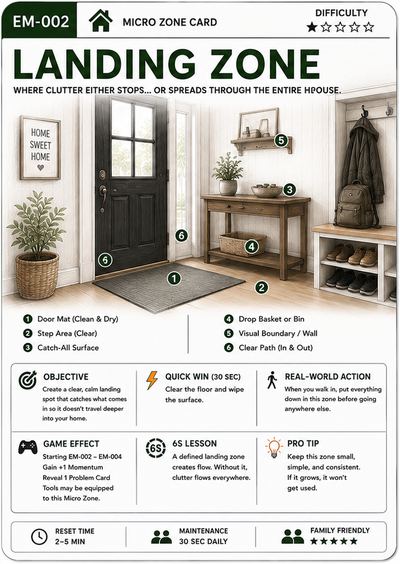
Landing Zone
EM-002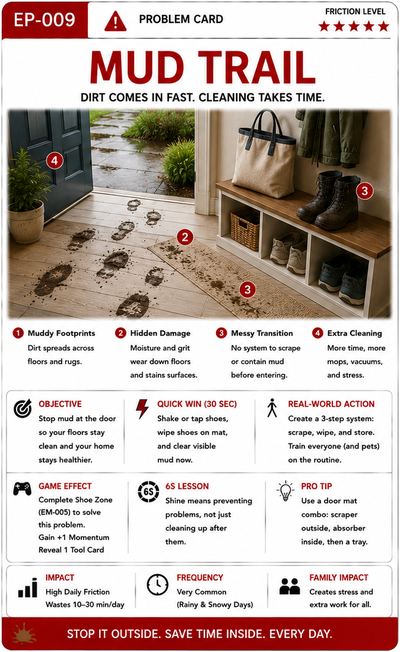
Mud Trail
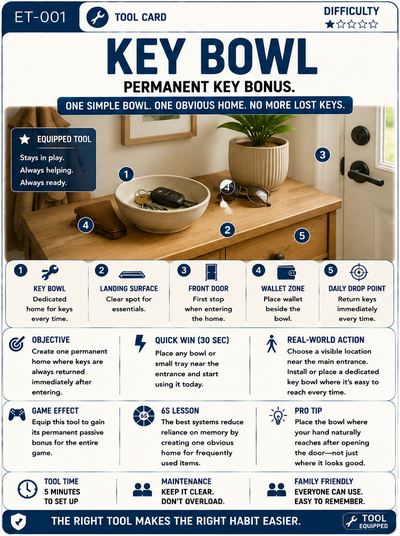
EP-009Key Bowl
ET-001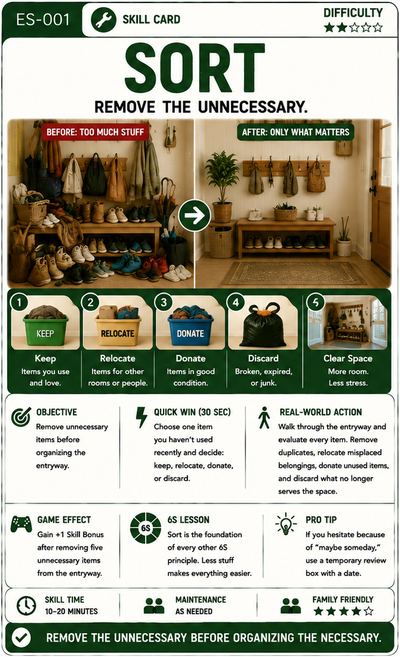
Sort
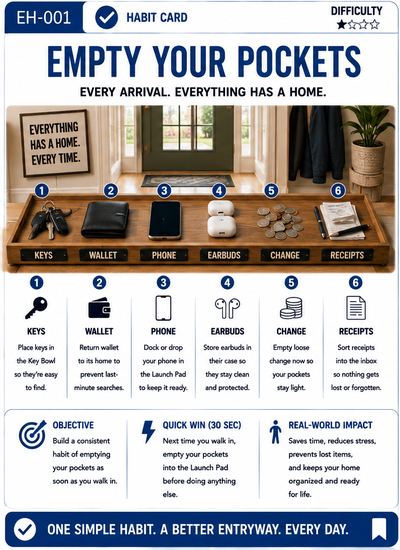
ES-001Empty Your Pockets
EH-001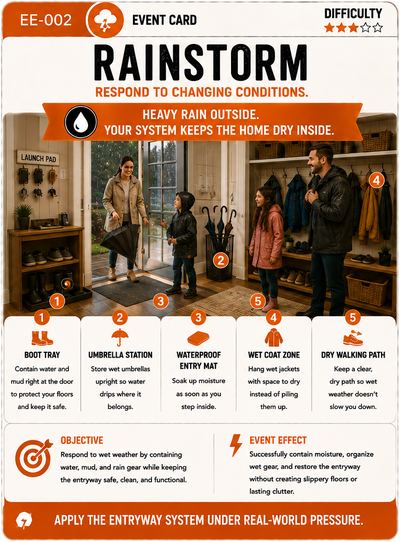
Rainstorm
EE-002Six of the seventy two shown today, the actual published art. See every card, front and back.
Six ways to play
However much time you actually have
- The full reset. The whole deck, front to back, in order. A long morning.
- One micro zone. Draw its Micro Zone card, then follow the thread: the problem it names, the tool and skill that fix it, the habit that holds it. Twenty to forty minutes.
- One card type. Take every card of one kind, all twelve Habit cards or all twelve Tool cards, across the whole entryway. Then stop.
- Daily draw. Turn one card over with your coffee. Do that card only.
- Family race. Deal the twelve Micro Zone cards out and see who finishes their zone first.
- Family co-op. Deal them out and try to clear the whole entryway together before a timer.
Start at the Landing Spot. It is the highest leverage square foot in the house, it takes about twenty minutes, and it is the one everybody uses within an hour of you finishing it.
Getting it
Print it tonight, free
The deck prints nine cards to a letter page at true trading card size, two and a half by three and a half inches, front and back, with crop marks so nothing prints on a card face. Cut them apart and they behave like cards, because they are the right shape and weight for a card sleeve if you want one.
Where the deck stands
Every card is written. Counted whole that is 89, including the single Room card that names the room and hands off to the next; counted the way the shop counts it, without that divider, it is 88. The printable PDF above carries the written deck: most cards with photography, and a dozen with a designed graphic face for the ones that name an idea rather than an object, Visual Control and Weekly Audit among them. Nothing there is a placeholder line drawing.
The browsable gallery shows 72 of the 89 today. The other 17 come from an older, separate scan of the same deck. Most of them still print the term this method replaced with Straighten, and one shows the wrong card under the wrong label entirely. Held back rather than shown wrong, until the art is corrected.
One more thing worth saying plainly: the gallery above and the PDF you download do not look alike. The gallery is the original scanned layout, a full photograph with numbered callouts. The PDF uses a newer card-game template, a color band and glyph, a smaller photograph, one action block. Same twelve micro zones, same written content, different look, because they come from two different tools that have not been unified yet.
And one more: this deck's twelve "micro zones" predate the Manual's own diagnosis work and do not match it. The Manual, the zone pages, the Home Quest and the print pack all teach five real Entryway zones instead. If you own the print pack and want a deck that matches it card for card, read the newer five-zone Entryway deck instead: typeset, free, no photography yet, built straight from the same source as the pack. This illustrated deck stays live and unchanged while that gap gets resolved, rather than being quietly swapped out from under anyone who already has it.
Whether a future printed or boxed edition gets sold, and at what price, has not been decided. When it is, it will say so here, with a real date, rather than a preorder for something that does not exist.
The written deck above is complete and is the whole method for this room. It is free because the fastest way to find out whether this works in your house is to use it in your house.
Once the entryway works, there are nineteen more rooms
This deck is a game: it works out which zone and why, then hands you the fix. The Whole House Print Pack is the six-pass steps themselves, Sort through Sustain, for every one of the 114 micro zones in the house, 684 cards in all. Same trim size and card stock as this deck, so a mixed pile still prints and handles the same, but these are instruction cards, not the diagnostic game above. It prints nine to a page across 76 pages, in room order, so you print the room you are working on rather than the lot.
The Whole House Print Pack, $19
Delivered by email, usually within a few hours. If a file does not arrive, support@6s-success.com will fix it or refund you.
The Entryway deck stays free either way. It is the sample, not a trial.
What comes next
The kitchen is the second room, typeset before it is drawn
The method covers twenty rooms and a hundred and fourteen micro zones, and the deck structure works for any of them. The entryway was first because it is the smallest complete room in the house and the one whose state everyone sees on the way in. A second illustrated deck like this one still waits on this deck earning its keep with people who are not us: building twenty photographed decks before one has proven itself would be a way of looking busy.
The Kitchen deck did not wait on that, because it is not that kind of deck yet. Every one of its cards is written, typeset and free to read today; none of them are photographed. See the Kitchen Deck. The Laundry Room, Home Office, Primary Bathroom, Garage, Stair Landing, Pantry, Hall Closet, Dining Room, Guest Bedroom, Guest Bathroom, Family Room, Living Room, Mudroom, Nursery and Kids Bedroom decks followed the same way: real zones, built straight from the same diagnosis data as the zone pages. See the Laundry Room Deck. See the Home Office Deck. See the Primary Bathroom Deck. See the Garage Deck. See the Stair Landing Deck. See the Pantry Deck. See the Hall Closet Deck. See the Dining Room Deck. See the Guest Bedroom Deck. See the Guest Bathroom Deck. See the Family Room Deck. See the Living Room Deck. See the Mudroom Deck. See the Nursery Deck. See the Kids Bedroom Deck.