Living Room micro zone
The Floor and Circulation Path
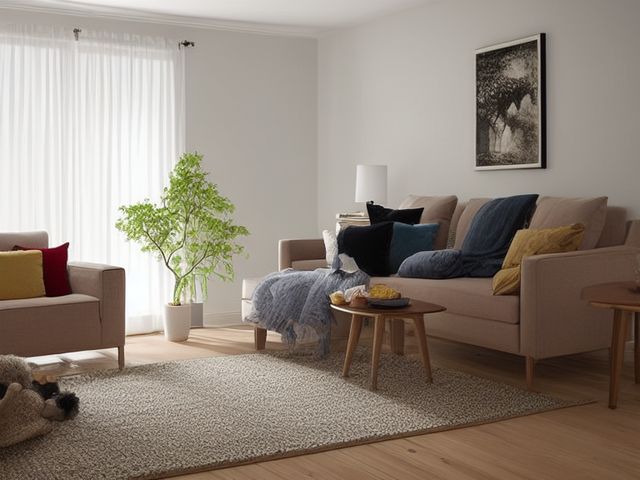
The walkway, in the Living Room. Let anyone cross this room in the dark, carrying something, without touching anything. A continuous clear route from the doorway past the sofa to the other exit, wide enough for two people to pass and for the vacuum to run through without being lifted. Rug edges lying flat on a grippy pad, no cord crossing the route, and nothing on the floor but furniture legs, the rug, and baskets pushed back against the wall.
One session: 15-30 min, fast, though it stops being fast if the answer turns out to be moving furniture.
The short version
- Sort. Walk the route with a laundry basket and put every floor item in it: shoes
- Straighten. Floor baskets go against a wall or under the side table, never in the route
- Shine. Vacuum the route, then move the sofa and chair legs and do underneath
- Safety. Curled rug corners, the lamp cord crossing the route
- Standardize. Full width, always, and you check it by walking the route
- Sustain. When the vacuum comes out, anything still on the floor at the end goes
Each step in full, with what to have on hand and what done looks like, below.
Where it is
Living Room
6 micro zones, one session each
- 1The Sofa and Seating
- 2The Coffee Table
- 3The Media Center
- 4The Bookshelves and Display
- 5The Side Tables and Lighting
- 6The Floor and Circulation Path
What done looks like
Let anyone cross this room in the dark, carrying something, without touching anything.
- A continuous clear route from the doorway past the sofa to the other exit, wide enough for two people to pass and for the vacuum to run through without being lifted
- Rug edges lying flat on a grippy pad, no cord crossing the route, and nothing on the floor but furniture legs, the rug, and baskets pushed back against the wall
What done looks like
A continuous clear route from the doorway past the sofa to the other exit, wide enough for two people to pass and for the vacuum to run through without being lifted. Rug edges lying flat on a grippy pad, no cord crossing the route, and nothing on the floor but furniture legs, the rug, and baskets pushed back against the wall.
Common items here
- The rug, lying flat on a grippy pad
- Furniture legs
- Floor baskets, pushed back against the wall
What belongs, and what strays in
Belongs here:
- The rug, lying flat on a grippy pad
- Furniture legs, and nothing else, along the route
- Floor baskets, pushed back against the wall
Strays in and should leave:
- Shoes, toys and yesterday's bag left on the route
- A pile of post
- A box that has sat beside the sofa for a month
- Anything that belongs in another room
Check these before you start
- FallA curled rug corner, a lamp cord crossing the route, or a toy left where you step are the three falls in this room, and all three happen in the dark to the first person up.
- Fall, cut, or crushA route narrowed below full width means someone carrying a full basket clips a table corner or a furniture leg on the way past.
Which of these is true here?
Match what you are actually seeing in the walkway to why it keeps happening, then start at the pass that fixes that, not the top of the list.
A box that arrived weeks ago is still sitting beside the sofa, along with today's shoes and yesterday's school bag
- Nothing on this floor has anywhere else assigned to go, so it just stays where it landed. Confirm in 30 seconds: Ask where one specific item lives. If two people answer differently, or nobody answers, it has no home. If that checks out, start at Straighten.
- The box isn't obviously blocking anything, so it's stopped registering as something in the way. Confirm in 30 seconds: Ask someone who does not live here to name what looks out of place. If they see it instantly and you had stopped noticing, this is the cause. If that checks out, start at Sort.
- Whatever's inside the box is an unmade decision, not really clutter, so it just sits. Confirm in 30 seconds: Pick up one piece. If your first thought is a verb (pay, sign, call, decide) rather than a place, it needs a decision, not a home. If that checks out, start at Sort.
The walking route has narrowed enough that carrying a full laundry basket through it means turning sideways or clipping a table corner
- There's genuinely more furniture in this room than the floor space allows for a full-width route. Confirm in 30 seconds: Put back only what belongs here. If it still will not close, or still stacks four deep, the capacity is the problem, not the habit. If that checks out, start at Sort.
- The route only ever gets checked by eye from the doorway, never by actually walking it with something in your hands. Confirm in 30 seconds: Ask two people in the house to describe this zone when it is finished. Two different answers means there is no standard to keep. If that checks out, start at Standardize.
- It's narrowed so gradually that nobody's actually noticed it's gotten worse. Confirm in 30 seconds: Ask someone who does not live here to name what looks out of place. If they see it instantly and you had stopped noticing, this is the cause. If that checks out, start at Sort.
A rug corner has curled up and a cord crosses the route, and both have been like that long enough that everyone's just learned to step around them
- Nobody's checked the rug pad or the cord path specifically, it only gets noticed when someone nearly trips. Confirm in 30 seconds: Ask who resets this zone. If the honest answer is "whoever gets to it" or two names with no agreement, there is no owner. If that checks out, start at Sustain.
- Stepping around them has become automatic, so they've stopped registering as hazards. Confirm in 30 seconds: Ask someone who does not live here to name what looks out of place. If they see it instantly and you had stopped noticing, this is the cause. If that checks out, start at Sort.
- There's no grippy pad under the rug to actually keep the corner flat in the first place. Confirm in 30 seconds: Look for the four: a blade your hand would meet, weight above shoulder height, heat beside something that burns, and an unsafe placement near a child's reach. If that checks out, start at Safety.
Only have 15 minutes? Walk the route with a laundry basket and put every floor item in it: shoes, toys, yesterday's bag, the pile of post, the box that has sat beside the sofa for a month. Anything belonging to another room gets carried there before you let yourself sit down. Victory: The route from door to door is clear at full width, with nothing on the floor but furniture legs and the rug.
The six passes, in order
Work them in this order. Sorting after you have arranged things means arranging things you were about to remove.
This zone's full kit list is below, after the method. Skim it first if you would rather gather everything before you start.
Sort
Decide what stays. Everything else leaves the zone now.
Walk the route with a laundry basket and put every floor item in it: shoes, toys, yesterday's bag, the pile of post, the box that has sat beside the sofa for a month. Anything belonging to another room gets carried there before you let yourself sit down.
What to store it in, now that you know what you are keeping
Bins and shelves are for what Sort left behind, not a stand-in for it. Buying storage before sorting means buying a container for things you have not yet decided to keep.
Only if it applies to the walkway: 5 more
Not every home needs these for the walkway. Each one is here because some do, and the reason is next to it.
- Magazine File ×4 Contain manuals, papers, slim books, or activity books, in the Straighten, Standardize and Sustain passes. Do not overload; anchor wall-mounted or tall systems where required.
- Open Front Bin Medium ×4 Provide one-motion access to medium items, in the Straighten, Standardize and Sustain passes. Do not overload; anchor wall-mounted or tall systems where required.
- Woven Basket Large Contain blankets, toys, or bulky soft items, in the Straighten, Standardize and Sustain passes. Do not overload; anchor wall-mounted or tall systems where required.
- Woven Basket Small ×2 Contain soft or decorative daily-use items, in the Straighten, Standardize and Sustain passes. Do not overload; anchor wall-mounted or tall systems where required.
- Remote Control Tray Create one visible home for controls, in the Straighten, Standardize and Sustain passes. Do not overload; anchor wall-mounted or tall systems where required.
Straighten
Give what stays a home, placed where the hand actually reaches.
Floor baskets go against a wall or under the side table, never in the route, and each one gets a named category so it does not turn into a bin nobody empties. The route itself is permanently off limits for storage, including "just for tonight".
Shine
Clean it, and use the cleaning to inspect what you cannot see when it is full.
Vacuum the route, then move the sofa and chair legs and do underneath, because that is where pet hair and dust build up out of sight. Shake or vacuum the rug on both sides and press the gripper pad to check it is still tacky.
Surface by surface, all 8 of them, with what to use on each.
Safety
Make the zone safe for everybody who uses it, including the shortest person.
Curled rug corners, the lamp cord crossing the route and toys left in the dark are the three falls this room produces, and they happen at night to whoever is up first. Keep the route to the door clear at its full width in case you ever have to leave the house in a hurry. "Find it, and fix it now."
Standardize
Write down the best way you know today, so it survives you forgetting.
Full width, always, and you check it by walking the route with a full basket in both hands rather than by standing in the doorway looking at it.
Sustain
Attach the reset to something that already happens, so it keeps itself.
When the vacuum comes out, anything still on the floor at the end goes into the basket and gets returned before the vacuum is put away, by whoever ran it. Checking is not done from the doorway: walk the route with a full basket in both hands, and if you have to turn sideways, the path has gone. Recovery is the basket trip, five minutes, and it is worth noticing where the objects came from. This is a symptom zone, so a path that keeps closing is usually telling you about the coffee table.
The kit this zone called for
Everything above assumed you had these already. Types of thing, not brands: anything you already own that does the job is the right one to use.
- Color-coded microfiber cloth set ×12 Shine Wash by use color; avoid fabric softener.
- Neutral pH multi-surface cleaner Shine, Sustain Verify surface compatibility; lock around children and pets.
- Compact vacuum with attachments Shine Use appropriate attachment.
- Keep, Relocate, Donate, Recycle, Trash container set ×5 Sort Do not block exits.
- Portable cleaning caddy Straighten, Shine, Sustain Secure chemicals from children and pets.
- Portable label maker Standardize, Sustain Follow surface and adhesive guidance.
- Removable write-on labels Standardize Test on delicate finishes.
Only if it applies to the walkway: 2 more
- Cord Label Set Standardize, Sustain Install and use according to product instructions.
- Floor-material-compatible cleaner Shine, Sustain Match cleaner to floor material.
Whether there is simply too much furniture
You keep tidying this floor and it keeps failing, and the reason may not be the clutter. Measure the narrowest gap on your route with a tape. If two adults cannot pass, or you cannot get through carrying a full laundry basket in both hands without turning sideways, the room holds more furniture than floor. The avoided decision is that one piece has to leave, and it is usually the spare armchair nobody chooses or the second side table that came with a set. Choose by use, not by what it cost: whichever piece was sat on or set down on least this month is the one that goes. A room you can walk through beats a room with enough seating for a party you host once a year.
Cleaning it properly, surface by surface
This is the route you cross in the dark carrying something, so clean the whole run, not just the open middle. Move the furniture legs and do underneath, then lift the rug and check the grip under it.
Work down, not across. Whatever comes off a high surface lands on the one below it, so cleaning the floor first means cleaning it twice.
Carry these in with you. Floor-material-compatible cleaner; Compact vacuum with attachments; Portable cleaning caddy; Color-coded microfiber cloth set; Neutral pH multi-surface cleaner.
- The clear route itself
Vacuum the whole run from the doorway past the sofa to the far exit, working back to front so you finish toward the door. - Under the sofa and chair legs
Move the sofa and chair out and vacuum underneath, because this is where pet hair and dust build up out of sight between cleans. - The rug, both faces
Vacuum the top of the rug, then turn it over and vacuum or shake the underside, where grit works down and grinds at the fibers from below. - The gripper pad and rug edges
Vacuum the gripper pad and press it with your hand to feel whether it is still tacky. Vacuum the rug edges and corners where they meet the floor. - The hard floor along the route
Once the loose grit is up, damp mop the hard floor with the floor-material-compatible cleaner, following the run of the boards, and let it dry before anyone crosses. - The skirting boards along the route
Wipe the skirting down the length of the route with a just-damp cloth. That low ledge collects dust and scuffs and is easy to walk straight past. - The baskets pushed against the wall
Wipe the outside of the baskets set back against the wall and vacuum the floor they stood on before you slide them back. - The fireplace or stove front, its hearth, and the glass
Cold and out for hours before you start, and the ash bucket metal with a lid, because embers stay alive in ash far longer than anyone expects. Take the ash out first with a dustpan rather than the household vacuum, which will spread fine ash through the room and can catch on a live ember. Wipe the stove glass with a damp cloth dipped in the cooled ash itself, which is the traditional method and a mild abrasive that costs nothing, then a clean damp pass. Brush the hearth from the back forward, wipe the surround, and keep the air vents clear.
How to clean anything else in the house, surface by surface.
Inspect as you clean. Cleaning is the only time you see the zone empty, so use it.
- The gripper pad under the rug gone smooth and no longer tacky when you press it
- A rug backing crumbling, or a thin worn patch opening up along the most-walked line
- A floorboard that lifts or creaks underfoot, or a tile that sounds hollow when you tap it
- A pale stain or a soft, springy patch of floor under the rug, or skirting swelling low down near it
The standard that keeps it fixed
The route from door to door stays clear at its full width. The floor is for furniture legs and the rug.
Reset trigger. When the vacuum comes out, everything still on the floor rides the basket back to where it lives.
How much the walkway can actually hold
A continuous route from the doorway to the other exit, wide enough for two people to pass and for the vacuum to run without being lifted, with nothing on the floor but furniture legs, the rug and its grippy pad.
If the route cannot be kept clear, the room holds more furniture or more floor baskets than its floor allows. Remove one piece rather than narrowing the route, because the route is what makes the room usable in the dark. Run the honest count.
When this does not describe your walkway
The passes above describe the ordinary case. Plenty of real households are not ordinary, and the fix is not to skip the method, it is to run it against a different starting shape.
- Open plan, so the route is also the way to another room
- The route gets wider and stricter rather than narrower. Treat it as a corridor that happens to pass through a sitting room, and keep furniture out of the straight line between the two doorways entirely.
- A wheelchair, a walking frame or a child learning to walk uses this room
- Measure the route rather than judging it by eye, and keep rug edges flat on a grippy pad or take the rug out altogether. The width that feels generous when you are standing is often not the width that turns a chair.
The rest of the living room
Each of these is one session on its own.
- The Sofa and Seating
- The Coffee Table
- The Media Center
- The Bookshelves and Display
- The Side Tables and Lighting
- The Floor and Circulation Path, you are here
The Living Room in full, with what each of the 6 zones is for
The living room as a deck of 69 cards: the frictions people report in each zone, the root cause behind each one, and the timed action that clears it. Free to read or print.
Zones that do the same job, elsewhere in the house
Different room, different name, same real job. Each one is its own page because the room around it changes what actually works.
- The Door, Mat, and Immediate Floor in the entryway
- The Stair and Floor Path in the stair landing
- The Surface, Rail, and Safety Zone in the patio or deck
Related reading
- Have you stopped noticing the clutter in this zone?
- Why the standard above names one home per category
- Is mail piling up on this exact surface?
- Still does not fit, even after the honest count?
- Does everyone in the house agree what "done" looks like here?
Questions people ask about this zone
- How long does it take to reset the walkway?
- One session: 15-30 min, fast, though it stops being fast if the answer turns out to be moving furniture.
- What does a finished walkway look like?
- A continuous clear route from the doorway past the sofa to the other exit, wide enough for two people to pass and for the vacuum to run through without being lifted. Rug edges lying flat on a grippy pad, no cord crossing the route, and nothing on the floor but furniture legs, the rug, and baskets pushed back against the wall.
- What is the hardest call to make in the walkway?
- You keep tidying this floor and it keeps failing, and the reason may not be the clutter. Measure the narrowest gap on your route with a tape. If two adults cannot pass, or you cannot get through carrying a full laundry basket in both hands without turning sideways, the room holds more furniture than floor. The avoided decision is that one piece has to leave, and it is usually the spare armchair nobody chooses or the second side table that came with a set. Choose by use, not by what it cost: whichever piece was sat on or set down on least this month is the one that goes. A room you can walk through beats a room with enough seating for a party you host once a year.
- How do you keep the walkway from getting cluttered again?
- The route from door to door stays clear at its full width. The floor is for furniture legs and the rug. When the vacuum comes out, everything still on the floor rides the basket back to where it lives.
- What do you need to clean the walkway?
- Floor-material-compatible cleaner; Compact vacuum with attachments; Portable cleaning caddy; Color-coded microfiber cloth set; Neutral pH multi-surface cleaner.
- What do you clean first in the walkway?
- The clear route itself. Vacuum the whole run from the doorway past the sofa to the far exit, working back to front so you finish toward the door.
- Is there a fall risk in the walkway?
- A curled rug corner, a lamp cord crossing the route, or a toy left where you step are the three falls in this room, and all three happen in the dark to the first person up.
- Is there a fall, cut, or crush risk in the walkway?
- A route narrowed below full width means someone carrying a full basket clips a table corner or a furniture leg on the way past.
- Why does the walkway do this: A box that arrived weeks ago is still sitting beside the sofa, along with today's shoes and yesterday's school bag?
- Nothing on this floor has anywhere else assigned to go, so it just stays where it landed, so start at Straighten; The box isn't obviously blocking anything, so it's stopped registering as something in the way, so start at Sort; Whatever's inside the box is an unmade decision, not really clutter, so it just sits, so start at Sort.
- Why does the walkway do this: The walking route has narrowed enough that carrying a full laundry basket through it means turning sideways or clipping a table corner?
- There's genuinely more furniture in this room than the floor space allows for a full-width route, so start at Sort; The route only ever gets checked by eye from the doorway, never by actually walking it with something in your hands, so start at Standardize; It's narrowed so gradually that nobody's actually noticed it's gotten worse, so start at Sort.
- Why does the walkway do this: A rug corner has curled up and a cord crosses the route, and both have been like that long enough that everyone's just learned to step around them?
- Nobody's checked the rug pad or the cord path specifically, it only gets noticed when someone nearly trips, so start at Sustain; Stepping around them has become automatic, so they've stopped registering as hazards, so start at Sort; There's no grippy pad under the rug to actually keep the corner flat in the first place, so start at Safety.
When you want it off the screen
Carry The Floor and Circulation Path into the room
The method above is complete and free. The Whole House Print Pack puts The Floor and Circulation Path and the other 113 micro zones on 684 printable cards, so the steps you just read are not stuck behind a phone screen while your hands are full.
The Print Pack, 19 dollarsJust this zone, 4 dollarsOr draw a card free
The Floor and Circulation Path on its own is 4 dollars for 6 cards. All 114 micro zones is 19 dollars for 684. The whole house is the better buy; the single zone is here so you can take only what you are working on.
If The Floor and Circulation Path keeps fighting back, the real problem usually sits somewhere else in the room. A one hour virtual consult is 250 dollars: we find the function, the friction and the root cause together, and you keep a written standard for the space.
See what a consult covers, 250 dollars
Not ready to pay for that either? Ask which zone first, free