Mudroom micro zone
The Seasonal Outdoor Gear
The seasonal outdoor gear, in the Mudroom. Holds the small weather items the family grabs on the way out, for the season you are actually in. One open bin per person at their own height holding this season's gloves and hat with every pair matched, umbrellas standing points down in one stand by the door, and the other season's bin closed, labeled with the month you packed it, and up on the high shelf.
One session: 30-45 min, most of it in Sort, on the floor matching gloves into pairs.
The short version
- Sort. Tip every glove, mitten and hat onto the floor and match them into pairs
- Straighten. Open bins with no lids, one per person, set at their own reach
- Shine. Everything goes into off-season storage washed and bone dry
- Safety. Insect repellent and sun cream sitting in a low open bin will find their way
- Standardize. Two changeovers a year, spring and autumn
- Sustain. The first cold morning you reach into the bin for gloves
Each step in full, with what to have on hand and what done looks like, below.
Where it is
Mudroom
6 micro zones, one session each
- 1The Family Hook Zone
- 2The Bench and Transition Surface
- 3The Shoe and Boot Storage
- 4The Pet Station
- 5The Seasonal Outdoor Gear
- 6The Cleaning and Utility Zone
What done looks like
Holds the small weather items the family grabs on the way out, for the season you are actually in.
- One open bin per person at their own height holding this season's gloves and hat with every pair matched
- Umbrellas standing points down in one stand by the door
- The other season's bin closed
- Labeled with the month you packed it
+ 1 more on this page
What done looks like
One open bin per person at their own height holding this season's gloves and hat with every pair matched, umbrellas standing points down in one stand by the door, and the other season's bin closed, labeled with the month you packed it, and up on the high shelf.
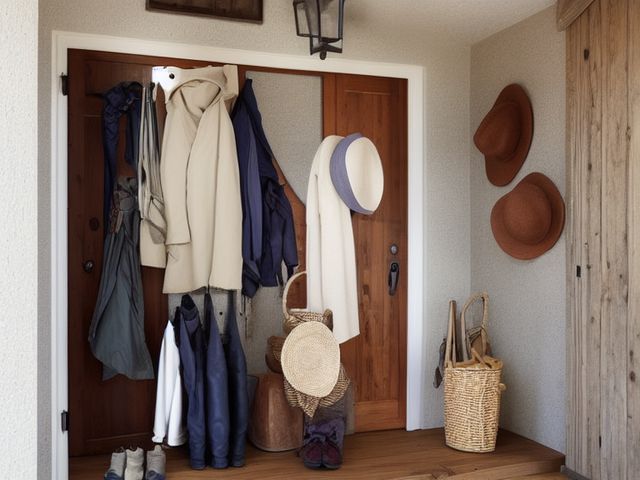
Common items here
- One open bin per person, holding this season's matched gloves and hat
- Umbrellas, standing points down in one stand
- The off-season bin, closed and labeled with the month, on the high shelf
Check these before you start
- Poison, choke, or strangleInsect repellent and sun cream stored in an open low bin that a young child is encouraged to help themselves from.
- Fall, cut, or crushA packed seasonal bin lifted down from a high shelf overhead, and umbrella spikes stored points up at face height.
Which of these is true here?
Match what you are actually seeing in the seasonal outdoor gear to why it keeps happening, then start at the pass that fixes that, not the top of the list.
The bag of unmatched single gloves has survived three changeovers already, including a good ski glove nobody will actually throw out
- The glove is expensive, and letting it go without finding its pair feels wasteful even three seasons on. Confirm in 30 seconds: Ask if you would buy this again today for what it does. If the answer is no but you still cannot decide, the hold is sentimental. If that checks out, start at Sort.
- The one-bag-one-changeover rule exists, but nobody's actually applied it to this bag when the deadline came around. Confirm in 30 seconds: Pick up one piece. If your first thought is a verb (pay, sign, call, decide) rather than a place, it needs a decision, not a home. If that checks out, start at Sort.
- Gloves get lost one at a time, so this bag quietly grows a bit worse every season without anyone noticing the accumulation. Confirm in 30 seconds: Ask someone who does not live here to name what looks out of place. If they see it instantly and you had stopped noticing, this is the cause. If that checks out, start at Sort.
A bottle of sun cream from two summers ago is still sitting in the open, low bin a young child is encouraged to help themselves from
- Sun cream and insect repellent sitting where a small child can reach and taste them is a safety constraint that outranks tidy. Confirm in 30 seconds: Look for the four: a blade your hand would meet, weight above shoulder height, heat beside something that burns, and an unsafe placement near a child's reach. If that checks out, start at Safety.
- Nobody's reading the dates on these bottles at the changeover the way the sort pass calls for, so old stock just ages out unseen. Confirm in 30 seconds: Find the last one of something you use daily. If nothing tells you it is the last one, you will find out at the worst possible moment. If that checks out, start at Standardize.
- It's sat in that bin through enough seasons that an old bottle doesn't register as different from a fresh one. Confirm in 30 seconds: Ask someone who does not live here to name what looks out of place. If they see it instantly and you had stopped noticing, this is the cause. If that checks out, start at Sort.
An umbrella is standing spike up in the stand at exactly face height, instead of points down the way the standard calls for
- An upright spike at a toddler's eye height is a safety constraint independent of how tidy the stand looks. Confirm in 30 seconds: Look for the four: a blade your hand would meet, weight above shoulder height, heat beside something that burns, and an unsafe placement near a child's reach. If that checks out, start at Safety.
- Nobody's specifically the one who checks the stand when umbrellas go back in, so however it lands stays that way. Confirm in 30 seconds: Ask who resets this zone. If the honest answer is "whoever gets to it" or two names with no agreement, there is no owner. If that checks out, start at Sustain.
- There's no habit tied to a specific moment that flips a wrongly stood umbrella, so it only gets noticed by chance. Confirm in 30 seconds: Name the moment it happens. If the answer is "when I get round to it", there is no trigger and it will not survive a bad week. If that checks out, start at Sustain.
Only have 15 minutes? Tip every glove, mitten and hat from this season's bin onto the floor and match them into pairs. Put any single into the dated singles bag, and check the sun cream and insect repellent for their dates, moving anything expired out of the low bin. Victory: Every glove and mitten in the bin is matched into a pair, the singles bag carries today's date, and no expired sun cream or insect repellent remains in the low bin.
The six passes, in order
Work them in this order. Sorting after you have arranged things means arranging things you were about to remove.
This zone's full kit list is below, after the method. Skim it first if you would rather gather everything before you start.
Sort
Decide what stays. Everything else leaves the zone now.
Tip every glove, mitten and hat onto the floor and match them into pairs. Put the singles in one bag, and read the dates on the sun cream and the insect repellent, because a bottle opened two summers ago is no longer doing the job printed on the label.
What to store it in, now that you know what you are keeping
Bins and shelves are for what Sort left behind, not a stand-in for it. Buying storage before sorting means buying a container for things you have not yet decided to keep.
Only if it applies to the seasonal outdoor gear: 7 more
Not every home needs these for the seasonal outdoor gear. Each one is here because some do, and the reason is next to it.
- Deck Box Protect outdoor cushions and patio items, in the Straighten, Standardize and Sustain passes. Do not overload; anchor wall-mounted or tall systems where required.
- Broom and Tool Wall Clips Secure cleaning tools vertically, in the Straighten, Standardize and Sustain passes. Do not overload; anchor wall-mounted or tall systems where required.
- Large Clear Latching Bin ×2 Contain seasonal, garage, and bulk items, in the Straighten, Standardize and Sustain passes. Do not overload; anchor wall-mounted or tall systems where required.
- Board Game Component Bags Keep game pieces complete, in the Straighten, Standardize and Sustain passes. Do not overload; anchor wall-mounted or tall systems where required.
- Controller Dock Charge and contain game controllers, in the Straighten, Standardize and Sustain passes. Do not overload; anchor wall-mounted or tall systems where required.
- Toy Bin with Picture Label ×4 Support independent child cleanup, in the Straighten, Standardize and Sustain passes. Do not overload; anchor wall-mounted or tall systems where required.
- Front-Facing Book Bin ×2 Display children's books for easy access, in the Straighten, Standardize and Sustain passes. Do not overload; anchor wall-mounted or tall systems where required.
Straighten
Give what stays a home, placed where the hand actually reaches.
Open bins with no lids, one per person, set at their own reach so a child can get their own gloves without asking anyone. Umbrellas go in the stand and never in a bin, because one wet umbrella soaks everything it lies against.
Shine
Clean it, and use the cleaning to inspect what you cannot see when it is full.
Everything goes into off-season storage washed and bone dry, because damp wool packed away in April comes out smelling in October. Wipe out the empty bins and get the sand out of the corners before you refill them.
Surface by surface, all 5 of them, with what to use on each.
Safety
Make the zone safe for everybody who uses it, including the shortest person.
Insect repellent and sun cream sitting in a low open bin will find their way into a small mouth, so anything carrying a warning on the label goes in a closed box above child reach. Store umbrellas points down, because a spike stood upright sits at a toddler's eye height.
Standardize
Write down the best way you know today, so it survives you forgetting.
Two changeovers a year, spring and autumn, and the month you closed a bin goes on its lid. Write the same short order on that lid as well: gloves matched, hats washed, creams checked for date, umbrellas emptied out.
Sustain
Attach the reset to something that already happens, so it keeps itself.
The first cold morning you reach into the bin for gloves and find it empty is the signal, and the changeover happens that weekend, run by one adult from the short order written on the lid. An hour, twice a year. Slip in between is two seasons within reach at once, or a bin holding unmatched singles. Recovery is matching pairs and giving the singles one bag and one season to be reunited. Gloves are lost one at a time, so this zone degrades into halves, and half a pair still looks like stock.
The kit this zone called for
Everything above assumed you had these already. Types of thing, not brands: anything you already own that does the job is the right one to use.
- Color-coded microfiber cloth set ×12 Shine Wash by use color; avoid fabric softener.
- Neutral pH multi-surface cleaner Shine, Sustain Verify surface compatibility; lock around children and pets.
- Compact vacuum with attachments Shine Use appropriate attachment.
- Keep, Relocate, Donate, Recycle, Trash container set ×5 Sort Do not block exits.
- Portable cleaning caddy Straighten, Shine, Sustain Secure chemicals from children and pets.
- Portable label maker Standardize, Sustain Follow surface and adhesive guidance.
- Removable write-on labels Standardize Test on delicate finishes.
Only if it applies to the seasonal outdoor gear: 1 more
- Shelf Location Label Set Standardize, Sustain Install and use according to product instructions.
The bag of single gloves
You are keeping orphan gloves because the other half is somewhere in a coat pocket, a car door or the school lost property, and one of them was expensive. That bag has survived three changeovers already. Give it a rule instead of another reprieve: singles go in one bag with today's date on it, and the bag lives through exactly one changeover. Whatever is still unmatched when you next pack the bins goes, including the good ski glove. A right-hand glove on its own is not a glove. The one exception worth making is a survivor that fits a child who will need a bigger pair by next winter anyway, and even that gets a date on it.
Cleaning it properly, surface by surface
Work down, not across. Whatever comes off a high surface lands on the one below it, so cleaning the floor first means cleaning it twice.
Carry these in with you. Portable cleaning caddy; Compact vacuum with attachments; Color-coded microfiber cloth set; Neutral pH multi-surface cleaner; Floor-material-compatible cleaner.
- The high shelf and the off-season bin lids
Start with the dry cloth on the top shelf and the closed off-season bin lids, then wipe them with a cloth damp with neutral pH multi-surface cleaner. Do this before you open anything so the settled dust does not drop onto clean gear. - The open per-person bins
Empty each bin, vacuum the sand and grit from the corners, then wipe the inside and the rim and let it dry fully. Refill with this season's matched pairs only, one person's height per bin. - The gloves, hats and scarves
Anything going into off-season storage gets washed and dried right through first. Shake this season's items out, match every pair, and set them back so the gear is dry before it is boxed, since damp wool is what smells six months on. - The umbrella stand
Lift the umbrellas out and tip the stand over the bin, since rain carries grit and leaf litter down into the base. Wipe or rinse the inside, dry it, and stand the umbrellas back points down. - The floor under the stand and shelf
Vacuum the floor beneath the umbrella stand and the shelf where drips and sand collect, then wipe or mop the sealed floor with the floor-material-compatible cleaner. Dry it before the stand goes back.
How to clean anything else in the house, surface by surface.
Inspect as you clean. Cleaning is the only time you see the zone empty, so use it.
- As you empty each bin, flag a cracked lid or a bin whose corner has split, since it will not seal the off-season gear against damp.
- Put your nose into the off-season bin as you open it and flag a musty note, which means something went in damp last time.
- When you lift the umbrellas, flag a bent rib, a jammed slider, or a rusted spike, and note any tip left stored point up.
- Feel the high shelf brackets as you wipe them and flag any that flex or sit loose under a packed seasonal bin.
The standard that keeps it fixed
Only the current season is within reach, singles get one bag and one season, and every stored bin carries the month it was closed.
Reset trigger. The first morning of the season you reach for gloves and the bin is empty.
How much the seasonal outdoor gear can actually hold
One open bin per person at their own height holding this season's gloves and hat with every pair matched, umbrellas points down in one stand by the door, and the other season's bin closed and labeled with the month you packed it.
If a bin will not close on the off-season gear, you are storing singles. Unmatched gloves are not a pair waiting to be reunited, they are one glove, and they should leave at the changeover. Run the honest count.
When this does not describe your seasonal outdoor gear
The passes above describe the ordinary case. Plenty of real households are not ordinary, and the fix is not to skip the method, it is to run it against a different starting shape.
- A climate with no real seasonal change
- There is one bin rather than two, and the rule becomes matching rather than rotation. The failure mode moves from forgotten boxes to a bin of odd gloves nobody ever culls.
- Young children who lose gloves constantly
- Buy one style in quantity so every glove matches every other, and keep the spares in the same bin. A matched pair is the goal; identical singles are the only version of that which survives a winter.
The rest of the mudroom
Each of these is one session on its own.
- The Family Hook Zone
- The Bench and Transition Surface
- The Shoe and Boot Storage
- The Pet Station
- The Seasonal Outdoor Gear, you are here
- The Cleaning and Utility Zone
The Mudroom in full, with what each of the 6 zones is for
The mudroom as a deck of 69 cards: the frictions people report in each zone, the root cause behind each one, and the timed action that clears it. Free to read or print.
Zones that do the same job, elsewhere in the house
Different room, different name, same real job. Each one is its own page because the room around it changes what actually works.
- The Coats and Outerwear in the entryway
- The Family Hook Zone in the mudroom
- The Sports and Recreation Zone in the garage
Related reading
- This zone's safety pass, in full
- Does this zone keep running out of something?
- Stuck on one item in this zone?
- Have you stopped noticing the clutter in this zone?
- Does more than one person use this zone?
Questions people ask about this zone
- How long does it take to reset the seasonal outdoor gear?
- One session: 30-45 min, most of it in Sort, on the floor matching gloves into pairs.
- What does a finished seasonal outdoor gear look like?
- One open bin per person at their own height holding this season's gloves and hat with every pair matched, umbrellas standing points down in one stand by the door, and the other season's bin closed, labeled with the month you packed it, and up on the high shelf.
- What is the hardest call to make in the seasonal outdoor gear?
- You are keeping orphan gloves because the other half is somewhere in a coat pocket, a car door or the school lost property, and one of them was expensive. That bag has survived three changeovers already. Give it a rule instead of another reprieve: singles go in one bag with today's date on it, and the bag lives through exactly one changeover. Whatever is still unmatched when you next pack the bins goes, including the good ski glove. A right-hand glove on its own is not a glove. The one exception worth making is a survivor that fits a child who will need a bigger pair by next winter anyway, and even that gets a date on it.
- How do you keep the seasonal outdoor gear from getting cluttered again?
- Only the current season is within reach, singles get one bag and one season, and every stored bin carries the month it was closed. The first morning of the season you reach for gloves and the bin is empty.
- What do you need to clean the seasonal outdoor gear?
- Portable cleaning caddy; Compact vacuum with attachments; Color-coded microfiber cloth set; Neutral pH multi-surface cleaner; Floor-material-compatible cleaner.
- What do you clean first in the seasonal outdoor gear?
- The high shelf and the off-season bin lids. Start with the dry cloth on the top shelf and the closed off-season bin lids, then wipe them with a cloth damp with neutral pH multi-surface cleaner. Do this before you open anything so the settled dust does not drop onto clean gear.
- Is there a poison, choke, or strangle risk in the seasonal outdoor gear?
- Insect repellent and sun cream stored in an open low bin that a young child is encouraged to help themselves from.
- Is there a fall, cut, or crush risk in the seasonal outdoor gear?
- A packed seasonal bin lifted down from a high shelf overhead, and umbrella spikes stored points up at face height.
- Why does the seasonal outdoor gear do this: The bag of unmatched single gloves has survived three changeovers already, including a good ski glove nobody will actually throw out?
- The glove is expensive, and letting it go without finding its pair feels wasteful even three seasons on, so start at Sort; The one-bag-one-changeover rule exists, but nobody's actually applied it to this bag when the deadline came around, so start at Sort; Gloves get lost one at a time, so this bag quietly grows a bit worse every season without anyone noticing the accumulation, so start at Sort.
- Why does the seasonal outdoor gear do this: A bottle of sun cream from two summers ago is still sitting in the open, low bin a young child is encouraged to help themselves from?
- Sun cream and insect repellent sitting where a small child can reach and taste them is a safety constraint that outranks tidy, so start at Safety; Nobody's reading the dates on these bottles at the changeover the way the sort pass calls for, so old stock just ages out unseen, so start at Standardize; It's sat in that bin through enough seasons that an old bottle doesn't register as different from a fresh one, so start at Sort.
- Why does the seasonal outdoor gear do this: An umbrella is standing spike up in the stand at exactly face height, instead of points down the way the standard calls for?
- An upright spike at a toddler's eye height is a safety constraint independent of how tidy the stand looks, so start at Safety; Nobody's specifically the one who checks the stand when umbrellas go back in, so however it lands stays that way, so start at Sustain; There's no habit tied to a specific moment that flips a wrongly stood umbrella, so it only gets noticed by chance, so start at Sustain.
When you want it off the screen
Carry The Seasonal Outdoor Gear into the room
The method above is complete and free. The Whole House Print Pack puts The Seasonal Outdoor Gear and the other 113 micro zones on 684 printable cards, so the steps you just read are not stuck behind a phone screen while your hands are full.
The Print Pack, 19 dollarsJust this zone, 4 dollarsOr draw a card free
The Seasonal Outdoor Gear on its own is 4 dollars for 6 cards. All 114 micro zones is 19 dollars for 684. The whole house is the better buy; the single zone is here so you can take only what you are working on.
If The Seasonal Outdoor Gear keeps fighting back, the real problem usually sits somewhere else in the room. A one hour virtual consult is 250 dollars: we find the function, the friction and the root cause together, and you keep a written standard for the space.
See what a consult covers, 250 dollars
Not ready to pay for that either? Ask which zone first, free