Mudroom micro zone
The Pet Station
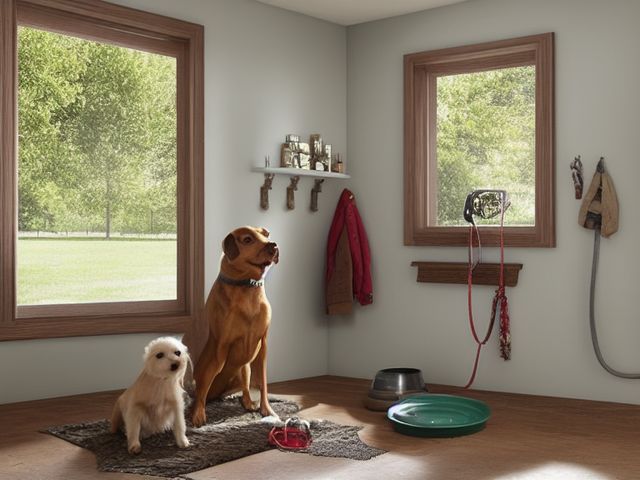
The pet station, in the Mudroom. Everything the animal needs to get out of the door, and everything you need when it comes back through it filthy. Lead clipped to collar on one hook with a full roll of waste bags attached, an old towel folded within arm's reach of the door, food sealed in a bin with the scoop inside it, and every treatment behind a closed door above the animal's nose and above a toddler's reach.
One session: 15-30 min, quick, with most of the time spent deciding what does not belong here.
The short version
- Sort. Lay out every lead, collar, harness and chewed toy you can find in this room
- Straighten. Hang the walking kit as one connected unit, lead clipped to collar
- Shine. Wash the scoop and wipe the crumbs and oils out of the bin
- Safety. Flea, tick and worming treatments are poison to a child
- Standardize. Refill the bin when the level drops to the scoop
- Sustain. When you clip the lead back on its hook after a walk
Each step in full, with what to have on hand and what done looks like, below.
Where it is
Mudroom
6 micro zones, one session each
- 1The Family Hook Zone
- 2The Bench and Transition Surface
- 3The Shoe and Boot Storage
- 4The Pet Station
- 5The Seasonal Outdoor Gear
- 6The Cleaning and Utility Zone
What done looks like
Everything the animal needs to get out of the door, and everything you need when it comes back through it filthy.
- Lead clipped to collar on one hook with a full roll of waste bags attached
- An old towel folded within arm's reach of the door
- Food sealed in a bin with the scoop inside it
- Every treatment behind a closed door above the animal's nose and above a toddler's reach
What done looks like
Lead clipped to collar on one hook with a full roll of waste bags attached, an old towel folded within arm's reach of the door, food sealed in a bin with the scoop inside it, and every treatment behind a closed door above the animal's nose and above a toddler's reach.
Common items here
- Lead clipped to collar, with a full roll of waste bags attached
- An old towel, folded within arm's reach
- Food, sealed in a bin with the scoop inside
- Treatments, behind a closed door above reach
Check these before you start
- Poison, choke, or strangleSpot-on flea treatment and worming tablets stored in an open caddy at the same height as the waste bags a child is allowed to fetch.
- FallA knocked water bowl on hard floor, right where people are already stepping in with wet soles.
Which of these is true here?
Match what you are actually seeing in the pet station to why it keeps happening, then start at the pass that fixes that, not the top of the list.
The food bin sits in the mudroom purely because the sack came in through this door, while the bowl it feeds sits in the kitchen, so every meal costs a walk across the house with the scoop
- It's stored here because that's where it arrived, not because it's where it's actually used. Confirm in 30 seconds: Stand where you use it and count the steps to where it is kept. More than two is the wrong cabinet. If that checks out, start at Straighten.
- Nobody's actually asked the question the rule calls for, whether the bin would fit in the kitchen instead. Confirm in 30 seconds: Pick up one piece. If your first thought is a verb (pay, sign, call, decide) rather than a place, it needs a decision, not a home. If that checks out, start at Sort.
- The walk from the food bin to the bowl is an extra trip every single meal, exactly the cost the straighten pass warns against. Confirm in 30 seconds: Fetch it once and count the movements. More than two and the storage is charging you rent every time. If that checks out, start at Straighten.
Flea and worming treatment sits loose in the open caddy at the same height as the waste bags a child is allowed to fetch
- Poison stored at a height a child is encouraged to reach into for something else entirely is a safety constraint that outranks convenience. Confirm in 30 seconds: Look for the four: a blade your hand would meet, weight above shoulder height, heat beside something that burns, and an unsafe placement near a child's reach. If that checks out, start at Safety.
- There's no separate rule yet that treatments go behind a closed door above reach, only that the walking kit hangs together. Confirm in 30 seconds: Ask two people in the house to describe this zone when it is finished. Two different answers means there is no standard to keep. If that checks out, start at Standardize.
- It's sat in the caddy at that height for so long that nobody clocks it as a hazard walking past. Confirm in 30 seconds: Ask someone who does not live here to name what looks out of place. If they see it instantly and you had stopped noticing, this is the cause. If that checks out, start at Sort.
The waste bag roll ran out a quarter mile from the house on a walk last week, because nobody checked it when the lead went back on its hook
- Nobody's actually pairing the lead-hook check with the bag-roll check the way the sustain rule calls for. Confirm in 30 seconds: Name the moment it happens. If the answer is "when I get round to it", there is no trigger and it will not survive a bad week. If that checks out, start at Sustain.
- There's no spare roll kept behind the one in use, so running low has no backup. Confirm in 30 seconds: Find the last one of something you use daily. If nothing tells you it is the last one, you will find out at the worst possible moment. If that checks out, start at Standardize.
- Whoever walked the dog last isn't necessarily the one who's supposed to check the roll, so it falls through. Confirm in 30 seconds: Ask who resets this zone. If the honest answer is "whoever gets to it" or two names with no agreement, there is no owner. If that checks out, start at Sustain.
Only have 15 minutes? Clip the lead back on its hook right now and check the bag roll: if it's down to the last few, swap it for the spare. Check the food bin's level against the scoop and refill it if it has dropped that low, and move any treatment sitting loose in the caddy behind a closed door above reach. Victory: The lead, collar and a full bag roll hang together as one kit on the hook, the food bin's level sits at or above the scoop line, and no treatment is loose in the open caddy.
The six passes, in order
Work them in this order. Sorting after you have arranged things means arranging things you were about to remove.
This zone's full kit list is below, after the method. Skim it first if you would rather gather everything before you start.
Sort
Decide what stays. Everything else leaves the zone now.
Lay out every lead, collar, harness and chewed toy you can find in this room. Keep the lead you genuinely walk with plus one spare, then let the outgrown collar, the harness that never fitted and the retired long line go.
What to store it in, now that you know what you are keeping
Bins and shelves are for what Sort left behind, not a stand-in for it. Buying storage before sorting means buying a container for things you have not yet decided to keep.
Only if it applies to the pet station: 7 more
Not every home needs these for the pet station. Each one is here because some do, and the reason is next to it.
- Adjustable Wall Track System Secure long tools and sports equipment, in the Straighten, Standardize and Sustain passes. Do not overload; anchor wall-mounted or tall systems where required.
- Boot Tray Contain water, mud, and outdoor footwear, in the Straighten, Standardize and Sustain passes. Do not overload; anchor wall-mounted or tall systems where required.
- Umbrella Stand Contain umbrellas vertically and allow drying, in the Straighten, Standardize and Sustain passes. Do not overload; anchor wall-mounted or tall systems where required.
- Wall Hook Rail Create labeled hanging homes, in the Straighten, Standardize and Sustain passes. Do not overload; anchor wall-mounted or tall systems where required.
- Broom and Tool Wall Clips Secure cleaning tools vertically, in the Straighten, Standardize and Sustain passes. Do not overload; anchor wall-mounted or tall systems where required.
- Over-Door Hook Rack Add reversible vertical storage, in the Straighten, Standardize and Sustain passes. Do not overload; anchor wall-mounted or tall systems where required.
- Shoe Rack Contain active footwear and preserve floor paths, in the Straighten, Standardize and Sustain passes. Do not overload; anchor wall-mounted or tall systems where required.
Straighten
Give what stays a home, placed where the hand actually reaches.
Hang the walking kit as one connected unit, lead clipped to collar with the bag roll threaded on, so leaving the house is one grab and not a search of three rooms. Towel on top of the food bin, treats up high where a nose cannot reach them.
Shine
Clean it, and use the cleaning to inspect what you cannot see when it is full.
Wash the scoop and wipe the crumbs and oils out of the bin before you refill it, rather than tipping fresh food onto stale, and put the paw towel through the wash with the door mats so one load covers both.
Surface by surface, all 6 of them, with what to use on each.
Safety
Make the zone safe for everybody who uses it, including the shortest person.
Flea, tick and worming treatments are poison to a child and to an animal of the wrong size, so they live in a closed box above reach, never loose in the caddy beside the bags. Coil the lead on its hook instead of leaving a loop hanging low, because a hanging loop at a toddler's height is a strangling risk.
Standardize
Write down the best way you know today, so it survives you forgetting.
Refill the bin when the level drops to the scoop, and keep one spare bag roll behind the one in use. Write the daily food amount on a label taped to the bin lid so whoever feeds gets the same answer.
Sustain
Attach the reset to something that already happens, so it keeps itself.
When you clip the lead back on its hook after a walk, check the bag roll and swap it if it is down to the last few. Five seconds while your hands are already there. The scoop is the second gauge, because when the food level drops to it the bin gets refilled, and the daily amount written on the lid means whoever feeds gets the same answer. The shortfall here is discovered a quarter of a mile from the house in the rain, which is why the check hangs on the hook.
The kit this zone called for
Everything above assumed you had these already. Types of thing, not brands: anything you already own that does the job is the right one to use.
- Color-coded microfiber cloth set ×12 Shine Wash by use color; avoid fabric softener.
- Neutral pH multi-surface cleaner Shine, Sustain Verify surface compatibility; lock around children and pets.
- Compact vacuum with attachments Shine Use appropriate attachment.
- Keep, Relocate, Donate, Recycle, Trash container set ×5 Sort Do not block exits.
- Portable cleaning caddy Straighten, Shine, Sustain Secure chemicals from children and pets.
- Portable label maker Standardize, Sustain Follow surface and adhesive guidance.
- Removable write-on labels Standardize Test on delicate finishes.
Whether the food bin belongs here at all
The mudroom pulls in everything with the animal's name on it, and the food sack is the biggest and least questioned piece. So ask where the bowl actually sits. If you feed in the kitchen, the food is stored here purely because the sack came in through this door, and every meal costs you a walk across the house carrying a scoop. This zone is for departures and arrivals only: lead, bags, towel, coat, paw wash. Feeding, grooming and paperwork belong wherever the bowl and the sink are. Move the bin to the bowl. If the answer is that the bin will not fit in the kitchen, that is a kitchen problem to solve, not a reason to keep walking.
Cleaning it properly, surface by surface
Wash the scoop and wipe the crumbs and oils out of the food bin before you refill it, rather than tipping fresh food onto stale. Put the paw towel through the wash with the door mats so one load covers both.
Work down, not across. Whatever comes off a high surface lands on the one below it, so cleaning the floor first means cleaning it twice.
Carry these in with you. Portable cleaning caddy; Compact vacuum with attachments; Color-coded microfiber cloth set; Neutral pH multi-surface cleaner; Floor-material-compatible cleaner; Dish soap for bowls and scoop (not in this zone's list).
- The lead hook and the wall around it
Lift the lead and bag roll off and wipe the hook and the wall patch behind it with a cloth damp with neutral pH multi-surface cleaner, where nose-height smears and hair build up. Coil the lead back on rather than leaving a loop hanging. - The food bin, inside and out
Empty out any stale food before you top up, vacuum the crumbs and dusty fines from the corners of the bin, then wipe the inside dry so no oily film stays to go rancid. Wipe the lid and outside of the bin too, and reseal it. - The scoop
Wash the scoop in hot soapy water and dry it fully, since a damp scoop buried back in the food is what turns the next fill greasy. Store it inside the sealed bin. - The paw towel and any bedding
Send the paw towel through the wash together with the door mats so one load does both, shaking it out over the bin first so you are not running loose grit and hair through the machine. If a pet bed or blanket lives here, strip its cover into the same wash and vacuum the base pad with the upholstery tool before it goes back down. - The food and water bowls
Tip and wash both bowls daily in hot soapy water, scrubbing the slime ring that forms at the waterline and the dried film in the food bowl, then dry and refill. Wipe the mat or tray they stand on. - The floor under the station
Vacuum the spilled kibble and hair from under and around the station, working into the corner behind the bin, then wipe or mop the sealed floor with the floor-material-compatible cleaner, since splashed water and food dust make a sticky film there.
How to clean anything else in the house, surface by surface.
Inspect as you clean. Cleaning is the only time you see the zone empty, so use it.
- As you coil the lead, flag a clip whose spring is weak, a collar buckle that is fraying, or webbing worn thin where it takes the strain.
- Note a food bin whose seal no longer clicks shut or whose lid is cracked, since a bin that lets air in is a bin that lets pests in, and flag it.
- Watch for a chewed patch on the lead, the bag roll, or the towel that says the animal has been getting to them, and flag it.
- When you move the water bowl, flag a slow damp patch or a warped floorboard under it that a daily splash has been quietly soaking.
The standard that keeps it fixed
Lead, collar and a full bag roll hang together as one kit, and treatments stay behind a closed door above reach.
Reset trigger. When you hang the lead back up after a walk.
How much the pet station can actually hold
Lead clipped to the collar on one hook with a full roll of waste bags attached, an old towel within arm's reach of the door, food sealed in a bin with the scoop inside it, and every treatment behind a closed door above animal height.
If the treatments are not behind a closed door, nothing else in this zone matters. Flea and worming products are the one thing here that is dangerous to the animal they are for, and to a child. Run the honest count.
When this does not describe your pet station
The passes above describe the ordinary case. Plenty of real households are not ordinary, and the fix is not to skip the method, it is to run it against a different starting shape.
- More than one animal
- One hook and one labeled bowl set per animal, and keep the food bins separate even when the food is the same. The reason is dosing: shared bins are how one animal gets the other's prescription diet.
- A dog that needs washing down after most walks
- The towel becomes a stack rather than one, with a named wash day, and the drip tray from the shoe zone earns its place here too. Plan for the water arriving indoors, because it will.
The rest of the mudroom
Each of these is one session on its own.
- The Family Hook Zone
- The Bench and Transition Surface
- The Shoe and Boot Storage
- The Pet Station, you are here
- The Seasonal Outdoor Gear
- The Cleaning and Utility Zone
The Mudroom in full, with what each of the 6 zones is for
The mudroom as a deck of 69 cards: the frictions people report in each zone, the root cause behind each one, and the timed action that clears it. Free to read or print.
Related reading
- Moving three things to get to the one you need?
- Does this zone keep running out of something?
- Does something in this zone actually get used somewhere else?
- Is mail piling up on this exact surface?
- Have you stopped noticing the clutter in this zone?
Questions people ask about this zone
- How long does it take to reset the pet station?
- One session: 15-30 min, quick, with most of the time spent deciding what does not belong here.
- What does a finished pet station look like?
- Lead clipped to collar on one hook with a full roll of waste bags attached, an old towel folded within arm's reach of the door, food sealed in a bin with the scoop inside it, and every treatment behind a closed door above the animal's nose and above a toddler's reach.
- What is the hardest call to make in the pet station?
- The mudroom pulls in everything with the animal's name on it, and the food sack is the biggest and least questioned piece. So ask where the bowl actually sits. If you feed in the kitchen, the food is stored here purely because the sack came in through this door, and every meal costs you a walk across the house carrying a scoop. This zone is for departures and arrivals only: lead, bags, towel, coat, paw wash. Feeding, grooming and paperwork belong wherever the bowl and the sink are. Move the bin to the bowl. If the answer is that the bin will not fit in the kitchen, that is a kitchen problem to solve, not a reason to keep walking.
- How do you keep the pet station from getting cluttered again?
- Lead, collar and a full bag roll hang together as one kit, and treatments stay behind a closed door above reach. When you hang the lead back up after a walk.
- What do you need to clean the pet station?
- Portable cleaning caddy; Compact vacuum with attachments; Color-coded microfiber cloth set; Neutral pH multi-surface cleaner; Floor-material-compatible cleaner; Dish soap for bowls and scoop (not in this zone's list).
- What do you clean first in the pet station?
- The lead hook and the wall around it. Lift the lead and bag roll off and wipe the hook and the wall patch behind it with a cloth damp with neutral pH multi-surface cleaner, where nose-height smears and hair build up. Coil the lead back on rather than leaving a loop hanging.
- Is there a poison, choke, or strangle risk in the pet station?
- Spot-on flea treatment and worming tablets stored in an open caddy at the same height as the waste bags a child is allowed to fetch.
- Is there a fall risk in the pet station?
- A knocked water bowl on hard floor, right where people are already stepping in with wet soles.
- Why does the pet station do this: The food bin sits in the mudroom purely because the sack came in through this door, while the bowl it feeds sits in the kitchen, so every meal costs a walk across the house with the scoop?
- It's stored here because that's where it arrived, not because it's where it's actually used, so start at Straighten; Nobody's actually asked the question the rule calls for, whether the bin would fit in the kitchen instead, so start at Sort; The walk from the food bin to the bowl is an extra trip every single meal, exactly the cost the straighten pass warns against, so start at Straighten.
- Why does the pet station do this: Flea and worming treatment sits loose in the open caddy at the same height as the waste bags a child is allowed to fetch?
- Poison stored at a height a child is encouraged to reach into for something else entirely is a safety constraint that outranks convenience, so start at Safety; There's no separate rule yet that treatments go behind a closed door above reach, only that the walking kit hangs together, so start at Standardize; It's sat in the caddy at that height for so long that nobody clocks it as a hazard walking past, so start at Sort.
- Why does the pet station do this: The waste bag roll ran out a quarter mile from the house on a walk last week, because nobody checked it when the lead went back on its hook?
- Nobody's actually pairing the lead-hook check with the bag-roll check the way the sustain rule calls for, so start at Sustain; There's no spare roll kept behind the one in use, so running low has no backup, so start at Standardize; Whoever walked the dog last isn't necessarily the one who's supposed to check the roll, so it falls through, so start at Sustain.
When you want it off the screen
Carry The Pet Station into the room
The method above is complete and free. The Whole House Print Pack puts The Pet Station and the other 113 micro zones on 684 printable cards, so the steps you just read are not stuck behind a phone screen while your hands are full.
The Print Pack, 19 dollarsJust this zone, 4 dollarsOr draw a card free
The Pet Station on its own is 4 dollars for 6 cards. All 114 micro zones is 19 dollars for 684. The whole house is the better buy; the single zone is here so you can take only what you are working on.
If The Pet Station keeps fighting back, the real problem usually sits somewhere else in the room. A one hour virtual consult is 250 dollars: we find the function, the friction and the root cause together, and you keep a written standard for the space.
See what a consult covers, 250 dollars
Not ready to pay for that either? Ask which zone first, free