Kitchen micro zone
The Lower Cabinets and Cookware
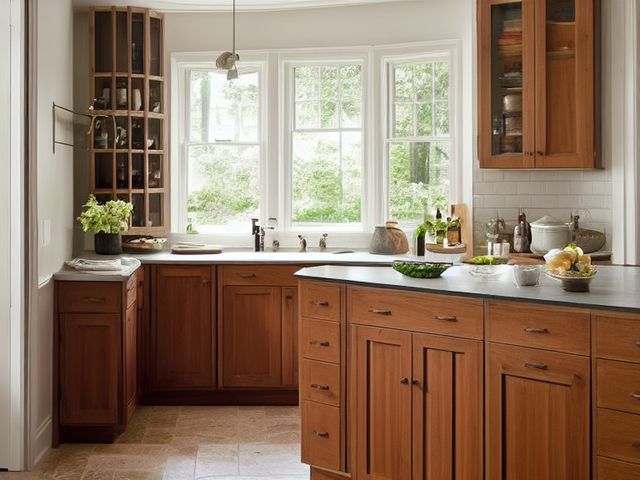
The lower cabinets and cookware, in the Kitchen. Deep, low storage for the heavy pieces: pots, pans, lids, bakeware, and the big bowls. Every pan comes out and goes back in one motion. Pans nested no more than three deep or stood on edge in a divider, lids in a rack or on a door rail instead of loose, baking sheets standing on end, and the two pans you cook with nightly at the front of the cabinet nearest the hob. Nothing has to come out to reach anything else.
One session: 45-75 min, most of it in Sort, once everything is out on the floor.
The short version
- Sort. Empty the entire cabinet onto the floor
- Straighten. Nest by size but cap any stack at three, with a cloth
- Shine. Wipe the shelf floor itself, where oil creeps down from pan bases
- Safety. Keep the cast iron and the full stockpot on the cabinet floor
- Standardize. Size the divider slots to your actual pans
- Sustain. When the pans come off the drying rack they go back into their named slots
Each step in full, with what to have on hand and what done looks like, below.
Where it is
Kitchen
7 micro zones, one session each
- 1The Primary Prep Counter
- 2The Cooking Zone
- 3The Sink and Dishwashing Zone
- 4The Upper Cabinets
- 5The Lower Cabinets and Cookware
- 6The Utensil and Utility Drawers
- 7The Refrigerator and Freezer
What done looks like
Deep, low storage for the heavy pieces: pots, pans, lids, bakeware, and the big bowls.
- Every pan comes out and goes back in one motion
- Pans nested no more than three deep or stood on edge in a divider, lids in a rack or on a door rail instead of loose, baking sheets standing on end, and the two pans you cook with nightly at the front of the cabinet nearest the hob
- Nothing has to come out to reach anything else
What done looks like
Every pan comes out and goes back in one motion. Pans nested no more than three deep or stood on edge in a divider, lids in a rack or on a door rail instead of loose, baking sheets standing on end, and the two pans you cook with nightly at the front of the cabinet nearest the hob. Nothing has to come out to reach anything else.
Common items here
- Pots and pans, nested no more than three deep or stood on edge in a divider
- Lids, in a rack or on a door rail instead of loose
- Baking sheets, standing on end in a divider
- The two pans you cook with nightly, at the front nearest the hob
Check these before you start
- Fall, cut, or crushA tall nest of pans or a cast iron pot stored above waist height comes down on hands and feet the moment the stack shifts. Food processor and blender blades stored loose inside a bowl in a low cabinet are found by fingers reaching into the dark.
Which of these is true here?
Match what you are actually seeing in the lower cabinets and cookware to why it keeps happening, then start at the pass that fixes that, not the top of the list.
Every pan is under three others
- The stacks are deeper than three. Confirm in 30 seconds: Fetch it once and count the movements. More than two and the storage is charging you rent every time. If that checks out, start at Straighten.
- There are more pans here than we cook with. Confirm in 30 seconds: Count what you used in the past month. If the honest number is a third of what is stored here, the space is not too small. If that checks out, start at Sort.
- Nothing holds them apart. Confirm in 30 seconds: Put back only what belongs here. If it still will not close, or still stacks four deep, the capacity is the problem, not the habit. If that checks out, start at Sort.
The lids are a landslide
- Lids have no place of their own. Confirm in 30 seconds: Ask where one specific item lives. If two people answer differently, or nobody answers, it has no home. If that checks out, start at Straighten.
- There is no rack or rail to stand them in. Confirm in 30 seconds: Put back only what belongs here. If it still will not close, or still stacks four deep, the capacity is the problem, not the habit. If that checks out, start at Sort.
- They are stored away from the pans they belong to. Confirm in 30 seconds: Stand where you use it and count the steps to where it is kept. More than two is the wrong cabinet. If that checks out, start at Straighten.
The heavy pot lives over my head
- Weight is stored above shoulder height. Confirm in 30 seconds: Look for the four: a blade your hand would meet, weight above shoulder height, heat beside something that burns, and an unsafe placement near a child's reach. If that checks out, start at Safety.
- It is nowhere near the hob it is used at. Confirm in 30 seconds: Stand where you use it and count the steps to where it is kept. More than two is the wrong cabinet. If that checks out, start at Straighten.
- The cabinet floor, where it should be, is already full. Confirm in 30 seconds: Put back only what belongs here. If it still will not close, or still stacks four deep, the capacity is the problem, not the habit. If that checks out, start at Sort.
Only have 15 minutes? The two pans you cook with nightly at the front, everything else capped at three deep. Victory: Each of your three most used pans comes out in one motion, moving nothing else.
The six passes, in order
Work them in this order. Sorting after you have arranged things means arranging things you were about to remove.
This zone's full kit list is below, after the method. Skim it first if you would rather gather everything before you start.
Sort
Decide what stays. Everything else leaves the zone now.
Empty the entire cabinet onto the floor, which is the only way you will ever find the third saucepan and the wok bought for one weekend. Keep what actually cooked something in the past year. Nonstick worn through to the metal in the middle is not a spare, it is finished, and it goes to metal recycling rather than to the back of the shelf.
What to store it in, now that you know what you are keeping
Bins and shelves are for what Sort left behind, not a stand-in for it. Buying storage before sorting means buying a container for things you have not yet decided to keep.
Only if it applies to the lower cabinets and cookware: 4 more
Not every home needs these for the lower cabinets and cookware. Each one is here because some do, and the reason is next to it.
- Vertical File Sorter Store paper, trays, lids, or boards vertically, in the Straighten, Standardize and Sustain passes. Do not overload; anchor wall-mounted or tall systems where required.
- Single-Tier Slide-Out Organizer Provide pull-out access in low or narrow cabinets, in the Straighten, Standardize and Sustain passes. Do not overload; anchor wall-mounted or tall systems where required.
- Two-Tier Slide-Out Organizer Create accessible pull-out storage in cabinets, in the Straighten, Standardize and Sustain passes. Do not overload; anchor wall-mounted or tall systems where required.
- Small Clear Lidded Bin ×4 Contain small loose items with visibility, in the Straighten, Standardize and Sustain passes. Do not overload; anchor wall-mounted or tall systems where required.
Straighten
Give what stays a home, placed where the hand actually reaches.
Nest by size but cap any stack at three, with a cloth or a sheet of paper between coated surfaces. Lids stand in a rack or on a rail inside the door, and baking sheets go on edge in a divider so you stop lifting three to reach the fourth.
Shine
Clean it, and use the cleaning to inspect what you cannot see when it is full.
Wipe the shelf floor itself, where oil creeps down from pan bases and holds dust into a tacky film that resists a dry cloth. While everything is out, twist every pan handle and tighten any rivet or screw that moves.
Surface by surface, all 5 of them, with what to use on each.
Safety
Make the zone safe for everybody who uses it, including the shortest person.
Keep the cast iron and the full stockpot on the cabinet floor, never above waist height, and lift them from a squat rather than bending over the open door. If a stack slides when the door is closed hard, it will one day land on a foot, so build the stack so it survives a slam.
Standardize
Write down the best way you know today, so it survives you forgetting.
Size the divider slots to your actual pans and write the pan on the front edge of each slot, so the wide skillet slot cannot quietly become the place lids get dropped.
Sustain
Attach the reset to something that already happens, so it keeps itself.
When the pans come off the drying rack they go back into their named slots, done by whoever set them there to dry. The hob is the tell. A pan that sleeps on the burner is not laziness, it is a slot that costs a crouch to reach, and the pan is reporting that honestly. Recovery is changing the slot rather than the person: move that pan to the front, ten minutes with the cabinet open. This zone fails physically, so it goes at the end of a long day before anything else in the kitchen.
The kit this zone called for
Everything above assumed you had these already. Types of thing, not brands: anything you already own that does the job is the right one to use.
- Color-coded microfiber cloth set ×12 Shine Wash by use color; avoid fabric softener.
- Neutral pH multi-surface cleaner Shine, Sustain Verify surface compatibility; lock around children and pets.
- Compact vacuum with attachments Shine Use appropriate attachment.
- Keep, Relocate, Donate, Recycle, Trash container set ×5 Sort Do not block exits.
- Portable cleaning caddy Straighten, Shine, Sustain Secure chemicals from children and pets.
- Portable label maker Standardize, Sustain Follow surface and adhesive guidance.
- Removable write-on labels Standardize Test on delicate finishes.
Only if it applies to the lower cabinets and cookware: 3 more
- Small detail brush set Shine Use surface-safe bristles.
- Anti-tip anchors and hardware Safety Install to manufacturer and wall-type requirements.
- Shelf Location Label Set Standardize, Sustain Install and use according to product instructions.
The third frying pan
Cook a normal week and count the most pans you had going at once. That number plus one is your cap, and everything beyond it goes, including the expensive one you never liked using. The money is already spent, and keeping the pan does not get any of it back; it only costs you the low shelf. Then handle the guest argument separately: if a piece earns its place twice a year for visitors, and a roasting tray you already own could do the same job, keep the tray and release the piece. A cookware set kept for a hypothetical dinner party takes up the easiest shelf in the kitchen every day of the year for two evenings of use.
Cleaning it properly, surface by surface
Everything comes out for this one, and the prize is the shelf floor itself, where oil creeping down from pan bases holds dust into a tacky film a dry cloth just slides over. With the cabinet empty, it is the one moment you can see every handle and every hinge at once.
Work down, not across. Whatever comes off a high surface lands on the one below it, so cleaning the floor first means cleaning it twice.
Carry these in with you. Food-area degreaser; Neutral pH multi-surface cleaner; Small detail brush set; Compact vacuum with attachments; Color-coded microfiber cloth set; Portable cleaning caddy.
- The shelf floor and the tacky oil film on it
Empty the cabinet fully. Attack the shelf floor with the food-area degreaser or a strong neutral pH pass, let it sit for the dwell time so it can cut the tacky film, then wipe and follow with a clean damp cloth. A dry cloth alone will only skate across it. - The interior walls and back of the cabinet
Wipe the side walls and the back panel with a neutral pH cloth, working top to bottom so grit falls to the floor you will do last. Reach right into the back corners where a dropped lid or a dust drift hides. - The door interior and any lid rail
Wipe the inside of the door and the lid rack or rail mounted on it, since splashes carry onto the door every time a pan goes in wet. Dry the rail so lids do not sit against a damp edge. - The pans, lids, and bakeware themselves
While everything is out, wipe each piece before it returns and stand baking sheets on end to dry. Twist each pan handle as you wipe it, so grease comes off the grip and rivets and a loose one makes itself known under your hand. - Any pull-out shelf runners and the toe-kick vent at the base
Wipe the runners of a pull-out shelf and clear grit from the track with a detail brush so it glides. Finish by vacuuming the toe-kick and the plinth vent at the very base of the units, where floor dust and crumbs pack in.
How to clean anything else in the house, surface by surface.
Inspect as you clean. Cleaning is the only time you see the zone empty, so use it.
- A loose rivet, a wobbling handle, or a cracked helper handle on a pan as you twist each one.
- The tacky oil film returning to the shelf floor faster than it should, telling you a pan is going away greasy.
- A damp patch or a water stain on the cabinet floor along the wall that carries the plumbing.
- Rust spots or orange bloom starting on cast iron, a carbon-steel pan, or a bare baking sheet.
- A pull-out shelf runner that binds or drops, or a mounting bracket working loose from the cabinet side.
The standard that keeps it fixed
Stacks capped at three, lids racked, heaviest pieces on the cabinet floor, and the two nightly pans at the front.
Reset trigger. When the pans come off the drying rack.
How much the lower cabinets and cookware can actually hold
Pans nested no more than three deep, or stood on edge in a divider, with the two pans cooked with nightly at the front nearest the hob.
If the pots and pans actually used this month, with any duplicate or long-unused piece already gone, still will not sit at a three-deep nest or in the divider, the cabinet is smaller than the cookware this kitchen runs on, and a second home for the least-used pieces is the honest fix, not a deeper stack. Run the honest count.
When this does not describe your lower cabinets and cookware
The passes above describe the ordinary case. Plenty of real households are not ordinary, and the fix is not to skip the method, it is to run it against a different starting shape.
- Only one low cabinet for all the cookware in a small kitchen
- Prioritize by the two pans you cook with nightly. Everything else, the roasting pan, the stockpot, the seasonal bakeware, moves to the highest shelf of this same cabinet or to a different storage spot entirely, since one cabinet cannot hold the whole kitchen's cookware at equal priority.
- Bending to floor-level shelves is painful or difficult
- A pull-out drawer or a lazy Susan insert brings the back of a low cabinet to the front without kneeling. Where that is not available, keep the nightly pans on the shelf closest to standing height, even if the less-used pieces go lower.
The rest of the kitchen
Each of these is one session on its own.
- The Primary Prep Counter
- The Cooking Zone
- The Sink and Dishwashing Zone
- The Upper Cabinets
- The Lower Cabinets and Cookware, you are here
- The Utensil and Utility Drawers
- The Refrigerator and Freezer
The Kitchen in full, with what each of the 7 zones is for
The kitchen as a deck of 72 cards: the frictions people report in each zone, the root cause behind each one, and the timed action that clears it. Free to read or print.
Related reading
- Moving three things to get to the one you need?
- Still does not fit, even after the honest count?
- Why the standard above names one home per category
- Before you buy storage for this zone
- Does something in this zone actually get used somewhere else?
Questions people ask about this zone
- How long does it take to reset the lower cabinets and cookware?
- One session: 45-75 min, most of it in Sort, once everything is out on the floor.
- What does a finished lower cabinets and cookware look like?
- Every pan comes out and goes back in one motion. Pans nested no more than three deep or stood on edge in a divider, lids in a rack or on a door rail instead of loose, baking sheets standing on end, and the two pans you cook with nightly at the front of the cabinet nearest the hob. Nothing has to come out to reach anything else.
- What is the hardest call to make in the lower cabinets and cookware?
- Cook a normal week and count the most pans you had going at once. That number plus one is your cap, and everything beyond it goes, including the expensive one you never liked using. The money is already spent, and keeping the pan does not get any of it back; it only costs you the low shelf. Then handle the guest argument separately: if a piece earns its place twice a year for visitors, and a roasting tray you already own could do the same job, keep the tray and release the piece. A cookware set kept for a hypothetical dinner party takes up the easiest shelf in the kitchen every day of the year for two evenings of use.
- How do you keep the lower cabinets and cookware from getting cluttered again?
- Stacks capped at three, lids racked, heaviest pieces on the cabinet floor, and the two nightly pans at the front. When the pans come off the drying rack.
- What do you need to clean the lower cabinets and cookware?
- Food-area degreaser; Neutral pH multi-surface cleaner; Small detail brush set; Compact vacuum with attachments; Color-coded microfiber cloth set; Portable cleaning caddy.
- What do you clean first in the lower cabinets and cookware?
- The shelf floor and the tacky oil film on it. Empty the cabinet fully. Attack the shelf floor with the food-area degreaser or a strong neutral pH pass, let it sit for the dwell time so it can cut the tacky film, then wipe and follow with a clean damp cloth. A dry cloth alone will only skate across it.
- Is there a fall, cut, or crush risk in the lower cabinets and cookware?
- A tall nest of pans or a cast iron pot stored above waist height comes down on hands and feet the moment the stack shifts. Food processor and blender blades stored loose inside a bowl in a low cabinet are found by fingers reaching into the dark.
- Why does the lower cabinets and cookware do this: Every pan is under three others?
- The stacks are deeper than three, so start at Straighten; There are more pans here than we cook with, so start at Sort; Nothing holds them apart, so start at Sort.
- Why does the lower cabinets and cookware do this: The lids are a landslide?
- Lids have no place of their own, so start at Straighten; There is no rack or rail to stand them in, so start at Sort; They are stored away from the pans they belong to, so start at Straighten.
- Why does the lower cabinets and cookware do this: The heavy pot lives over my head?
- Weight is stored above shoulder height, so start at Safety; It is nowhere near the hob it is used at, so start at Straighten; The cabinet floor, where it should be, is already full, so start at Sort.
Watch this zone
The same steps as above, done on camera, with captions. Nothing is sent to YouTube until you press play.
When you want it off the screen
Carry The Lower Cabinets and Cookware into the room
The method above is complete and free. The Whole House Print Pack puts The Lower Cabinets and Cookware and the other 113 micro zones on 684 printable cards, so the steps you just read are not stuck behind a phone screen while your hands are full.
The Print Pack, 19 dollarsOr draw a card free
If The Lower Cabinets and Cookware keeps fighting back, the real problem usually sits somewhere else in the room. A one hour virtual consult is 250 dollars: we find the function, the friction and the root cause together, and you keep a written standard for the space.
See what a consult covers, 250 dollars
Not ready to pay for that either? Ask which zone first, free