Garage micro zone
The Automotive Care Zone
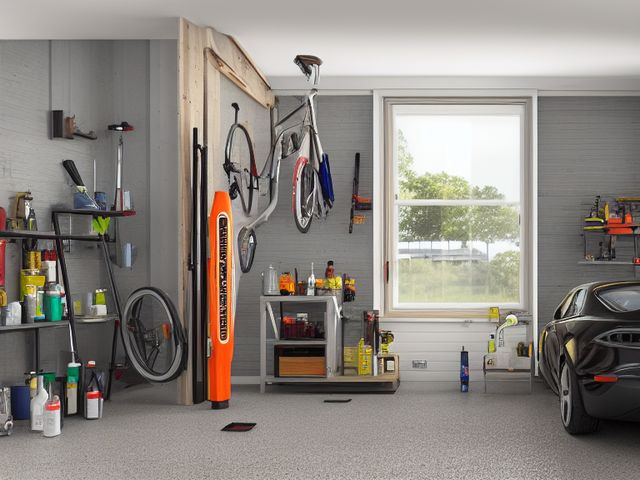
The car care supplies, in the Garage. Keeps the fluids, cables, and cleaning kit for the cars you actually own upright, labeled, and separate from everything the household touches. Every fluid bottle standing upright on a clean drip tray with its opened date written on the shoulder, jumper cables and tire gauge together in one bag by the door, rags in a closed metal can, and not a single bottle for a car nobody here drives.
One session: 45-75 min, most of it in Sort, reading labels bottle by bottle.
The short version
- Sort. Line every bottle up and read the label out loud
- Straighten. Fluids stand upright on a shallow drip tray at waist height
- Shine. Wipe every bottle shoulder and check the tray for the ring
- Safety. Petrol and any can that has ever held it stays out of the house envelope
- Standardize. Label the tray shelf with exactly what belongs on it, and mark every bottle
- Sustain. You already lift the bonnet to check the oil
Each step in full, with what to have on hand and what done looks like, below.
Where it is
Garage
7 micro zones, one session each
- 1The Primary Workbench
- 2The Hand Tool Wall and Cabinets
- 3The Power Tool and Battery Zone
- 4The Automotive Care Zone
- 5The Sports and Recreation Zone
- 6The Lawn and Garden Tool Zone
- 7The Bulk and Overhead Storage
What done looks like
Keeps the fluids, cables, and cleaning kit for the cars you actually own upright, labeled, and separate from everything the household touches.
- Every fluid bottle standing upright on a clean drip tray with its opened date written on the shoulder
- Jumper cables and tire gauge together in one bag by the door
- Rags in a closed metal can
- Not a single bottle for a car nobody here drives
What done looks like
Every fluid bottle standing upright on a clean drip tray with its opened date written on the shoulder, jumper cables and tire gauge together in one bag by the door, rags in a closed metal can, and not a single bottle for a car nobody here drives.
Common items here
- Fluid bottles, upright with opened dates
- Jumper cables and a tire gauge, bagged together
- Rags, in a closed metal can
Check these before you start
- Burn or firePetrol vapor pooling low near the water heater pilot, and polish or oil rags heating in a closed plastic bin.
- Poison, choke, or strangleAntifreeze tastes sweet, and a spilled puddle or a decanted unlabeled bottle will kill a dog or a curious child.
- Fall, cut, or crushA trolley jack stored still loaded, or a car held up on a jack with no axle stands under the sills.
Which of these is true here?
Match what you are actually seeing in the car care supplies to why it keeps happening, then start at the pass that fixes that, not the top of the list.
There are bottles here for a car we no longer own
- They were expensive and still half full, so nothing is decided. Confirm in 30 seconds: Pick up one piece. If your first thought is a verb (pay, sign, call, decide) rather than a place, it needs a decision, not a home. If that checks out, start at Sort.
- Nothing ever prompts a check of the shelf against the driveway. Confirm in 30 seconds: Name the moment it happens. If the answer is "when I get round to it", there is no trigger and it will not survive a bad week. If that checks out, start at Sustain.
- Bottles are unlabeled, so nobody can tell what fits what. Confirm in 30 seconds: Open the door and, without moving anything, name what is at the back. If you cannot, that stock is invisible. If that checks out, start at Straighten.
There is a sticky film or a puddle under the shelf
- Bottles are stored lying down or leaning. Confirm in 30 seconds: Ask two people in the house to describe this zone when it is finished. Two different answers means there is no standard to keep. If that checks out, start at Standardize.
- There is no tray, so a weep goes straight onto the slab. Confirm in 30 seconds: Ask where one specific item lives. If two people answer differently, or nobody answers, it has no home. If that checks out, start at Straighten.
- The shelf is too deep to reach the back of and wipe. Confirm in 30 seconds: Time how long it actually takes to reach and wipe the surface. If it requires moving something first, that cost is why it is skipped. If that checks out, start at Shine.
In an emergency I could not lay my hands on the jump leads
- Cables, gauge and torch are stored in three different places. Confirm in 30 seconds: Ask where one specific item lives. If two people answer differently, or nobody answers, it has no home. If that checks out, start at Straighten.
- They are at the back of the garage rather than by the door. Confirm in 30 seconds: Stand where you use it and count the steps to where it is kept. More than two is the wrong cabinet. If that checks out, start at Straighten.
- They are in a bag under something heavy. Confirm in 30 seconds: Fetch it once and count the movements. More than two and the storage is charging you rent every time. If that checks out, start at Straighten.
Something here is a fire or poisoning risk
- Oily rags are in an open or plastic bin. Confirm in 30 seconds: Look for the four: a blade your hand would meet, weight above shoulder height, heat beside something that burns, and an unsafe placement near a child's reach. If that checks out, start at Safety.
- Antifreeze has been decanted into an unlabeled container. Confirm in 30 seconds: Ask two people in the house to describe this zone when it is finished. Two different answers means there is no standard to keep. If that checks out, start at Standardize.
- Petrol or solvent is stored low near the water heater pilot. Confirm in 30 seconds: Stand where you use it and count the steps to where it is kept. More than two is the wrong cabinet. If that checks out, start at Straighten.
Only have 15 minutes? Stand every bottle upright on one wipeable tray, write today's date on the shoulder of each one you have opened, bin anything that fits no car on this driveway, and put the oily rags in a metal can with a lid. Victory: Every bottle upright and dated on one tray, nothing for a car you do not own, and the rags in a closed metal can.
The six passes, in order
Work them in this order. Sorting after you have arranged things means arranging things you were about to remove.
This zone's full kit list is below, after the method. Skim it first if you would rather gather everything before you start.
Sort
Decide what stays. Everything else leaves the zone now.
Line every bottle up and read the label out loud. Oil in a weight your current engine does not take, coolant for the van you sold, and the half bottle whose label has soaked away into unreadable gray all come out of the row.
What to store it in, now that you know what you are keeping
Bins and shelves are for what Sort left behind, not a stand-in for it. Buying storage before sorting means buying a container for things you have not yet decided to keep.
Only if it applies to the car care supplies: 1 more
Not every home needs these for the car care supplies. Each one is here because some do, and the reason is next to it.
- Small Clear Lidded Bin ×4 Contain small loose items with visibility, in the Straighten, Standardize and Sustain passes. Do not overload; anchor wall-mounted or tall systems where required.
Straighten
Give what stays a home, placed where the hand actually reaches.
Fluids stand upright on a shallow drip tray at waist height, where a weeping cap shows as a ring rather than soaking into a shelf. Jumper cables, tire gauge, and lug wrench live together in one bag right by the door, because you go for those with a dead engine, in the dark, in a hurry.
Shine
Clean it, and use the cleaning to inspect what you cannot see when it is full.
Wipe every bottle shoulder and check the tray for the ring that says something is seeping. Wash the wash mitts and microfibre towels on their own, never with house laundry, so grit and old wax stay out of the good towels.
Surface by surface, all 7 of them, with what to use on each.
Safety
Make the zone safe for everybody who uses it, including the shortest person.
Petrol and any can that has ever held it stays out of the house envelope, capped tight, and never on a shelf near the water heater's pilot flame. Polish and oil rags go into a metal can with a lid, not the plastic bin.
Standardize
Write down the best way you know today, so it survives you forgetting.
Label the tray shelf with exactly what belongs on it, and mark every bottle with the month you opened it. Brake fluid pulls water out of the air and coolant goes off once the seal is broken, and the date is the only way you will ever know which is which.
Sustain
Attach the reset to something that already happens, so it keeps itself.
You already lift the bonnet to check the oil. While it is up, look along the tray for a fresh ring, and an empty bottle goes into the bin instead of back into the row. Twenty seconds, by whoever does the oil check. A ring on the tray is the leak signal, which is why the tray is pale, and the second check is ownership, because a bottle for a car nobody here drives has no reason to stay. Dates matter more here than anywhere, since brake fluid and coolant both change once opened.
The kit this zone called for
Everything above assumed you had these already. Types of thing, not brands: anything you already own that does the job is the right one to use.
- Concrete degreaser Shine Ventilate while working; keep off skin and eyes; never flush residue to a storm drain.
- Oil-absorbent granules Shine, Safety Sweep up and dispose of used granules as contaminated waste, never to a drain.
- Wire brush and scraper set Shine Wear eye protection; flying rust and grit is the reason this is a safety-glasses job.
- Self-closing oily rag can Safety, Sustain Oil-finish rags generate their own heat as they cure and can ignite with nothing touching them; the lid must fall shut on its own weight.
- Impact-rated safety glasses Safety Use rated protection appropriate to task.
- Color-coded microfiber cloth set ×12 Shine Wash by use color; avoid fabric softener.
- Neutral pH multi-surface cleaner Shine, Sustain Verify surface compatibility; lock around children and pets.
- Compact vacuum with attachments Shine Use appropriate attachment.
- Keep, Relocate, Donate, Recycle, Trash container set ×5 Sort Do not block exits.
- Portable cleaning caddy Straighten, Shine, Sustain Secure chemicals from children and pets.
- Portable label maker Standardize, Sustain Follow surface and adhesive guidance.
- Removable write-on labels Standardize Test on delicate finishes.
Only if it applies to the car care supplies: 6 more
- Reusable or disposable nitrile gloves Shine, Safety Use per product label.
- Stable household step stool Safety Use on level surfaces only.
- Anti-tip anchors and hardware Safety Install to manufacturer and wall-type requirements.
- Water-resistant permanent labels Standardize, Sustain Avoid irreplaceable surfaces.
- Shelf Location Label Set Standardize, Sustain Install and use according to product instructions.
- Moisture Absorber or Humidity Monitor Safety, Sustain Install and use according to product instructions.
The fluids for the car you no longer own
The hardest bottles here are the two thirds full ones. They cost real money, they have not gone off, and they fit nothing on your driveway. The rule is that every bottle must match a vehicle parked at this address, and no match means no keep. Offer them this week to the neighbor who drives that model, and take whatever is unclaimed to your council's household hazardous waste collection, never down a drain. Then write the opened date on every bottle from today onward, because the only reason this shelf grew this deep is that nobody could tell which ones were still good, so nothing was ever thrown out.
Cleaning it properly, surface by surface
Wipe every bottle shoulder and read the drip tray as you go, because the tray tells you what is seeping before the floor does. Car cloths and mitts wash on their own, never with the house laundry.
Work down, not across. Whatever comes off a high surface lands on the one below it, so cleaning the floor first means cleaning it twice.
Carry these in with you. Neutral pH multi-surface cleaner; Color-coded microfiber cloth set; Compact vacuum with attachments; Portable cleaning caddy; Oil-absorbent granules.
- The shelf of fluid bottles
Lift each bottle, wipe its shoulder and cap where oil and coolant weep down, and stand it back squarely on the tray with its dated shoulder facing out. - The shelf board under the bottles and tray
With the bottles and tray lifted off, wipe the shelf board itself with the neutral pH cleaner, lifting the greasy film and any fluid that has crept under the tray unseen. - The drip tray under the bottles
Slide the tray out, wipe it clean, and read what is on it as you go, since a fresh ring shows exactly which bottle has started to seep. - The jumper cables and tire gauge bag
Wipe the cable clamps and coil the leads back into their bag, then wipe the gauge before it goes in beside them. - The metal rag can
Wipe the outside of the can and check the lid closes flat, leaving the oily rags sealed inside it rather than loose on the shelf. - The wash mitts and microfibre towels
Wash the mitts and drying towels on their own load, never with house laundry, so old wax and grit stay out of clean fabric, and dry them fully before they go back. - The slab where the car parks and drips
Sweep the bay, then work oil-absorbent granules into any fresh spots on the concrete, leave them to draw the oil up, and sweep them off before wiping the area.
How to clean anything else in the house, surface by surface.
Inspect as you clean. Cleaning is the only time you see the zone empty, so use it.
- A fresh ring on the drip tray under one bottle, the sign it has started to seep.
- A sweet-smelling puddle anywhere on the slab, which is leaking antifreeze and deadly to a pet or a child.
- An oil stain spreading on the concrete under where the car sits, telling you the car itself is dropping fluid.
- A bottle whose printed label has washed or faded illegible, and any rust weeping from the base of the rag can.
The standard that keeps it fixed
Every fluid stands upright on the tray, wears an opened date, and belongs to a car on this driveway.
Reset trigger. When the bonnet is already up for the oil check, that is when the tray gets its look.
How much the car care supplies can actually hold
Every fluid bottle standing upright on a clean drip tray with its opened date written on the shoulder, jumper cables and tire gauge together in one bag by the door, rags in a closed metal can, and not a single bottle for a car nobody here drives.
The capacity test is not the shelf, it is the driveway: every bottle must match a vehicle parked at this address. The hard ones are always the two-thirds-full bottles, because they cost real money and have not gone off. They still fail the test. The rags are the other limit, and it is absolute: oily rags go in a closed metal can, never a plastic bin, because a pile of them generates its own heat. Run the honest count.
When this does not describe your car care supplies
The passes above describe the ordinary case. Plenty of real households are not ordinary, and the fix is not to skip the method, it is to run it against a different starting shape.
- You do no servicing yourself, only top-ups
- The zone shrinks to screenwash, oil, a tire gauge and the jump pack, and that is a complete zone rather than a deficient one. Do not keep a shelf of fluids for work you have decided you are not going to do; the garage that stores intentions is the one that runs out of room for cars.
- An electric vehicle
- Most of the fluid shelf simply does not apply, and the charging cable becomes the thing that needs a home: hung in a loop off the floor, not coiled on the slab where it gets driven over. Keep the tire gauge and the screenwash; an EV is heavier and goes through tires faster, not slower.
The rest of the garage
Each of these is one session on its own.
- The Primary Workbench
- The Hand Tool Wall and Cabinets
- The Power Tool and Battery Zone
- The Automotive Care Zone, you are here
- The Sports and Recreation Zone
- The Lawn and Garden Tool Zone
- The Bulk and Overhead Storage
The Garage in full, with what each of the 7 zones is for
The garage as a deck of 80 cards: the frictions people report in each zone, the root cause behind each one, and the timed action that clears it. Free to read or print.
Zones that do the same job, elsewhere in the house
Different room, different name, same real job. Each one is its own page because the room around it changes what actually works.
- The Finishing and Chemical Zone in the workshop
- The Detergent and Treatment Zone in the laundry room
- The Utility and Cleaning Zone in the laundry room
- The Cleaning and Utility Zone in the mudroom
- The Cleaning Equipment Zone in the hall closet
- The Cleaning Supply Zone in the hall closet
Related reading
- Is mail piling up on this exact surface?
- Is one spot in this zone always the one you skip?
- Moving three things to get to the one you need?
- Found a duplicate of something in this zone?
- Does something in this zone actually get used somewhere else?
Questions people ask about this zone
- How long does it take to reset the car care supplies?
- One session: 45-75 min, most of it in Sort, reading labels bottle by bottle.
- What does a finished car care supplies look like?
- Every fluid bottle standing upright on a clean drip tray with its opened date written on the shoulder, jumper cables and tire gauge together in one bag by the door, rags in a closed metal can, and not a single bottle for a car nobody here drives.
- What is the hardest call to make in the car care supplies?
- The hardest bottles here are the two thirds full ones. They cost real money, they have not gone off, and they fit nothing on your driveway. The rule is that every bottle must match a vehicle parked at this address, and no match means no keep. Offer them this week to the neighbor who drives that model, and take whatever is unclaimed to your council's household hazardous waste collection, never down a drain. Then write the opened date on every bottle from today onward, because the only reason this shelf grew this deep is that nobody could tell which ones were still good, so nothing was ever thrown out.
- How do you keep the car care supplies from getting cluttered again?
- Every fluid stands upright on the tray, wears an opened date, and belongs to a car on this driveway. When the bonnet is already up for the oil check, that is when the tray gets its look.
- What do you need to clean the car care supplies?
- Neutral pH multi-surface cleaner; Color-coded microfiber cloth set; Compact vacuum with attachments; Portable cleaning caddy; Oil-absorbent granules.
- What do you clean first in the car care supplies?
- The shelf of fluid bottles. Lift each bottle, wipe its shoulder and cap where oil and coolant weep down, and stand it back squarely on the tray with its dated shoulder facing out.
- Is there a burn or fire risk in the car care supplies?
- Petrol vapor pooling low near the water heater pilot, and polish or oil rags heating in a closed plastic bin.
- Is there a poison, choke, or strangle risk in the car care supplies?
- Antifreeze tastes sweet, and a spilled puddle or a decanted unlabeled bottle will kill a dog or a curious child.
- Is there a fall, cut, or crush risk in the car care supplies?
- A trolley jack stored still loaded, or a car held up on a jack with no axle stands under the sills.
- Why does the car care supplies do this: There are bottles here for a car we no longer own?
- They were expensive and still half full, so nothing is decided, so start at Sort; Nothing ever prompts a check of the shelf against the driveway, so start at Sustain; Bottles are unlabeled, so nobody can tell what fits what, so start at Straighten.
- Why does the car care supplies do this: There is a sticky film or a puddle under the shelf?
- Bottles are stored lying down or leaning, so start at Standardize; There is no tray, so a weep goes straight onto the slab, so start at Straighten; The shelf is too deep to reach the back of and wipe, so start at Shine.
- Why does the car care supplies do this: In an emergency I could not lay my hands on the jump leads?
- Cables, gauge and torch are stored in three different places, so start at Straighten; They are at the back of the garage rather than by the door, so start at Straighten; They are in a bag under something heavy, so start at Straighten.
- Why does the car care supplies do this: Something here is a fire or poisoning risk?
- Oily rags are in an open or plastic bin, so start at Safety; Antifreeze has been decanted into an unlabeled container, so start at Standardize; Petrol or solvent is stored low near the water heater pilot, so start at Straighten.
When you want it off the screen
Carry The Automotive Care Zone into the room
The method above is complete and free. The Whole House Print Pack puts The Automotive Care Zone and the other 113 micro zones on 684 printable cards, so the steps you just read are not stuck behind a phone screen while your hands are full.
The Print Pack, 19 dollarsJust this zone, 4 dollarsOr draw a card free
The Automotive Care Zone on its own is 4 dollars for 6 cards. All 114 micro zones is 19 dollars for 684. The whole house is the better buy; the single zone is here so you can take only what you are working on.
If The Automotive Care Zone keeps fighting back, the real problem usually sits somewhere else in the room. A one hour virtual consult is 250 dollars: we find the function, the friction and the root cause together, and you keep a written standard for the space.
See what a consult covers, 250 dollars
Not ready to pay for that either? Ask which zone first, free