Garage micro zone
The Bulk and Overhead Storage
The bulk and overhead storage, in the Garage. Holds the things you genuinely need once or twice a year, high up and out of the way, without becoming the place decisions go to hide. Every overhead bin labeled in letters you can read standing on the slab, a last-opened month and year on the end of each one, the heaviest bins on the lowest rack, nothing overhanging the parking bay, and a small map taped beside the light switch.
One session: 60-90 min, most of it in Sort, and every bin has to come down to the floor to be judged.
The short version
- Sort. Bring the bins down to the floor before you judge them
- Straighten. Heavy bins go on the lowest rack and light bulky things, folding chairs
- Shine. Wipe the lids, the depth of dust on an overhead lid tells you exactly how
- Safety. Nothing goes overhead that you cannot lift down with both hands on a stable ladder
- Standardize. Every bin gets a large label you can read from the slab plus the month
- Sustain. The moment a bin is on the floor with its lid off
Each step in full, with what to have on hand and what done looks like, below.
Where it is
Garage
7 micro zones, one session each
- 1The Primary Workbench
- 2The Hand Tool Wall and Cabinets
- 3The Power Tool and Battery Zone
- 4The Automotive Care Zone
- 5The Sports and Recreation Zone
- 6The Lawn and Garden Tool Zone
- 7The Bulk and Overhead Storage
What done looks like
Holds the things you genuinely need once or twice a year, high up and out of the way, without becoming the place decisions go to hide.
- Every overhead bin labeled in letters you can read standing on the slab
- A last-opened month and year on the end of each one
- The heaviest bins on the lowest rack
- Nothing overhanging the parking bay
+ 1 more on this page
What done looks like
Every overhead bin labeled in letters you can read standing on the slab, a last-opened month and year on the end of each one, the heaviest bins on the lowest rack, nothing overhanging the parking bay, and a small map taped beside the light switch.
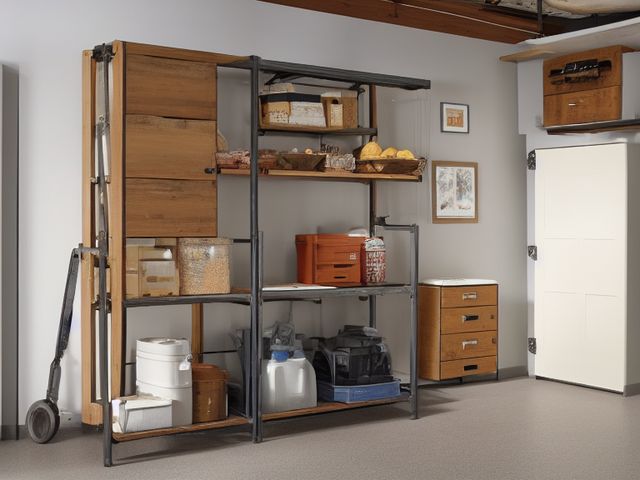
Common items here
- Overhead bins, labeled and dated
- Heaviest bins, on the lowest rack
- A map taped beside the light switch
Check these before you start
- FallWorking from a ladder rocking on a sloped slab, or coming down with a bin in both arms and no free hand for the stile.
- Fall, cut, or crushAn overloaded rack, or bins stacked so they overhang the rails directly above where people get in and out of a car.
Which of these is true here?
Match what you are actually seeing in the bulk and overhead storage to why it keeps happening, then start at the pass that fixes that, not the top of the list.
I have to get a ladder and open three bins to find one thing
- Labels are too small to read standing on the slab. Confirm in 30 seconds: Open the door and, without moving anything, name what is at the back. If you cannot, that stock is invisible. If that checks out, start at Straighten.
- Bins are grouped by what things are, not by when they come down. Confirm in 30 seconds: Ask two people in the house to describe this zone when it is finished. Two different answers means there is no standard to keep. If that checks out, start at Standardize.
- There is no map by the light switch. Confirm in 30 seconds: Fetch it once and count the movements. More than two and the storage is charging you rent every time. If that checks out, start at Straighten.
There are bins up there nobody has opened in years
- Nothing records when each bin was last opened. Confirm in 30 seconds: Name the moment it happens. If the answer is "when I get round to it", there is no trigger and it will not survive a bad week. If that checks out, start at Sustain.
- They hold things kept for what they represent. Confirm in 30 seconds: Ask if you would buy this again today for what it does. If the answer is no but you still cannot decide, the hold is sentimental. If that checks out, start at Sort.
- They hold a decision that has been postponed by putting it up high. Confirm in 30 seconds: Pick up one piece. If your first thought is a verb (pay, sign, call, decide) rather than a place, it needs a decision, not a home. If that checks out, start at Sort.
Getting a bin down is a two-person job, or a risky one
- The heaviest bins are on the highest rack. Confirm in 30 seconds: Look for the four: a blade your hand would meet, weight above shoulder height, heat beside something that burns, and an unsafe placement near a child's reach. If that checks out, start at Safety.
- Bins are packed to a weight nobody can lower at arm's length. Confirm in 30 seconds: Count what you used in the past month. If the honest number is a third of what is stored here, the space is not too small. If that checks out, start at Sort.
- There is no stable ladder, so a chair or a bumper gets used. Confirm in 30 seconds: Have the shortest person who uses this zone fetch what they need daily. If they climb, reach overhead, or ask for help, the height is wrong. If that checks out, start at Safety.
Something up there overhangs where the car parks
- The rack was loaded past its own footprint. Confirm in 30 seconds: Put back only what belongs here. If it still will not close, or still stacks four deep, the capacity is the problem, not the habit. If that checks out, start at Sort.
- Nothing marks how far the bins may come forward. Confirm in 30 seconds: Ask two people in the house to describe this zone when it is finished. Two different answers means there is no standard to keep. If that checks out, start at Standardize.
- It has been like that so long nobody sees it when parking. Confirm in 30 seconds: Ask someone who does not live here to name what looks out of place. If they see it instantly and you had stopped noticing, this is the cause. If that checks out, start at Sort.
Only have 15 minutes? Relabel every overhead bin in letters you can read standing on the slab, write the month and year on the end of each one you open, move the heaviest bins to the lowest rack, and tape a map of what is where beside the light switch. Victory: Labels readable from the floor, a date on every bin, the heaviest ones lowest, and a map by the light switch.
The six passes, in order
Work them in this order. Sorting after you have arranged things means arranging things you were about to remove.
This zone's full kit list is below, after the method. Skim it first if you would rather gather everything before you start.
Sort
Decide what stays. Everything else leaves the zone now.
Bring the bins down to the floor before you judge them, because nobody sorts honestly from the third step of a ladder with one arm through a lid. Start with the holiday bin that has not come down in three Decembers and the box marked "misc".
What to store it in, now that you know what you are keeping
Bins and shelves are for what Sort left behind, not a stand-in for it. Buying storage before sorting means buying a container for things you have not yet decided to keep.
Only if it applies to the bulk and overhead storage: 3 more
Not every home needs these for the bulk and overhead storage. Each one is here because some do, and the reason is next to it.
- Garden Tool Caddy Contain small garden tools and supplies, in the Straighten, Standardize and Sustain passes. Do not overload; anchor wall-mounted or tall systems where required.
- Large Clear Latching Bin ×2 Contain seasonal, garage, and bulk items, in the Straighten, Standardize and Sustain passes. Do not overload; anchor wall-mounted or tall systems where required.
- Hose Reel Control garden hose and protect walkways, in the Straighten, Standardize and Sustain passes. Do not overload; anchor wall-mounted or tall systems where required.
Straighten
Give what stays a home, placed where the hand actually reaches.
Heavy bins go on the lowest rack and light bulky things, folding chairs and the artificial tree, go highest. Group by the time of year they come down, so one December trip up the ladder brings the lights, the tree, and the wrapping bin down together.
Shine
Clean it, and use the cleaning to inspect what you cannot see when it is full.
Wipe the lids. The depth of dust on an overhead lid tells you exactly how many years it has been since anything came out of that bin. While you are up there, look at the rack underside and the ceiling above it for the brown stain that means the roof is letting water in.
Surface by surface, all 8 of them, with what to use on each.
Safety
Make the zone safe for everybody who uses it, including the shortest person.
Nothing goes overhead that you cannot lift down with both hands on a stable ladder, and nothing you might need in the dark or in a hurry. Check that the rack bolts land in joists, not just in the plasterboard, and that loaded bins sit fully inside the rails rather than overhanging the roof of a parked car.
Standardize
Write down the best way you know today, so it survives you forgetting.
Every bin gets a large label you can read from the slab plus the month and year it was last opened. A map taped beside the light switch says which bay holds what, so nobody climbs a ladder simply to find out.
Sustain
Attach the reset to something that already happens, so it keeps itself.
The moment a bin is on the floor with its lid off, write the new month and year on the end before it goes back up. Ten seconds with the marker that lives by the switch. The dates read from the slab, so slip is a bin whose newest date is two Decembers old, and that bin comes down at the next clear-out rather than being lifted straight back. Height protects the drift up here. Checking costs a ladder, so a bin can hold an unmade decision for years without anybody feeling it.
The kit this zone called for
Everything above assumed you had these already. Types of thing, not brands: anything you already own that does the job is the right one to use.
- Stable step ladder Shine, Safety Open fully and set level; never work from a ladder rocking on a sloped slab, and never carry a bin down without a hand for the stile.
- Impact-rated safety glasses Safety Use rated protection appropriate to task.
- Color-coded microfiber cloth set ×12 Shine Wash by use color; avoid fabric softener.
- Neutral pH multi-surface cleaner Shine, Sustain Verify surface compatibility; lock around children and pets.
- Compact vacuum with attachments Shine Use appropriate attachment.
- Keep, Relocate, Donate, Recycle, Trash container set ×5 Sort Do not block exits.
- Portable cleaning caddy Straighten, Shine, Sustain Secure chemicals from children and pets.
- Portable label maker Standardize, Sustain Follow surface and adhesive guidance.
- Removable write-on labels Standardize Test on delicate finishes.
Only if it applies to the bulk and overhead storage: 6 more
- Extendable duster Shine Use from the floor rather than climbing where you can; wear eye protection under overhead dust.
- Stable household step stool Safety Use on level surfaces only.
- Anti-tip anchors and hardware Safety Install to manufacturer and wall-type requirements.
- Water-resistant permanent labels Standardize, Sustain Avoid irreplaceable surfaces.
- Shelf Location Label Set Standardize, Sustain Install and use according to product instructions.
- Moisture Absorber or Humidity Monitor Safety, Sustain Install and use according to product instructions.
The box you have never opened
There is at least one box up there that moved in with you and has not been opened since. You keep it because opening it costs an afternoon and might cost more than that. Here is what settles it. Bring it down, open it on the floor with three things beside you: a rubbish sack, a donation box, and one empty container. Whatever you truly want to keep has to fit inside that single container and has to have a living person's name attached to it. Anything you cannot name an owner for goes today. Do not tape it up and send it back overhead, because a box that goes back unopened has just bought itself another five years and taught the rack that this is allowed.
Cleaning it properly, surface by surface
The depth of dust on a lid tells you how long a bin has sat untouched. While you are up there, read the roof deck above the rack for the brown stain that means water is getting in.
Work down, not across. Whatever comes off a high surface lands on the one below it, so cleaning the floor first means cleaning it twice.
Carry these in with you. Compact vacuum with attachments; Color-coded microfiber cloth set; Neutral pH multi-surface cleaner; Portable cleaning caddy; Extendable duster; Stable step ladder.
- The roof deck and ceiling above the rack
From a stable step, wipe the underside of the roof deck and the ceiling above the rack and clear the cobwebs, so a new stain would show against clean board. - The rack frame and its underside
Wipe the rails and the underside of the rack with a damp cloth, working the settled dust off the steel. - The rack shelf decks under the bins
Once a level is cleared, wipe the plywood or wire deck the bins sit on with a damp cloth, since grit ground under a base scratches the bin and hides damp. - The bin lids
Dust each lid with an extendable duster or a cloth, noting the depth of dust as you go, since it tells you how many years since anything came out of that bin. - The bin exteriors and labels
Wipe the bin sides and the label face so the letters read from the slab, and update the last-opened month if you have opened one. - The rack uprights and bolt plates
Wipe down the uprights and clear the grit from the bolt plates where the rack meets the wall and the ceiling. - The slab under the parking bay edge
Sweep and vacuum the floor under the rack, especially the strip right at the edge of the parking bay. - The garage door panels, its tracks, and the rollers
Door fully DOWN and the opener unplugged before your hands go anywhere near it, and never touch the spring above the door or the cables at its ends: those hold enough stored energy to kill and are a job for a fitter. Wash the panels with neutral pH multi-surface cleaner and rinse from the top down. Wipe the tracks out with a cloth rather than greasing them, because grease in a track collects grit and jams the rollers; the rollers, hinges and the opener's own rail are what get a light lubricant, following the maker's instructions.
How to clean anything else in the house, surface by surface.
Inspect as you clean. Cleaning is the only time you see the zone empty, so use it.
- A brown water stain spreading on the roof deck, the rack underside, or the ceiling, the sign the roof is letting water in.
- A bin gone soft, stained, or damp at its base, and any musty smell when you lift a lid.
- Rust, or a bend or sag, in a rack upright or a rail carrying the load.
- A rack bolt that has drawn part-way out of its hole, or that lands in plasterboard rather than a joist, and rodent droppings sitting on a lid.
The standard that keeps it fixed
Every overhead bin is labeled to be read from the slab and carries the date it was last opened.
Reset trigger. When a bin comes down, the new date goes on the end of it before it goes back up.
How much the bulk and overhead storage can actually hold
Every overhead bin labeled in letters you can read standing on the slab, a last-opened month and year on the end of each one, the heaviest bins on the lowest rack, nothing overhanging the parking bay, and a small map taped beside the light switch.
The last-opened date is the capacity rule, and it is the most honest one in the house. A bin that has not been opened in two years is not storage, it is a decision nobody made, and adding another rack simply buys that decision more time. Nothing overhangs the parking bay, ever: a bin that clears the roof of the car today does not clear the next car, and the cost of being wrong is measured in windscreens or heads. Run the honest count.
When this does not describe your bulk and overhead storage
The passes above describe the ordinary case. Plenty of real households are not ordinary, and the fix is not to skip the method, it is to run it against a different starting shape.
- No overhead racks, only shelving or a loft hatch
- The labels and the dates do the same work on a shelf, and the map matters more, because a loft swallows things far more completely than a rack does. Keep the heaviest boxes at waist height, not overhead and not on the floor, because both ends of that range are where backs get hurt.
- Genuinely seasonal storage, such as decorations or camping
- Group by the occasion it comes down for rather than by what the things are, because that is how you will go looking for it. One bin that holds everything for one weekend beats four bins sorted by material, and the last-opened date will tell you honestly whether that weekend still happens.
The rest of the garage
Each of these is one session on its own.
- The Primary Workbench
- The Hand Tool Wall and Cabinets
- The Power Tool and Battery Zone
- The Automotive Care Zone
- The Sports and Recreation Zone
- The Lawn and Garden Tool Zone
- The Bulk and Overhead Storage, you are here
The Garage in full, with what each of the 7 zones is for
The garage as a deck of 80 cards: the frictions people report in each zone, the root cause behind each one, and the timed action that clears it. Free to read or print.
Zones that do the same job, elsewhere in the house
Different room, different name, same real job. Each one is its own page because the room around it changes what actually works.
- The Backstock and Bulk in the pantry
- The Diaper and Care Backstock in the nursery
- The Paper and Household Backstock in the hall closet
- The Supply Cabinet in the home office
Related reading
- Is the everyday item in this zone actually the easy one to reach?
- Found a duplicate of something in this zone?
- Moving three things to get to the one you need?
- Still does not fit, even after the honest count?
- Stuck on one item in this zone?
Questions people ask about this zone
- How long does it take to reset the bulk and overhead storage?
- One session: 60-90 min, most of it in Sort, and every bin has to come down to the floor to be judged.
- What does a finished bulk and overhead storage look like?
- Every overhead bin labeled in letters you can read standing on the slab, a last-opened month and year on the end of each one, the heaviest bins on the lowest rack, nothing overhanging the parking bay, and a small map taped beside the light switch.
- What is the hardest call to make in the bulk and overhead storage?
- There is at least one box up there that moved in with you and has not been opened since. You keep it because opening it costs an afternoon and might cost more than that. Here is what settles it. Bring it down, open it on the floor with three things beside you: a rubbish sack, a donation box, and one empty container. Whatever you truly want to keep has to fit inside that single container and has to have a living person's name attached to it. Anything you cannot name an owner for goes today. Do not tape it up and send it back overhead, because a box that goes back unopened has just bought itself another five years and taught the rack that this is allowed.
- How do you keep the bulk and overhead storage from getting cluttered again?
- Every overhead bin is labeled to be read from the slab and carries the date it was last opened. When a bin comes down, the new date goes on the end of it before it goes back up.
- What do you need to clean the bulk and overhead storage?
- Compact vacuum with attachments; Color-coded microfiber cloth set; Neutral pH multi-surface cleaner; Portable cleaning caddy; Extendable duster; Stable step ladder.
- What do you clean first in the bulk and overhead storage?
- The roof deck and ceiling above the rack. From a stable step, wipe the underside of the roof deck and the ceiling above the rack and clear the cobwebs, so a new stain would show against clean board.
- Is there a fall risk in the bulk and overhead storage?
- Working from a ladder rocking on a sloped slab, or coming down with a bin in both arms and no free hand for the stile.
- Is there a fall, cut, or crush risk in the bulk and overhead storage?
- An overloaded rack, or bins stacked so they overhang the rails directly above where people get in and out of a car.
- Why does the bulk and overhead storage do this: I have to get a ladder and open three bins to find one thing?
- Labels are too small to read standing on the slab, so start at Straighten; Bins are grouped by what things are, not by when they come down, so start at Standardize; There is no map by the light switch, so start at Straighten.
- Why does the bulk and overhead storage do this: There are bins up there nobody has opened in years?
- Nothing records when each bin was last opened, so start at Sustain; They hold things kept for what they represent, so start at Sort; They hold a decision that has been postponed by putting it up high, so start at Sort.
- Why does the bulk and overhead storage do this: Getting a bin down is a two-person job, or a risky one?
- The heaviest bins are on the highest rack, so start at Safety; Bins are packed to a weight nobody can lower at arm's length, so start at Sort; There is no stable ladder, so a chair or a bumper gets used, so start at Safety.
- Why does the bulk and overhead storage do this: Something up there overhangs where the car parks?
- The rack was loaded past its own footprint, so start at Sort; Nothing marks how far the bins may come forward, so start at Standardize; It has been like that so long nobody sees it when parking, so start at Sort.
When you want it off the screen
Carry The Bulk and Overhead Storage into the room
The method above is complete and free. The Whole House Print Pack puts The Bulk and Overhead Storage and the other 113 micro zones on 684 printable cards, so the steps you just read are not stuck behind a phone screen while your hands are full.
The Print Pack, 19 dollarsJust this zone, 4 dollarsOr draw a card free
The Bulk and Overhead Storage on its own is 4 dollars for 6 cards. All 114 micro zones is 19 dollars for 684. The whole house is the better buy; the single zone is here so you can take only what you are working on.
If The Bulk and Overhead Storage keeps fighting back, the real problem usually sits somewhere else in the room. A one hour virtual consult is 250 dollars: we find the function, the friction and the root cause together, and you keep a written standard for the space.
See what a consult covers, 250 dollars
Not ready to pay for that either? Ask which zone first, free