Hall Closet micro zone
The Paper and Household Backstock
The paper goods storage, in the Hall Closet. Keeps a reserve of paper goods, bulbs, and batteries so you never make a late-night emergency trip. Toilet roll in one clear bin with a card on the shelf edge reading "min 6, max 24". Bulbs in a labeled bin sorted by fitting. Batteries standing in their original packs in a shallow tray, sizes readable without lifting one out. Every bin label facing the door.
One session: 30-45 min, most of it in Standardize, because writing honest minimum and maximum numbers is the work that lasts.
The short version
- Sort. Take the lot out, loose batteries you cannot vouch
- Straighten. Toilet roll goes into the clear bin loose so you can see the level drop
- Shine. Wipe the shelf and check the tray bottom for the white crust
- Safety. Loose batteries whose terminals touch metal or each other can short and heat
- Standardize. The minimum and maximum go on the shelf edge in front of each bin
- Sustain. Lifting the last toilet roll out of the bin is the moment you are below
Each step in full, with what to have on hand and what done looks like, below.
Where it is
Hall Closet
5 micro zones, one session each
- 1The Linen Shelf Zone
- 2The Cleaning Equipment Zone
- 3The Cleaning Supply Zone
- 4The Paper and Household Backstock
- 5The Seasonal and Guest Zone
What done looks like
Keeps a reserve of paper goods, bulbs, and batteries so you never make a late-night emergency trip.
- Toilet roll in one clear bin with a card on the shelf edge reading "min 6, max 24"
- Bulbs in a labeled bin sorted by fitting
- Batteries standing in their original packs in a shallow tray, sizes readable without lifting one out
- Every bin label facing the door
What done looks like
Toilet roll in one clear bin with a card on the shelf edge reading "min 6, max 24". Bulbs in a labeled bin sorted by fitting. Batteries standing in their original packs in a shallow tray, sizes readable without lifting one out. Every bin label facing the door.
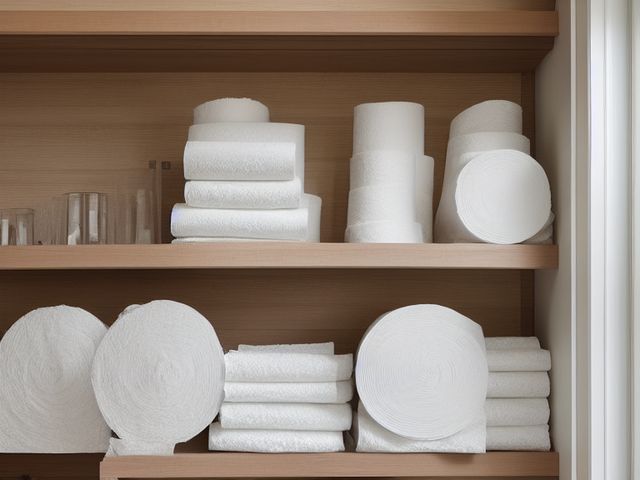
Common items here
- Toilet paper
- Light bulbs, grouped by fitting
- Batteries, sorted by size
What belongs, and what strays in
Belongs here:
- Toilet roll, in one clear bin with its min/max card on the shelf edge
- Light bulbs, in a labeled bin sorted by fitting
- Batteries, standing in their original packs in a shallow tray
Strays in and should leave:
- A loose battery you cannot vouch for
- A bulb for a fitting you replaced when you went over to LED
- A bulk paper towel pack too big to lift down alone
Check these before you start
- Poison, choke, or strangleButton cells and loose AAAs rolling to the closet floor where a small child finds them at eye level.
- Fall, cut, or crushA shrink-wrapped bulk pack of paper towel stored above head height slides free the moment you tug the corner of it.
Which of these is true here?
Match what you are actually seeing in the paper goods storage to why it keeps happening, then start at the pass that fixes that, not the top of the list.
A warehouse pack of paper towels bought on a deal is too big to fit in its bin, so it sits blocking the shelf instead
- There was no written maximum before the deal, so nothing stopped you buying it. Confirm in 30 seconds: Ask two people in the house to describe this zone when it is finished. Two different answers means there is no standard to keep. If that checks out, start at Standardize.
- The bulk price felt like a saving even though it's more than the shelf's job needs. Confirm in 30 seconds: Count what you used in the past month. If the honest number is a third of what is stored here, the space is not too small. If that checks out, start at Sort.
- You can't see how much is already on the shelf before you buy more. Confirm in 30 seconds: Open the door and, without moving anything, name what is at the back. If you cannot, that stock is invisible. If that checks out, start at Straighten.
A pack of bulbs at the back of this shelf is for a fitting the house replaced with LED two years ago, and nobody noticed until now
- Nothing gets dated or labeled with the fitting when it arrives, so an outdated pack looks the same as a current one. Confirm in 30 seconds: Find the last one of something you use daily. If nothing tells you it is the last one, you will find out at the worst possible moment. If that checks out, start at Standardize.
- The oldest stock is buried behind the newest because new stock goes in at the front. Confirm in 30 seconds: Name the moment it happens. If the answer is "when I get round to it", there is no trigger and it will not survive a bad week. If that checks out, start at Sustain.
- This shelf gets restocked but never audited, so it just accumulates. Confirm in 30 seconds: Ask who resets this zone. If the honest answer is "whoever gets to it" or two names with no agreement, there is no owner. If that checks out, start at Sustain.
Loose AAA batteries have rolled off a low shelf and are sitting on the closet floor at a small child's eye level
- Batteries get tipped in loose instead of standing upright in a tray, so a knock sends them rolling. Confirm in 30 seconds: Ask two people in the house to describe this zone when it is finished. Two different answers means there is no standard to keep. If that checks out, start at Standardize.
- This bin sits low enough for a small child to reach without help. Confirm in 30 seconds: Look for the four: a blade your hand would meet, weight above shoulder height, heat beside something that burns, and an unsafe placement near a child's reach. If that checks out, start at Safety.
- Nobody's swept this shelf floor since the last time this happened. Confirm in 30 seconds: Ask who resets this zone. If the honest answer is "whoever gets to it" or two names with no agreement, there is no owner. If that checks out, start at Sustain.
Only have 15 minutes? Take the lot out. Loose batteries you cannot vouch for, bulbs for fittings you replaced when you went over to LED, and the bulk paper towel pack too big to lift down alone all leave now. Victory: Every battery is in its original pack, every bulb fits a fitting the house still uses, and nothing on the shelf is too heavy to lift down alone.
The six passes, in order
Work them in this order. Sorting after you have arranged things means arranging things you were about to remove.
This zone's full kit list is below, after the method. Skim it first if you would rather gather everything before you start.
Sort
Decide what stays. Everything else leaves the zone now.
Take the lot out. Loose batteries you cannot vouch for, bulbs for fittings you replaced when you went over to LED, and the bulk paper towel pack too big to lift down alone all leave now.
What to store it in, now that you know what you are keeping
Bins and shelves are for what Sort left behind, not a stand-in for it. Buying storage before sorting means buying a container for things you have not yet decided to keep.
Only if it applies to the paper goods storage: 3 more
Not every home needs these for the paper goods storage. Each one is here because some do, and the reason is next to it.
- Toilet Paper Reserve Holder Hold a controlled visible reserve, in the Straighten, Standardize and Sustain passes. Do not overload; anchor wall-mounted or tall systems where required.
- Medicine Bin Set Group medicines by purpose and user, in the Straighten, Standardize and Sustain passes. Do not overload; anchor wall-mounted or tall systems where required.
- Lockable Medicine Box Secure prescriptions or high-risk products, in the Straighten, Standardize and Sustain passes. Do not overload; anchor wall-mounted or tall systems where required.
Straighten
Give what stays a home, placed where the hand actually reaches.
Toilet roll goes into the clear bin loose so you can see the level drop, bulbs stay in their boxes grouped by fitting, and batteries stand upright in a shallow tray by size so you read AAA from AA without picking one up. Heaviest packs at waist height, every label turned to the door.
Shine
Clean it, and use the cleaning to inspect what you cannot see when it is full.
Wipe the shelf and check the tray bottom for the white crust that means a cell has leaked. Press the underside of paper packs stored against a cold outside wall to feel for damp before you restock them.
Surface by surface, all 6 of them, with what to use on each.
Safety
Make the zone safe for everybody who uses it, including the shortest person.
Loose batteries whose terminals touch metal or each other can short and heat up, and a button cell dropped on a closet floor is exactly the size a toddler swallows. Keep cells in their packs, tape the terminals of any loose 9-volt, and store nothing at floor level here.
Standardize
Write down the best way you know today, so it survives you forgetting.
The minimum and maximum go on the shelf edge in front of each bin, not in your head. Below the minimum puts it on the shopping list; at the maximum you stop buying it regardless of the offer.
Sustain
Attach the reset to something that already happens, so it keeps itself.
Lifting the last toilet roll out of the bin is the moment you are below the minimum, and it goes on the list before you leave the hallway, which is ten seconds. The min and max cards on the shelf edge do the deciding, so nobody holds a number in their head, and at the maximum you stop buying regardless of the offer. Slip is a bin below its card, readable from the doorway because every label faces the door. The failure here is silence, since everybody takes the last one and almost nobody mentions it.
The kit this zone called for
Everything above assumed you had these already. Types of thing, not brands: anything you already own that does the job is the right one to use.
- Color-coded microfiber cloth set ×12 Shine Wash by use color; avoid fabric softener.
- Neutral pH multi-surface cleaner Shine, Sustain Verify surface compatibility; lock around children and pets.
- Compact vacuum with attachments Shine Use appropriate attachment.
- Keep, Relocate, Donate, Recycle, Trash container set ×5 Sort Do not block exits.
- Portable cleaning caddy Straighten, Shine, Sustain Secure chemicals from children and pets.
- Portable label maker Standardize, Sustain Follow surface and adhesive guidance.
- Removable write-on labels Standardize Test on delicate finishes.
Only if it applies to the paper goods storage: 4 more
- Min-Max Inventory Label Standardize, Sustain Install and use according to product instructions.
- Stable household step stool Safety Use on level surfaces only.
- Shelf Location Label Set Standardize, Sustain Install and use according to product instructions.
- Moisture Absorber or Humidity Monitor Safety, Sustain Install and use according to product instructions.
The offer that made you buy twelve
Bulk buying feels thrifty right up to the point where a warehouse pack blocks the shelf and you buy more anyway because you cannot see past it. Set your maximum as the number that fits inside the bin without stacking above the rim, then hold it: if a deal will not fit the bin, the deal is not for you. And date each pack with a marker as it arrives, pulling the oldest first. Undated bulk is where the saving quietly expires.
Cleaning it properly, surface by surface
This reserve sits untouched for weeks, which is exactly how a leaked battery or a damp pack goes unnoticed. Wiping the shelf is really a chance to catch both while the bins are out.
Work down, not across. Whatever comes off a high surface lands on the one below it, so cleaning the floor first means cleaning it twice.
Carry these in with you. Compact vacuum with attachments; Color-coded microfiber cloth set; Neutral pH multi-surface cleaner; Portable cleaning caddy.
- The shelf boards, top down
Clear each shelf, vacuum the dust and any cardboard flecks a pack has shed, then wipe the board with neutral cleaner and dry it before the bins go back. - The clear toilet-roll bin
Lift the bin out and tip the paper dust and cardboard bits from the bottom corners, then wipe it inside and out so the 'min 6, max 24' card on the shelf edge stays readable through the side. - The bulb bin
Empty the bin and wipe it out with a barely damp cloth, then set the bulbs back sorted by fitting, keeping the cloth away from the contacts and metal bases as you handle them. - The battery tray
Lift the shallow tray out and wipe the bottom, watching for a white crust, then dry it before the packs stand back in it with their sizes facing the door. - The paper packs and the wall behind them
Press the underside of each pack stored against the cold outside wall to feel for damp, and wipe the wall itself where condensation beads before you restock against it. - The closet floor
Vacuum and wipe the floor, keeping the habit of storing nothing down here so a rolled-away cell or a dropped bulb shows up at once.
How to clean anything else in the house, surface by surface.
Inspect as you clean. Cleaning is the only time you see the zone empty, so use it.
- A white or crusty powder in the battery tray, or on the terminals of a loose cell, is a leaked battery. Flag it as you find it.
- A battery that has puffed up or split its wrapper in the pack. Note it before it goes back among the good ones.
- A paper pack that feels soft or damp on its underside, and a wall behind it that reads cold and wet, point to condensation off the outside wall or a slow leak. Flag it.
- A spare bulb with a darkened base or a loose rattle inside is already spent. Note it rather than reshelving it as a working spare.
The standard that keeps it fixed
Every bin carries a minimum and maximum on the shelf edge, stock is dated with a marker on arrival, and the oldest pack is pulled first.
Reset trigger. When you take the last roll or the last pack of bulbs out of a bin, the restock goes on the shopping list on that same trip to the closet.
How much the paper goods storage can actually hold
Toilet roll in one clear bin with a card on the shelf edge reading its minimum and maximum, bulbs in a labeled bin sorted by fitting, and batteries standing in their original packs in a shallow tray with the sizes readable without lifting one out.
If the bin is over its maximum, the maximum was wrong or the buying was, and the card is where you settle that rather than the shelf. A reserve with no ceiling is a stockpile, and a stockpile is just floor you are renting. Run the honest count.
When this does not describe your paper goods storage
The passes above describe the ordinary case. Plenty of real households are not ordinary, and the fix is not to skip the method, it is to run it against a different starting shape.
- Little storage, so backstock has to be small
- Lower the maximum and raise the minimum, so the reorder point does the work the shelf cannot. The card matters more in a small house, because there is no room to absorb a mistake.
- Bulk buying because of distance or cost
- Keep this zone at its ceiling and put the genuine bulk somewhere else, labeled. This shelf exists to answer one question at nine at night, and it can only answer it while the count is readable.
The rest of the hall closet
Each of these is one session on its own.
- The Linen Shelf Zone
- The Cleaning Equipment Zone
- The Cleaning Supply Zone
- The Paper and Household Backstock, you are here
- The Seasonal and Guest Zone
The Hall Closet in full, with what each of the 5 zones is for
The hall closet as a deck of 58 cards: the frictions people report in each zone, the root cause behind each one, and the timed action that clears it. Free to read or print.
Zones that do the same job, elsewhere in the house
Different room, different name, same real job. Each one is its own page because the room around it changes what actually works.
- The File Storage in the home office
- The Backstock and Bulk in the pantry
- The Diaper and Care Backstock in the nursery
- The Bulk and Overhead Storage in the garage
- The Supply Cabinet in the home office
Related reading
- Does this zone keep running out of something?
- Before you buy storage for this zone
- Does everyone in the house agree what "done" looks like here?
- Found a duplicate of something in this zone?
- Why this zone gets messy again
Questions people ask about this zone
- How long does it take to reset the paper goods storage?
- One session: 30-45 min, most of it in Standardize, because writing honest minimum and maximum numbers is the work that lasts.
- What does a finished paper goods storage look like?
- Toilet roll in one clear bin with a card on the shelf edge reading "min 6, max 24". Bulbs in a labeled bin sorted by fitting. Batteries standing in their original packs in a shallow tray, sizes readable without lifting one out. Every bin label facing the door.
- What is the hardest call to make in the paper goods storage?
- Bulk buying feels thrifty right up to the point where a warehouse pack blocks the shelf and you buy more anyway because you cannot see past it. Set your maximum as the number that fits inside the bin without stacking above the rim, then hold it: if a deal will not fit the bin, the deal is not for you. And date each pack with a marker as it arrives, pulling the oldest first. Undated bulk is where the saving quietly expires.
- How do you keep the paper goods storage from getting cluttered again?
- Every bin carries a minimum and maximum on the shelf edge, stock is dated with a marker on arrival, and the oldest pack is pulled first. When you take the last roll or the last pack of bulbs out of a bin, the restock goes on the shopping list on that same trip to the closet.
- What do you need to clean the paper goods storage?
- Compact vacuum with attachments; Color-coded microfiber cloth set; Neutral pH multi-surface cleaner; Portable cleaning caddy.
- What do you clean first in the paper goods storage?
- The shelf boards, top down. Clear each shelf, vacuum the dust and any cardboard flecks a pack has shed, then wipe the board with neutral cleaner and dry it before the bins go back.
- Is there a poison, choke, or strangle risk in the paper goods storage?
- Button cells and loose AAAs rolling to the closet floor where a small child finds them at eye level.
- Is there a fall, cut, or crush risk in the paper goods storage?
- A shrink-wrapped bulk pack of paper towel stored above head height slides free the moment you tug the corner of it.
- Why does the paper goods storage do this: A warehouse pack of paper towels bought on a deal is too big to fit in its bin, so it sits blocking the shelf instead?
- There was no written maximum before the deal, so nothing stopped you buying it, so start at Standardize; The bulk price felt like a saving even though it's more than the shelf's job needs, so start at Sort; You can't see how much is already on the shelf before you buy more, so start at Straighten.
- Why does the paper goods storage do this: A pack of bulbs at the back of this shelf is for a fitting the house replaced with LED two years ago, and nobody noticed until now?
- Nothing gets dated or labeled with the fitting when it arrives, so an outdated pack looks the same as a current one, so start at Standardize; The oldest stock is buried behind the newest because new stock goes in at the front, so start at Sustain; This shelf gets restocked but never audited, so it just accumulates, so start at Sustain.
- Why does the paper goods storage do this: Loose AAA batteries have rolled off a low shelf and are sitting on the closet floor at a small child's eye level?
- Batteries get tipped in loose instead of standing upright in a tray, so a knock sends them rolling, so start at Standardize; This bin sits low enough for a small child to reach without help, so start at Safety; Nobody's swept this shelf floor since the last time this happened, so start at Sustain.
When you want it off the screen
Carry The Paper and Household Backstock into the room
The method above is complete and free. The Whole House Print Pack puts The Paper and Household Backstock and the other 113 micro zones on 684 printable cards, so the steps you just read are not stuck behind a phone screen while your hands are full.
The Print Pack, 19 dollarsJust this zone, 4 dollarsOr draw a card free
The Paper and Household Backstock on its own is 4 dollars for 6 cards. All 114 micro zones is 19 dollars for 684. The whole house is the better buy; the single zone is here so you can take only what you are working on.
If The Paper and Household Backstock keeps fighting back, the real problem usually sits somewhere else in the room. A one hour virtual consult is 250 dollars: we find the function, the friction and the root cause together, and you keep a written standard for the space.
See what a consult covers, 250 dollars
Not ready to pay for that either? Ask which zone first, free