Primary Bedroom micro zone
The Bed and Bedding Zone
The bed and bedding, in the Primary Bedroom. The bed and the linens on it have one job, which is to get you through the night without waking up. Bed made the same way every morning: fitted sheet, flat sheet or duvet, two sleeping pillows per person, one throw folded at the foot. Two complete sheet sets for this bed, one on it and one folded on the linen shelf. Under the bed holds either nothing or two labeled flat bins, and you can walk from either side of the bed to the door without stepping over anything.
One session: 30-45 min, most of it in Sort, once you pull everything out from under the bed.
The short version
- Sort. Strip the bed and pull out everything underneath it
- Straighten. Store each sheet set folded inside one of its own pillowcases
- Shine. With the mattress bare, vacuum the whole surface
- Safety. Nothing goes under the bed that sticks out into the strip of floor you cross
- Standardize. Write down what a made bed means in this house
- Sustain. Make the bed before you leave the room
Each step in full, with what to have on hand and what done looks like, below.
Where it is
Primary Bedroom
6 micro zones, one session each
- 1The Bed and Bedding Zone
- 2Your Own Nightstand
- 3The Other Sleeper's Nightstand
- 4The Dresser Top
- 5The Dresser Drawers
- 6The Primary Closet
What done looks like
The bed and the linens on it have one job, which is to get you through the night without waking up.
- Bed made the same way every morning: fitted sheet, flat sheet or duvet, two sleeping pillows per person, one throw folded at the foot
- Two complete sheet sets for this bed, one on it and one folded on the linen shelf
- Under the bed holds either nothing or two labeled flat bins, and you can walk from either side of the bed to the door without stepping over anything
What done looks like
Bed made the same way every morning: fitted sheet, flat sheet or duvet, two sleeping pillows per person, one throw folded at the foot. Two complete sheet sets for this bed, one on it and one folded on the linen shelf. Under the bed holds either nothing or two labeled flat bins, and you can walk from either side of the bed to the door without stepping over anything.
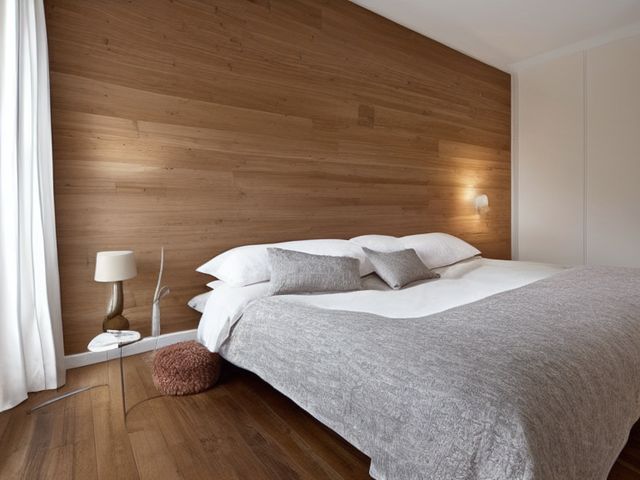
Common items here
- Fitted sheet, flat sheet or duvet
- Two sleeping pillows per person
- One throw, folded at the foot
- Two complete sheet sets, one on the bed and one on the shelf
What belongs, and what strays in
Belongs here:
- Bed made the same way every morning: fitted sheet, flat sheet or duvet, two sleeping pillows per person
- One throw, folded at the foot
- Two complete sheet sets, one on the bed and one folded on the linen shelf
- Under the bed, either nothing or two labeled flat bins
Strays in and should leave:
- Sheets worn thin at the hip
- Blankets gone pilled and scratchy
- Pillows that stay folded in half when you bend them
- Spare sheets kept for a guest who never comes
Check these before you start
- FallStorage bins, shoes and a charging cable in the strip of floor between the bed and the door are what your foot finds at three in the morning on the way to the bathroom. Keep that strip bare.
- Fall, cut, or crushFramed pictures, a speaker or a stack of books on a headboard ledge or hung on the wall above the pillows sit directly over a sleeping head. Move them, or fix them into the wall properly.
Which of these is true here?
Match what you are actually seeing in the bed and bedding to why it keeps happening, then start at the pass that fixes that, not the top of the list.
There are three or more sheet sets stacked on the linen shelf, including the good set you have never actually put on the bed
- One was a wedding gift and letting it go feels like refusing the person who gave it. Confirm in 30 seconds: Ask if you would buy this again today for what it does. If the answer is no but you still cannot decide, the hold is sentimental. If that checks out, start at Sort.
- The honest number is one on, one clean, but nobody has ever said that out loud as the rule. Confirm in 30 seconds: Ask two people in the house to describe this zone when it is finished. Two different answers means there is no standard to keep. If that checks out, start at Standardize.
- A set that has stood on the shelf that long stops registering as more than the bed actually needs. Confirm in 30 seconds: Ask someone who does not live here to name what looks out of place. If they see it instantly and you had stopped noticing, this is the cause. If that checks out, start at Sort.
There is a storage bin, a pair of shoes, or a charging cable sitting in the strip of floor between the bed and the door
- The cable has nowhere else it is supposed to live once it reaches this side of the room. Confirm in 30 seconds: Ask where one specific item lives. If two people answer differently, or nobody answers, it has no home. If that checks out, start at Straighten.
- It is what your foot finds at three in the morning, and that risk outranks the two seconds it takes to leave it there. Confirm in 30 seconds: Look for the four: a blade your hand would meet, weight above shoulder height, heat beside something that burns, and an unsafe placement near a child's reach. If that checks out, start at Safety.
- Nothing marks the moment to clear that strip, so it only gets checked once someone trips. Confirm in 30 seconds: Name the moment it happens. If the answer is "when I get round to it", there is no trigger and it will not survive a bad week. If that checks out, start at Sustain.
A stack of books, a speaker, or a framed picture sits on a headboard shelf directly above the pillows
- It is weight sitting right over a sleeping head, and that outranks how it looks on the shelf. Confirm in 30 seconds: Look for the four: a blade your hand would meet, weight above shoulder height, heat beside something that burns, and an unsafe placement near a child's reach. If that checks out, start at Safety.
- Nobody has decided the shelf above the pillows is off limits to anything but the lamp. Confirm in 30 seconds: Ask two people in the house to describe this zone when it is finished. Two different answers means there is no standard to keep. If that checks out, start at Standardize.
- It has been up there since before anyone thought about what is underneath it, so the height stopped reading as a hazard. Confirm in 30 seconds: Ask someone who does not live here to name what looks out of place. If they see it instantly and you had stopped noticing, this is the cause. If that checks out, start at Sort.
Only have 15 minutes? Clear the floor strip between the bed and the door of anything sitting on it, and move any headboard-shelf item that is not the lamp off the shelf. Victory: The floor strip between the bed and the door is bare, and the headboard shelf above the pillows holds only the lamp.
The six passes, in order
Work them in this order. Sorting after you have arranged things means arranging things you were about to remove.
This zone's full kit list is below, after the method. Skim it first if you would rather gather everything before you start.
Sort
Decide what stays. Everything else leaves the zone now.
Strip the bed and pull out everything underneath it. Sheets worn thin at the hip, blankets gone pilled and scratchy, and pillows that stay folded in half when you bend them are finished; they leave as rags or textile recycling, not as spares for a guest who never comes.
What to store it in, now that you know what you are keeping
Bins and shelves are for what Sort left behind, not a stand-in for it. Buying storage before sorting means buying a container for things you have not yet decided to keep.
Only if it applies to the bed and bedding: 8 more
Not every home needs these for the bed and bedding. Each one is here because some do, and the reason is next to it.
- Under-Bed Storage Bin ×2 Use under-bed capacity without loose storage, in the Straighten, Standardize and Sustain passes. Do not overload; anchor wall-mounted or tall systems where required.
- Jewelry and Valet Tray Contain small personal items, in the Straighten, Standardize and Sustain passes. Do not overload; anchor wall-mounted or tall systems where required.
- Folding Laundry Basket ×3 Move clean laundry back to rooms, in the Straighten, Standardize and Sustain passes. Do not overload; anchor wall-mounted or tall systems where required.
- Laundry Hamper Sorter Separate laundry by household method, in the Straighten, Standardize and Sustain passes. Do not overload; anchor wall-mounted or tall systems where required.
- Over-Door Hook Rack Add reversible vertical storage, in the Straighten, Standardize and Sustain passes. Do not overload; anchor wall-mounted or tall systems where required.
- Remote Control Tray Create one visible home for controls, in the Straighten, Standardize and Sustain passes. Do not overload; anchor wall-mounted or tall systems where required.
- Charging Dock Create one controlled device charging home, in the Straighten, Standardize and Sustain passes. Do not overload; anchor wall-mounted or tall systems where required.
- Towel Shelf Basket ×3 Contain towels and linen sets, in the Straighten, Standardize and Sustain passes. Do not overload; anchor wall-mounted or tall systems where required.
Straighten
Give what stays a home, placed where the hand actually reaches.
Store each sheet set folded inside one of its own pillowcases so the flat sheet and the fitted sheet stop traveling separately, and keep this bed's linen on one shelf instead of stacked in with guest doubles and kid singles.
Shine
Clean it, and use the cleaning to inspect what you cannot see when it is full.
With the mattress bare, vacuum the whole surface and the seam where the protector tucks under, then run the vacuum head down behind the headboard where dust and hair pack against the wall.
Surface by surface, all 8 of them, with what to use on each.
Safety
Make the zone safe for everybody who uses it, including the shortest person.
Nothing goes under the bed that sticks out into the strip of floor you cross in the dark, and nothing heavy sits on a headboard shelf directly above where your head rests.
Standardize
Write down the best way you know today, so it survives you forgetting.
Write down what a made bed means in this house, down to how many pillows go on and whether the duvet is folded back or pulled flat, so it looks the same on the mornings you do it and the mornings someone else does. A standard is the best way you know today, written down.
Sustain
Attach the reset to something that already happens, so it keeps itself.
Make the bed before you leave the room, while the duvet is still thrown back and it takes one pull. In a two person bed it belongs to whoever gets up second, worth agreeing out loud once rather than negotiating every morning. The cover is the signal: a made bed holds the agreed pillows and nothing else, so folded laundry on it means the bed has become a shelf. Recovery is thirty seconds and one armful. The window is short. Come back at ten and you are moving yesterday's clothes before you can start.
The kit this zone called for
Everything above assumed you had these already. Types of thing, not brands: anything you already own that does the job is the right one to use.
- Color-coded microfiber cloth set ×12 Shine Wash by use color; avoid fabric softener.
- Neutral pH multi-surface cleaner Shine, Sustain Verify surface compatibility; lock around children and pets.
- Compact vacuum with attachments Shine Use appropriate attachment.
- Keep, Relocate, Donate, Recycle, Trash container set ×5 Sort Do not block exits.
- Portable cleaning caddy Straighten, Shine, Sustain Secure chemicals from children and pets.
- Portable label maker Standardize, Sustain Follow surface and adhesive guidance.
- Removable write-on labels Standardize Test on delicate finishes.
The third sheet set
You are holding four or five sets because one was a wedding gift, one is new but scratchy, and one is the good set you have never slept on. Two per bed is the honest number: one on, one clean. Keep a third only if a child or a pet actually sleeps here and you have stripped this bed at two in the morning within the last year. Anything past three is a set you wash, fold, and never put on a bed. And the good one goes on tonight, because a sheet saved for an occasion is a sheet nobody ever uses.
Cleaning it properly, surface by surface
Strip it right back and clean what the sheets hide, working top down from the headboard to the bare mattress to the floor beneath. The surface most people skip is the strip of floor and wall behind the headboard, where dust and hair pack in unseen.
Work down, not across. Whatever comes off a high surface lands on the one below it, so cleaning the floor first means cleaning it twice.
Carry these in with you. Compact vacuum with attachments; Color-coded microfiber cloth set; Neutral pH multi-surface cleaner; Portable cleaning caddy; Laundry detergent for the stripped bedding.
- The headboard top edge and any shelf built into it
Dry microfiber first to lift the settled dust, then a cloth barely damp with the neutral pH cleaner, drying as you go so no moisture sits in the join or on the wood. - The wall and floor behind the headboard
Run the vacuum crevice tool down the gap where dust and hair pack against the wall, then draw a dry cloth down the skirting behind the frame. - The pillowcases, sheets, duvet cover and the folded throw
Strip them all off and send them to the wash, and pull the pillow protectors off too so the layer that sits against your face goes through the machine, not just the outer case. - The sleeping pillows and the duvet themselves
While the covers are off, plump each pillow and stand it on edge to air, and air the duvet over the footboard so it dries out rather than trapping the night's moisture. - The mattress face, the piped seams and the protector
With the mattress bare, vacuum the whole face with the upholstery tool, working the piped seams and any buttons where dust and skin flakes settle, then rotate or flip it end to end and vacuum the underside before the protector goes back on. - The bed frame rails, legs and slats
Wipe along the top of the rails and down the legs with a damp cloth, getting the inner faces of the slats you never see once the mattress is back down. - The floor under the bed and any storage bins
Pull the bins out, vacuum the full strip of floor and into the corners, and wipe the bin lids before they slide back. - The ceiling fan blades and the light fitting above the bed
Do this BEFORE you change the bed, never after, because everything you dislodge lands on the mattress. Fan off and still. Slide an old pillowcase over each blade, close it around the blade and pull it back towards you: the dust comes off inside the case instead of into the room, which is the whole trick. Then wipe each blade with a damp microfiber cloth and dry it, because a damp blade collects dust faster than a clean dry one. Do the light fitting and its shade last, working with a stable step, never the bed.
How to clean anything else in the house, surface by surface.
Inspect as you clean. Cleaning is the only time you see the zone empty, so use it.
- A yellowed patch or a dip formed on one side of the mattress, telling you the surface is wearing unevenly.
- Dark speckling or a musty note in the mattress seam, the first sign of a pest or trapped damp.
- A cool, damp feel or a mildew smell on the wall behind the headboard, which can mean moisture is coming through from outside.
- A bolt or joint on the frame worked loose enough to let a rail flex when you press on it.
The standard that keeps it fixed
Two sheet sets for this bed, each folded inside its own pillowcase; a made bed means the agreed pillow count and nothing else on the cover.
Reset trigger. When you strip the bed to wash the sheets, look underneath it before the clean set goes on.
How much the bed and bedding can actually hold
Two complete sheet sets for this bed, each folded inside its own pillowcase, plus two sleeping pillows per person and one throw. Under the bed holds nothing, or two labeled flat bins that slide out without lifting the frame.
A third set is honest only if a child or a pet actually sleeps here and you have stripped this bed at two in the morning within the last year. If the linen shelf will not hold two sets per bed in the house without you pressing them down, the shelf is undersized for the household, not badly kept. Run the honest count.
When this does not describe your bed and bedding
The passes above describe the ordinary case. Plenty of real households are not ordinary, and the fix is not to skip the method, it is to run it against a different starting shape.
- Two sleepers who disagree about temperature or duvet weight
- Two single duvets on one bed beats one shared duvet neither of you likes, and it counts as one set each rather than doubling the linen. Make the bed by laying both flat side by side instead of fighting one duvet square, which also drops the morning job back under two minutes.
- A platform bed, a divan with built-in drawers, or a frame too low for bins
- There is no under-bed strip to police, so that rule stops applying and the floor rule matters more: whatever used to go under the bed now has to live somewhere else entirely, not stacked against the wall in the walking strip. Built-in drawers count as storage with a fill line, one category each, the same as a chest.
The rest of the primary bedroom
Each of these is one session on its own.
- The Bed and Bedding Zone, you are here
- Your Own Nightstand
- The Other Sleeper's Nightstand
- The Dresser Top
- The Dresser Drawers
- The Primary Closet
The Primary Bedroom in full, with what each of the 6 zones is for
The primary bedroom as a deck of 66 cards: the frictions people report in each zone, the root cause behind each one, and the timed action that clears it. Free to read or print.
Zones that do the same job, elsewhere in the house
Different room, different name, same real job. Each one is its own page because the room around it changes what actually works.
- The Linen and Towel Storage in the primary bathroom
- The Guest Linen Zone in the guest bathroom
- The Linen Shelf Zone in the hall closet
- The Guest Bed and Linens in the guest bedroom
Related reading
- Stuck on one item in this zone?
- Why the standard above names one home per category
- Does everyone in the house agree what "done" looks like here?
- Have you stopped noticing the clutter in this zone?
- This zone's safety pass, in full
Questions people ask about this zone
- How long does it take to reset the bed and bedding?
- One session: 30-45 min, most of it in Sort, once you pull everything out from under the bed.
- What does a finished bed and bedding look like?
- Bed made the same way every morning: fitted sheet, flat sheet or duvet, two sleeping pillows per person, one throw folded at the foot. Two complete sheet sets for this bed, one on it and one folded on the linen shelf. Under the bed holds either nothing or two labeled flat bins, and you can walk from either side of the bed to the door without stepping over anything.
- What is the hardest call to make in the bed and bedding?
- You are holding four or five sets because one was a wedding gift, one is new but scratchy, and one is the good set you have never slept on. Two per bed is the honest number: one on, one clean. Keep a third only if a child or a pet actually sleeps here and you have stripped this bed at two in the morning within the last year. Anything past three is a set you wash, fold, and never put on a bed. And the good one goes on tonight, because a sheet saved for an occasion is a sheet nobody ever uses.
- How do you keep the bed and bedding from getting cluttered again?
- Two sheet sets for this bed, each folded inside its own pillowcase; a made bed means the agreed pillow count and nothing else on the cover. When you strip the bed to wash the sheets, look underneath it before the clean set goes on.
- What do you need to clean the bed and bedding?
- Compact vacuum with attachments; Color-coded microfiber cloth set; Neutral pH multi-surface cleaner; Portable cleaning caddy; Laundry detergent for the stripped bedding.
- What do you clean first in the bed and bedding?
- The headboard top edge and any shelf built into it. Dry microfiber first to lift the settled dust, then a cloth barely damp with the neutral pH cleaner, drying as you go so no moisture sits in the join or on the wood.
- Is there a fall risk in the bed and bedding?
- Storage bins, shoes and a charging cable in the strip of floor between the bed and the door are what your foot finds at three in the morning on the way to the bathroom. Keep that strip bare.
- Is there a fall, cut, or crush risk in the bed and bedding?
- Framed pictures, a speaker or a stack of books on a headboard ledge or hung on the wall above the pillows sit directly over a sleeping head. Move them, or fix them into the wall properly.
- Why does the bed and bedding do this: There are three or more sheet sets stacked on the linen shelf, including the good set you have never actually put on the bed?
- One was a wedding gift and letting it go feels like refusing the person who gave it, so start at Sort; The honest number is one on, one clean, but nobody has ever said that out loud as the rule, so start at Standardize; A set that has stood on the shelf that long stops registering as more than the bed actually needs, so start at Sort.
- Why does the bed and bedding do this: There is a storage bin, a pair of shoes, or a charging cable sitting in the strip of floor between the bed and the door?
- The cable has nowhere else it is supposed to live once it reaches this side of the room, so start at Straighten; It is what your foot finds at three in the morning, and that risk outranks the two seconds it takes to leave it there, so start at Safety; Nothing marks the moment to clear that strip, so it only gets checked once someone trips, so start at Sustain.
- Why does the bed and bedding do this: A stack of books, a speaker, or a framed picture sits on a headboard shelf directly above the pillows?
- It is weight sitting right over a sleeping head, and that outranks how it looks on the shelf, so start at Safety; Nobody has decided the shelf above the pillows is off limits to anything but the lamp, so start at Standardize; It has been up there since before anyone thought about what is underneath it, so the height stopped reading as a hazard, so start at Sort.
When you want it off the screen
Carry The Bed and Bedding Zone into the room
The method above is complete and free. The Whole House Print Pack puts The Bed and Bedding Zone and the other 113 micro zones on 684 printable cards, so the steps you just read are not stuck behind a phone screen while your hands are full.
The Print Pack, 19 dollarsJust this zone, 4 dollarsOr draw a card free
The Bed and Bedding Zone on its own is 4 dollars for 6 cards. All 114 micro zones is 19 dollars for 684. The whole house is the better buy; the single zone is here so you can take only what you are working on.
If The Bed and Bedding Zone keeps fighting back, the real problem usually sits somewhere else in the room. A one hour virtual consult is 250 dollars: we find the function, the friction and the root cause together, and you keep a written standard for the space.
See what a consult covers, 250 dollars
Not ready to pay for that either? Ask which zone first, free