Primary Bedroom micro zone
The Dresser Drawers, Primary Bedroom
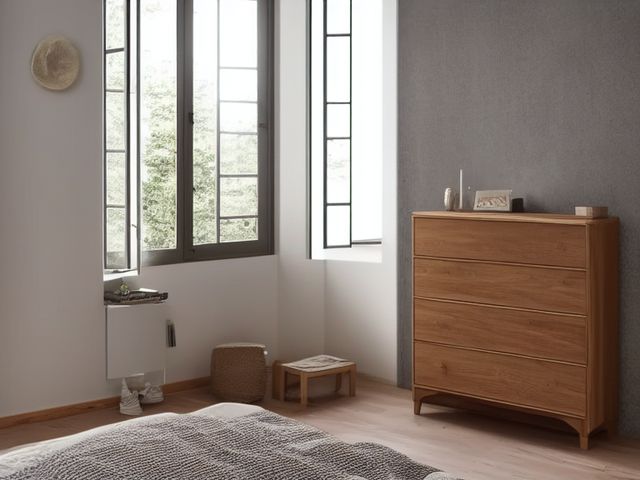
The dresser drawers, in the Primary Bedroom. These drawers hold the folded clothes you wear this season, split into categories you can find without digging. Each drawer holds one category: underwear and socks, sleepwear, t-shirts, workout clothes. Everything folded to stand upright so you read the whole drawer from above when it opens. A hand's width of free space in each drawer, and every drawer slides shut without you pressing anything down first.
One session: 60-90 min, most of it in Sort and refolding, working one drawer at a time.
The short version
- Sort. Tip one drawer at a time onto the bed
- Straighten. Fold everything so it stands on its edge
- Shine. Empty each drawer completely, vacuum the corners and the runners, wipe the base
- Safety. Open one drawer at a time
- Standardize. One category per drawer, and a hand's width of free space is the fill line
- Sustain. When clean laundry comes back to the bedroom it gets folded upright
Each step in full, with what to have on hand and what done looks like, below.
Where it is
Primary Bedroom
6 micro zones, one session each
- 1The Bed and Bedding Zone
- 2Your Own Nightstand
- 3The Other Sleeper's Nightstand
- 4The Dresser Top
- 5The Dresser Drawers
- 6The Primary Closet
What done looks like
These drawers hold the folded clothes you wear this season, split into categories you can find without digging.
- Each drawer holds one category: underwear and socks, sleepwear, t-shirts, workout clothes
- Everything folded to stand upright so you read the whole drawer from above when it opens
- A hand's width of free space in each drawer, and every drawer slides shut without you pressing anything down first
What done looks like
Each drawer holds one category: underwear and socks, sleepwear, t-shirts, workout clothes. Everything folded to stand upright so you read the whole drawer from above when it opens. A hand's width of free space in each drawer, and every drawer slides shut without you pressing anything down first.
Common items here
- Underwear and socks, one drawer
- Sleepwear, one drawer
- T-shirts, one drawer
- Workout clothes, one drawer
What belongs, and what strays in
Belongs here:
- One category per drawer: underwear and socks, sleepwear, t-shirts, workout clothes
- Clothes folded to stand upright, readable from above
- A hand's width of free space in each drawer
Strays in and should leave:
- A sock whose partner never turned up
- A waistband that has given up
- Workout tops beyond the two you actually wear
- A t-shirt from an event you no longer think about
Check these before you start
- Fall, cut, or crushTwo heavy drawers open at once, or a child climbing the open drawers like steps, is how a chest of drawers comes down on someone. One drawer at a time, heaviest clothes lowest, anti-tip strap fitted.
- Poison, choke, or strangleMothballs and cedar blocks rolling loose in a sock drawer look like sweets to a toddler standing at the open bottom drawer. Put them in a mesh bag hung at the back, or leave them out.
Which of these is true here?
Match what you are actually seeing in the dresser drawers to why it keeps happening, then start at the pass that fixes that, not the top of the list.
A drawer needs a shove or a press-down to close, and it is the one holding workout tops or t-shirts
- You own more of that category than you actually wear, six workout tops when you wear two. Confirm in 30 seconds: Count what you used in the past month. If the honest number is a third of what is stored here, the space is not too small. If that checks out, start at Sort.
- There is no fill line anyone is applying, so the drawer just absorbs more until it will not shut. Confirm in 30 seconds: Ask two people in the house to describe this zone when it is finished. Two different answers means there is no standard to keep. If that checks out, start at Standardize.
- The overflow only shows up as effort at closing time, so it is easy to keep ignoring until today. Confirm in 30 seconds: Ask someone who does not live here to name what looks out of place. If they see it instantly and you had stopped noticing, this is the cause. If that checks out, start at Sort.
Two of the drawers are part filled with clothes that do not fit you today
- You have not decided yet whether these come back, so they sit exactly where they always have instead of leaving the bedroom. Confirm in 30 seconds: Pick up one piece. If your first thought is a verb (pay, sign, call, decide) rather than a place, it needs a decision, not a home. If that checks out, start at Sort.
- They stayed in the main rotation of drawers instead of moving to a box elsewhere in the house, so there is no boundary marking them as separate. Confirm in 30 seconds: Stand where you use it and count the steps to where it is kept. More than two is the wrong cabinet. If that checks out, start at Straighten.
- Nobody has re-checked these drawers since your size changed; there was no moment that prompted it. Confirm in 30 seconds: Name the moment it happens. If the answer is "when I get round to it", there is no trigger and it will not survive a bad week. If that checks out, start at Sustain.
Mothballs or cedar blocks are rolling loose in the bottom of a sock or underwear drawer
- Loose in an open drawer, they look like candy to a toddler standing at drawer height, and that outranks the moth protection. Confirm in 30 seconds: Look for the four: a blade your hand would meet, weight above shoulder height, heat beside something that burns, and an unsafe placement near a child's reach. If that checks out, start at Safety.
- They have never been given their own mesh bag, so loose is just how they have always been stored. Confirm in 30 seconds: Ask where one specific item lives. If two people answer differently, or nobody answers, it has no home. If that checks out, start at Straighten.
- They have rolled around long enough, under the folded rows, that nobody notices them as loose anymore. Confirm in 30 seconds: Ask someone who does not live here to name what looks out of place. If they see it instantly and you had stopped noticing, this is the cause. If that checks out, start at Sort.
Only have 15 minutes? Open the drawer that needs a shove to close and pull one full category's worth of overflow out right now: extra workout tops, a wrong-size stack, or loose mothballs, whichever is worst. Victory: Every drawer closes without being pressed down, and a hand's width of free space shows in each one.
The six passes, in order
Work them in this order. Sorting after you have arranged things means arranging things you were about to remove.
This zone's full kit list is below, after the method. Skim it first if you would rather gather everything before you start.
Sort
Decide what stays. Everything else leaves the zone now.
Tip one drawer at a time onto the bed. Out go socks whose partners never turned up, waistbands that have given up, the six workout tops you own when you wear two, and the t-shirts from events you no longer think about. Anything stained or holed becomes a rag or textile recycling rather than a donation somebody else has to bin.
What to store it in, now that you know what you are keeping
Bins and shelves are for what Sort left behind, not a stand-in for it. Buying storage before sorting means buying a container for things you have not yet decided to keep.
Only if it applies to the dresser drawers: 6 more
Not every home needs these for the dresser drawers. Each one is here because some do, and the reason is next to it.
- Jewelry and Valet Tray Contain small personal items, in the Straighten, Standardize and Sustain passes. Do not overload; anchor wall-mounted or tall systems where required.
- Folding Laundry Basket ×3 Move clean laundry back to rooms, in the Straighten, Standardize and Sustain passes. Do not overload; anchor wall-mounted or tall systems where required.
- Laundry Hamper Sorter Separate laundry by household method, in the Straighten, Standardize and Sustain passes. Do not overload; anchor wall-mounted or tall systems where required.
- Remote Control Tray Create one visible home for controls, in the Straighten, Standardize and Sustain passes. Do not overload; anchor wall-mounted or tall systems where required.
- Drawer Divider Set Create visible subcategories in shallow drawers, in the Straighten, Standardize and Sustain passes. Do not overload; anchor wall-mounted or tall systems where required.
- Small Clear Lidded Bin ×4 Contain small loose items with visibility, in the Straighten, Standardize and Sustain passes. Do not overload; anchor wall-mounted or tall systems where required.
Straighten
Give what stays a home, placed where the hand actually reaches.
Fold everything so it stands on its edge and the drawer reads like a row of files instead of a stack you excavate. Put dividers in for socks and underwear so the small things stop sliding under the folded rows, and move the heaviest categories, jeans and knitwear, into the bottom drawers.
Shine
Clean it, and use the cleaning to inspect what you cannot see when it is full.
Empty each drawer completely, vacuum the corners and the runners, wipe the base, and let it dry before anything goes back in. While it is out, check the runners and tighten any screw that has worked loose.
Surface by surface, all 5 of them, with what to use on each.
Safety
Make the zone safe for everybody who uses it, including the shortest person.
Open one drawer at a time. Two loaded drawers out together pulls the weight far enough forward to tip the whole chest, and a child using the open drawers as steps does it faster.
Standardize
Write down the best way you know today, so it survives you forgetting.
One category per drawer, and a hand's width of free space is the fill line. When a drawer needs pressing to close, that category has outgrown its drawer and one item comes out the same day.
Sustain
Attach the reset to something that already happens, so it keeps itself.
When clean laundry comes back to the bedroom it gets folded upright and into the drawer then, by whoever carried the basket up, rather than living in a stack until the weekend. Ten minutes for a load. The fill line measures it, a hand's width of free space, so a drawer you press to close is a category that has outgrown its drawer. Recovery is one item leaving that day. The trap is that the dresser top is right there: a stack on it is twenty seconds cheaper than the drawer, and it costs a week.
The kit this zone called for
Everything above assumed you had these already. Types of thing, not brands: anything you already own that does the job is the right one to use.
- Color-coded microfiber cloth set ×12 Shine Wash by use color; avoid fabric softener.
- Neutral pH multi-surface cleaner Shine, Sustain Verify surface compatibility; lock around children and pets.
- Compact vacuum with attachments Shine Use appropriate attachment.
- Keep, Relocate, Donate, Recycle, Trash container set ×5 Sort Do not block exits.
- Portable cleaning caddy Straighten, Shine, Sustain Secure chemicals from children and pets.
- Portable label maker Standardize, Sustain Follow surface and adhesive guidance.
- Removable write-on labels Standardize Test on delicate finishes.
Only if it applies to the dresser drawers: 2 more
- Small detail brush set Shine Use surface-safe bristles.
- Anti-tip anchors and hardware Safety Install to manufacturer and wall-type requirements.
The size you are not right now
Two of these drawers are part filled with clothes that do not fit today, so every morning starts with a small unpleasant reminder instead of a clean choice. Take them out of the bedroom entirely. One box, not two, today's date written on the lid, stored somewhere else in the house. If that box is still sealed a year from now it leaves sealed, and you do not look inside, because looking is how it all comes back. These drawers dress the body you have this morning. That is not giving up on anything. It is refusing to open a drawer and be told off by it every day.
Cleaning it properly, surface by surface
Pull each drawer right out, because the grit that makes a drawer stick lives under it and in the runner, not inside it. Empty, vacuum, wipe, dry, then refold back in.
Work down, not across. Whatever comes off a high surface lands on the one below it, so cleaning the floor first means cleaning it twice.
Carry these in with you. Compact vacuum with attachments; Small detail brush set; Color-coded microfiber cloth set; Neutral pH multi-surface cleaner; Portable cleaning caddy.
- The inside of each drawer
Lift each drawer out completely, vacuum the corners and the folds of any liner, and wipe the base with a barely damp cloth, letting it dry fully before clothes return. - The runners and tracks
Work the small detail brush along the metal runners and into the track, lifting the grit that makes a drawer stick and then jump when it is shoved shut, then wipe them clean. - The carcass interior behind the drawers
With the drawers out, vacuum inside the empty frame and the back panel where dust and stray socks gather. - The drawer fronts and the label edge
Wipe the fronts and the inside front edge where the category names are written. - The folded contents as you reload
This is not a wash, but as each stack goes back, shake it out and confirm nothing has been living in it.
How to clean anything else in the house, surface by surface.
Inspect as you clean. Cleaning is the only time you see the zone empty, so use it.
- A runner screw backed out, or a runner bent so the drawer drops at one corner.
- A drawer base panel bowing or splitting under the weight it carries.
- A musty or damp smell in the empty drawer, or a tide line low on the back panel.
- Moth casings, grazed holes in a folded wool item, or crumbled cedar that mean pests have been at work.
The standard that keeps it fixed
One category per drawer, folded to stand upright, and a hand's width of free space kept as the fill line.
Reset trigger. When the laundry basket comes back up to the bedroom, it gets folded into the drawers before you put the empty basket down.
How much the dresser drawers can actually hold
One category per drawer, folded to stand upright so you read the whole drawer from above, with a hand's width of free space kept as the fill line and the heaviest clothes in the bottom drawers.
If every drawer holds one category, everything is folded upright, and there is still no hand's width free, the chest is genuinely too small for the clothes you wear this season. That is a capacity fact rather than a folding failure, and it is answered by moving one category to a closet shelf, not by pressing the drawer shut. Run the honest count.
When this does not describe your dresser drawers
The passes above describe the ordinary case. Plenty of real households are not ordinary, and the fix is not to skip the method, it is to run it against a different starting shape.
- Two people share one chest of drawers
- Split it by person first and by category second, whole drawers each, never half a drawer each. A drawer with a line down the middle collapses within a fortnight because neither person can see where their own half ends, and one category per person per drawer is the only split that survives a busy week.
- A child, or anyone seated, uses these drawers
- The reachable drawers are the middle ones rather than the top, so the categories used most often move down to where the hand arrives without stretching or climbing. That also settles the safety question, because the reason a child climbs a drawer at all is that what they need is above them.
The rest of the primary bedroom
Each of these is one session on its own.
- The Bed and Bedding Zone
- Your Own Nightstand
- The Other Sleeper's Nightstand
- The Dresser Top
- The Dresser Drawers, you are here
- The Primary Closet
The Primary Bedroom in full, with what each of the 6 zones is for
The primary bedroom as a deck of 66 cards: the frictions people report in each zone, the root cause behind each one, and the timed action that clears it. Free to read or print.
The same zone in another room
The primary bedroom is not the only room in this house with this zone. They do not do the same job, which is why each has its own page rather than one page pretending the rooms are interchangeable.
Zones that do the same job, elsewhere in the house
Different room, different name, same real job. Each one is its own page because the room around it changes what actually works.
Related reading
- Before you buy storage for this zone
- Is mail piling up on this exact surface?
- Have you stopped noticing the clutter in this zone?
- Why the standard above names one home per category
- Does everyone in the house agree what "done" looks like here?
Questions people ask about this zone
- How long does it take to reset the dresser drawers?
- One session: 60-90 min, most of it in Sort and refolding, working one drawer at a time.
- What does a finished dresser drawers look like?
- Each drawer holds one category: underwear and socks, sleepwear, t-shirts, workout clothes. Everything folded to stand upright so you read the whole drawer from above when it opens. A hand's width of free space in each drawer, and every drawer slides shut without you pressing anything down first.
- What is the hardest call to make in the dresser drawers?
- Two of these drawers are part filled with clothes that do not fit today, so every morning starts with a small unpleasant reminder instead of a clean choice. Take them out of the bedroom entirely. One box, not two, today's date written on the lid, stored somewhere else in the house. If that box is still sealed a year from now it leaves sealed, and you do not look inside, because looking is how it all comes back. These drawers dress the body you have this morning. That is not giving up on anything. It is refusing to open a drawer and be told off by it every day.
- How do you keep the dresser drawers from getting cluttered again?
- One category per drawer, folded to stand upright, and a hand's width of free space kept as the fill line. When the laundry basket comes back up to the bedroom, it gets folded into the drawers before you put the empty basket down.
- What do you need to clean the dresser drawers?
- Compact vacuum with attachments; Small detail brush set; Color-coded microfiber cloth set; Neutral pH multi-surface cleaner; Portable cleaning caddy.
- What do you clean first in the dresser drawers?
- The inside of each drawer. Lift each drawer out completely, vacuum the corners and the folds of any liner, and wipe the base with a barely damp cloth, letting it dry fully before clothes return.
- Is there a fall, cut, or crush risk in the dresser drawers?
- Two heavy drawers open at once, or a child climbing the open drawers like steps, is how a chest of drawers comes down on someone. One drawer at a time, heaviest clothes lowest, anti-tip strap fitted.
- Is there a poison, choke, or strangle risk in the dresser drawers?
- Mothballs and cedar blocks rolling loose in a sock drawer look like sweets to a toddler standing at the open bottom drawer. Put them in a mesh bag hung at the back, or leave them out.
- Why does the dresser drawers do this: A drawer needs a shove or a press-down to close, and it is the one holding workout tops or t-shirts?
- You own more of that category than you actually wear, six workout tops when you wear two, so start at Sort; There is no fill line anyone is applying, so the drawer just absorbs more until it will not shut, so start at Standardize; The overflow only shows up as effort at closing time, so it is easy to keep ignoring until today, so start at Sort.
- Why does the dresser drawers do this: Two of the drawers are part filled with clothes that do not fit you today?
- You have not decided yet whether these come back, so they sit exactly where they always have instead of leaving the bedroom, so start at Sort; They stayed in the main rotation of drawers instead of moving to a box elsewhere in the house, so there is no boundary marking them as separate, so start at Straighten; Nobody has re-checked these drawers since your size changed; there was no moment that prompted it, so start at Sustain.
- Why does the dresser drawers do this: Mothballs or cedar blocks are rolling loose in the bottom of a sock or underwear drawer?
- Loose in an open drawer, they look like candy to a toddler standing at drawer height, and that outranks the moth protection, so start at Safety; They have never been given their own mesh bag, so loose is just how they have always been stored, so start at Straighten; They have rolled around long enough, under the folded rows, that nobody notices them as loose anymore, so start at Sort.
When you want it off the screen
Carry The Dresser Drawers into the room
The method above is complete and free. The Whole House Print Pack puts The Dresser Drawers and the other 113 micro zones on 684 printable cards, so the steps you just read are not stuck behind a phone screen while your hands are full.
The Print Pack, 19 dollarsJust this zone, 4 dollarsOr draw a card free
The Dresser Drawers on its own is 4 dollars for 6 cards. All 114 micro zones is 19 dollars for 684. The whole house is the better buy; the single zone is here so you can take only what you are working on.
If The Dresser Drawers keeps fighting back, the real problem usually sits somewhere else in the room. A one hour virtual consult is 250 dollars: we find the function, the friction and the root cause together, and you keep a written standard for the space.
See what a consult covers, 250 dollars
Not ready to pay for that either? Ask which zone first, free