Laundry Room micro zone
The Washer and Dryer
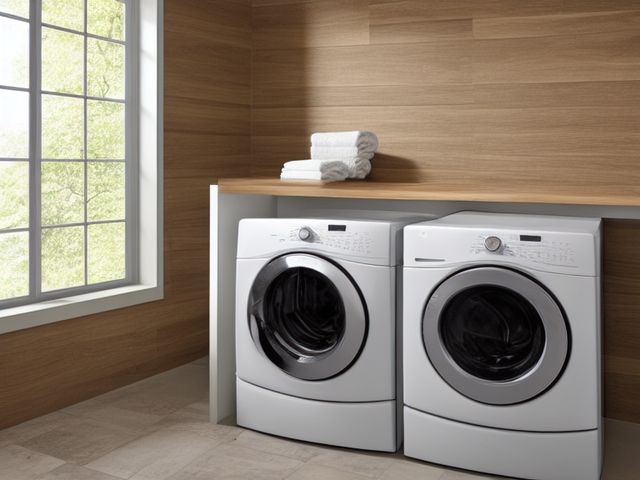
The washer and dryer, in the Laundry Room. Run loads reliably, and stay maintained well enough that the machines are never the reason laundry stops. Both drums empty with the washer door propped ajar, nothing at all sitting on either lid, a clean lint screen back in its slot, and a strip of masking tape on the side of the dryer with the month you last cleared the duct written on it.
One session: 45-75 min, most of it behind the machines, where the duct and the fill hoses live.
The short version
- Sort. Clear the tops of both machines and the inside of both drums
- Straighten. Machine lids carry nothing, put the vent brush
- Shine. Lift the folds of the door gasket and wipe out the coins, hairpins
- Safety. Clear the lint screen every single load
- Standardize. Write the month on masking tape stuck to the side of the dryer each time
- Sustain. When the dryer buzzer sounds the lint screen gets cleared before the door closes again
Each step in full, with what to have on hand and what done looks like, below.
Where it is
Laundry Room
6 micro zones, one session each
- 1The Washer and Dryer
- 2The Detergent and Treatment Zone
- 3The Sorting and Hamper Zone
- 4The Folding Surface
- 5The Hanging and Air-Dry Zone
- 6The Utility and Cleaning Zone
What done looks like
Run loads reliably, and stay maintained well enough that the machines are never the reason laundry stops.
- Both drums empty with the washer door propped ajar
- Nothing at all sitting on either lid
- A clean lint screen back in its slot
- A strip of masking tape on the side of the dryer with the month you last cleared the duct written on it
What done looks like
Both drums empty with the washer door propped ajar, nothing at all sitting on either lid, a clean lint screen back in its slot, and a strip of masking tape on the side of the dryer with the month you last cleared the duct written on it.
Common items here
- A vent brush and a pack of machine cleaner tablets, on the shelf above
- The lint screen, clean and back in its slot
- A strip of masking tape on the dryer, dated
Check these before you start
- Burn or fireLint packed in the duct behind the dryer, and lint on the heating element side of the screen housing. This is the highest heat and the most fuel in any indoor room outside the kitchen.
- Water and electricityRubber fill hoses that have gone hard or bulged at the collar, sitting a hand's width from a wall outlet. A split hose sprays under pressure and does not stop until you reach the tap.
- Fall, cut, or crushA machine that walks across the floor on an unbalanced spin because a foot is not level, and the sharp sheet metal edge underneath when you tilt it back to check.
Which of these is true here?
Match what you are actually seeing in the washer and dryer to why it keeps happening, then start at the pass that fixes that, not the top of the list.
Washing sits in the drum long enough to smell, and gets rewashed
- Nothing marks the moment a cycle ends. Confirm in 30 seconds: Name the moment it happens. If the answer is "when I get round to it", there is no trigger and it will not survive a bad week. If that checks out, start at Sustain.
- Whoever starts a load is not the one who moves it. Confirm in 30 seconds: Ask who resets this zone. If the honest answer is "whoever gets to it" or two names with no agreement, there is no owner. If that checks out, start at Sustain.
- The door is shut between loads, so the drum never dries out. Confirm in 30 seconds: Ask two people in the house to describe this zone when it is finished. Two different answers means there is no standard to keep. If that checks out, start at Standardize.
The dryer takes two or three cycles to dry one load
- The lint screen goes back in without being cleared. Confirm in 30 seconds: Ask two people in the house to describe this zone when it is finished. Two different answers means there is no standard to keep. If that checks out, start at Standardize.
- Nothing records when the duct was last cleared. Confirm in 30 seconds: Name the moment it happens. If the answer is "when I get round to it", there is no trigger and it will not survive a bad week. If that checks out, start at Sustain.
- The duct behind the machine is crushed, kinked or packed with lint. Confirm in 30 seconds: Look for the four: a blade your hand would meet, weight above shoulder height, heat beside something that burns, and an unsafe placement near a child's reach. If that checks out, start at Safety.
There is always something sitting on top of the machines
- The lids are the nearest flat surface in the room. Confirm in 30 seconds: Ask where one specific item lives. If two people answer differently, or nobody answers, it has no home. If that checks out, start at Straighten.
- The folding counter is covered, so things migrate here. Confirm in 30 seconds: Put back only what belongs here. If it still will not close, or still stacks four deep, the capacity is the problem, not the habit. If that checks out, start at Sort.
- Nobody ever agreed the lids stay bare. Confirm in 30 seconds: Ask two people in the house to describe this zone when it is finished. Two different answers means there is no standard to keep. If that checks out, start at Standardize.
Only have 15 minutes? Empty both drums, take everything off both lids, clear the lint screen and put it back, prop the washer door ajar, and write this month on a strip of tape on the side of the dryer. Victory: Both drums empty, both lids bare, the door propped open, and a date on the dryer you can read from the doorway.
The six passes, in order
Work them in this order. Sorting after you have arranged things means arranging things you were about to remove.
This zone's full kit list is below, after the method. Skim it first if you would rather gather everything before you start.
Sort
Decide what stays. Everything else leaves the zone now.
Clear the tops of both machines and the inside of both drums. The single sock behind the agitator, the hardened box of dryer sheets, the bottle of softener you stopped using: all of it comes off the machines now rather than being shuffled sideways.
What to store it in, now that you know what you are keeping
Bins and shelves are for what Sort left behind, not a stand-in for it. Buying storage before sorting means buying a container for things you have not yet decided to keep.
Only if it applies to the washer and dryer: 7 more
Not every home needs these for the washer and dryer. Each one is here because some do, and the reason is next to it.
- Drying Rack Air-dry delicate or non-dryer items, in the Straighten, Standardize and Sustain passes. Do not overload; anchor wall-mounted or tall systems where required.
- Chemical Storage Bin ×2 Separate and contain household chemicals, in the Straighten, Standardize and Sustain passes. Do not overload; anchor wall-mounted or tall systems where required.
- Wall Hook Rail Create labeled hanging homes, in the Straighten, Standardize and Sustain passes. Do not overload; anchor wall-mounted or tall systems where required.
- Broom and Tool Wall Clips Secure cleaning tools vertically, in the Straighten, Standardize and Sustain passes. Do not overload; anchor wall-mounted or tall systems where required.
- Leak Tray Protect cabinets and expose plumbing leaks, in the Straighten, Standardize and Sustain passes. Do not overload; anchor wall-mounted or tall systems where required.
- Folding Laundry Basket ×3 Move clean laundry back to rooms, in the Straighten, Standardize and Sustain passes. Do not overload; anchor wall-mounted or tall systems where required.
- Laundry Hamper Sorter Separate laundry by household method, in the Straighten, Standardize and Sustain passes. Do not overload; anchor wall-mounted or tall systems where required.
Straighten
Give what stays a home, placed where the hand actually reaches.
Machine lids carry nothing. Put the vent brush and the pack of machine cleaner tablets on the shelf above, so the lids open freely and a knocked cap cannot roll down behind the drum where nobody retrieves it.
Shine
Clean it, and use the cleaning to inspect what you cannot see when it is full.
Lift the folds of the door gasket and wipe out the coins, hairpins, and gray slime that collect in there. Wash the detergent drawer in the sink, then run a hot cycle with a cleaner tablet in the empty drum.
Surface by surface, all 8 of them, with what to use on each.
Safety
Make the zone safe for everybody who uses it, including the shortest person.
Clear the lint screen every single load, then check the duct behind the dryer for the soft gray packing that builds where the pipe bends. Lint plus heat is a fire, and a crushed foil accordion duct traps far more of it than a smooth rigid pipe does.
Standardize
Write down the best way you know today, so it survives you forgetting.
Write the month on masking tape stuck to the side of the dryer each time you clear the duct, so the next check is a glance instead of an argument with your memory. A standard is the best way you know today, written down.
Sustain
Attach the reset to something that already happens, so it keeps itself.
When the dryer buzzer sounds the lint screen gets cleared before the door closes again, by whoever is unloading. That one motion, every load, is the whole machine standard. The tape on the side of the dryer carries the month you last cleared the duct, so the bigger job has a written date. Slip is a screen with a visible mat on it, or a tape date you have to stop and think about. Recovery is the screen now and the duct booked for the weekend. Nothing here degrades fast enough to force the issue.
The kit this zone called for
Everything above assumed you had these already. Types of thing, not brands: anything you already own that does the job is the right one to use.
- Dryer duct cleaning brush Shine, Safety, Sustain Unplug the dryer before clearing the duct; clearing and inspection only, not appliance repair.
- Washer drum cleaning tablet Shine, Sustain Run on an empty drum only; never combine with other cleaning products in the same cycle.
- Color-coded microfiber cloth set ×12 Shine Wash by use color; avoid fabric softener.
- Neutral pH multi-surface cleaner Shine, Sustain Verify surface compatibility; lock around children and pets.
- Compact vacuum with attachments Shine Use appropriate attachment.
- Keep, Relocate, Donate, Recycle, Trash container set ×5 Sort Do not block exits.
- Portable cleaning caddy Straighten, Shine, Sustain Secure chemicals from children and pets.
- Portable label maker Standardize, Sustain Follow surface and adhesive guidance.
- Removable write-on labels Standardize Test on delicate finishes.
Only if it applies to the washer and dryer: 1 more
- Min-Max Inventory Label Standardize, Sustain Install and use according to product instructions.
The duct you have not looked at
You have been telling yourself the dryer just runs a bit slow these days, and that towels have always needed two cycles. The dryer is not slow, it is blocked. The rule: if you cannot name the month you last pulled the machine out and cleared the duct, that is today's job, no debate. And while the dryer is already out and the duct is disconnected, look at what it is made of. If it is the flexible foil accordion kind, replace it with rigid metal now rather than promising yourself you will do it next time, because there is rarely a next time. Once a year is a cheap habit, and the failure it prevents burns the room it happens in.
Cleaning it properly, surface by surface
Two machines that look clean hide their dirt in three places: the gasket folds, the detergent drawer, and the drum itself. Work top down, save the gasket and the lint screen for last, and finish with a hot empty cycle.
Work down, not across. Whatever comes off a high surface lands on the one below it, so cleaning the floor first means cleaning it twice.
Carry these in with you. Neutral pH multi-surface cleaner; Color-coded microfiber cloth set; Compact vacuum with attachments; Portable cleaning caddy; Small detail brush; Washer drum cleaning tablet.
- The tops and lids of both machines
Clear everything off first. Mist neutral pH cleaner onto a microfiber cloth rather than onto the machine, wipe from the back edge forward, then buff dry with a second cloth so no film is left where the next basket lands. - The control panel, dials, and door handles
Go over the buttons and dials with a dry cloth to lift lint, then a barely damp microfiber over the handle and the panel where hands leave grime. Keep water out of the dial seams and work a small detail brush into the ridges where grime has set. - The detergent drawer and its cavity
Pull the drawer out to its stop and lift it free. Wash it in the sink in warm water to shift the caked powder and the blue softener gel, scrub the siphon cap with the detail brush, and wipe inside the empty cavity where black mold films the roof of it before you slide it back. - The washer door gasket folds and glass
Peel back each fold of the rubber boot and wipe out the coins, hairpins, and gray slime, working right around the seal. Wipe the inside of the glass where detergent scum clouds it, dry the folds so they do not sit wet, then prop the door ajar so the drum breathes. - The washer drum interior
Wipe the drum with a damp cloth, then run the longest, hottest cycle empty with a washer drum cleaning tablet, or the machine's own clean setting, to clear the biofilm your cloth cannot reach. - The dryer lint screen and its housing
Pull the screen and peel the lint mat off it. If dryer sheets have left a waxy film, wash the mesh under running water and dry it fully. Vacuum inside the empty slot with the crevice tool before the screen goes back. - The dryer drum and its door
Wipe the dryer drum with a barely damp microfiber to lift the fabric softener film and stray lint, then dry it. Clean the inside of the door and its seal where lint packs into the lip, and leave the door open afterward so the drum airs. - Behind and underneath the machines, and the floor
Ease the machines out on their feet, vacuum the dust and lint drift off the back panel and the slab, and wipe the skirting and the floor where damp collects.
How to clean anything else in the house, surface by surface.
Inspect as you clean. Cleaning is the only time you see the zone empty, so use it.
- A water stain or damp ring on the floor under the washer that dries and comes back points to a slow leak at a hose collar or the pump seal. Mark it and note the date.
- Rust bleeding from under the detergent drawer or around the drum lip is the enamel giving way. Flag it before it stains the next white load.
- A musty smell that survives a hot clean cycle means biofilm deeper than the drum reaches. Note it.
- A scorch mark or a warm brown patch on the dryer cabinet, or a power cord that feels stiff or looks scuffed near the plug. Flag any of these.
The standard that keeps it fixed
Both drums empty, washer door ajar, lint screen cleared, before you leave the room.
Reset trigger. when the dryer buzzer sounds and you are still standing next to it
How much the washer and dryer can actually hold
Both drums empty between loads with the washer door propped ajar, nothing at all on either lid, a cleared lint screen back in its slot, and the month you last cleared the duct written on a strip of tape on the side of the dryer.
There is no capacity to negotiate here, because the machines hold one load and a lid is not a shelf. The test is the tape: if you cannot read a month off the side of the dryer, the duct is overdue by definition, because nobody remembers doing it and everybody assumes somebody did. Run the honest count.
When this does not describe your washer and dryer
The passes above describe the ordinary case. Plenty of real households are not ordinary, and the fix is not to skip the method, it is to run it against a different starting shape.
- A stacked or all-in-one washer-dryer
- There is no lid to keep bare, so the rule moves to the floor and the top of the column: nothing stored on top of a stack you would need a stool to reach, and nothing on the floor in front of the door. The duct tape date matters more, not less, because a condenser or heat-pump filter clogs faster than a vented duct.
- The machines live in a cupboard or a closet
- Clearance becomes the whole job. Leave the doors open after the last load so the drum can dry, keep the duct run as short and straight as the space allows, and store nothing in the gaps beside the machines, which is where lint collects against a hot surface.
The rest of the laundry room
Each of these is one session on its own.
- The Washer and Dryer, you are here
- The Detergent and Treatment Zone
- The Sorting and Hamper Zone
- The Folding Surface
- The Hanging and Air-Dry Zone
- The Utility and Cleaning Zone
The Laundry Room in full, with what each of the 6 zones is for
The laundry room as a deck of 67 cards: the frictions people report in each zone, the root cause behind each one, and the timed action that clears it. Free to read or print.
Related reading
- Does more than one person use this zone?
- Why this zone gets messy again
- Does everyone in the house agree what "done" looks like here?
- This zone's safety pass, in full
- Still does not fit, even after the honest count?
Questions people ask about this zone
- How long does it take to reset the washer and dryer?
- One session: 45-75 min, most of it behind the machines, where the duct and the fill hoses live.
- What does a finished washer and dryer look like?
- Both drums empty with the washer door propped ajar, nothing at all sitting on either lid, a clean lint screen back in its slot, and a strip of masking tape on the side of the dryer with the month you last cleared the duct written on it.
- What is the hardest call to make in the washer and dryer?
- You have been telling yourself the dryer just runs a bit slow these days, and that towels have always needed two cycles. The dryer is not slow, it is blocked. The rule: if you cannot name the month you last pulled the machine out and cleared the duct, that is today's job, no debate. And while the dryer is already out and the duct is disconnected, look at what it is made of. If it is the flexible foil accordion kind, replace it with rigid metal now rather than promising yourself you will do it next time, because there is rarely a next time. Once a year is a cheap habit, and the failure it prevents burns the room it happens in.
- How do you keep the washer and dryer from getting cluttered again?
- Both drums empty, washer door ajar, lint screen cleared, before you leave the room, when the dryer buzzer sounds and you are still standing next to it.
- What do you need to clean the washer and dryer?
- Neutral pH multi-surface cleaner; Color-coded microfiber cloth set; Compact vacuum with attachments; Portable cleaning caddy; Small detail brush; Washer drum cleaning tablet.
- What do you clean first in the washer and dryer?
- The tops and lids of both machines. Clear everything off first. Mist neutral pH cleaner onto a microfiber cloth rather than onto the machine, wipe from the back edge forward, then buff dry with a second cloth so no film is left where the next basket lands.
- Is there a burn or fire risk in the washer and dryer?
- Lint packed in the duct behind the dryer, and lint on the heating element side of the screen housing. This is the highest heat and the most fuel in any indoor room outside the kitchen.
- Is there a water and electricity risk in the washer and dryer?
- Rubber fill hoses that have gone hard or bulged at the collar, sitting a hand's width from a wall outlet. A split hose sprays under pressure and does not stop until you reach the tap.
- Is there a fall, cut, or crush risk in the washer and dryer?
- A machine that walks across the floor on an unbalanced spin because a foot is not level, and the sharp sheet metal edge underneath when you tilt it back to check.
- Why does the washer and dryer do this: Washing sits in the drum long enough to smell, and gets rewashed?
- Nothing marks the moment a cycle ends, so start at Sustain; Whoever starts a load is not the one who moves it, so start at Sustain; The door is shut between loads, so the drum never dries out, so start at Standardize.
- Why does the washer and dryer do this: The dryer takes two or three cycles to dry one load?
- The lint screen goes back in without being cleared, so start at Standardize; Nothing records when the duct was last cleared, so start at Sustain; The duct behind the machine is crushed, kinked or packed with lint, so start at Safety.
- Why does the washer and dryer do this: There is always something sitting on top of the machines?
- The lids are the nearest flat surface in the room, so start at Straighten; The folding counter is covered, so things migrate here, so start at Sort; Nobody ever agreed the lids stay bare, so start at Standardize.
When you want it off the screen
Carry The Washer and Dryer into the room
The method above is complete and free. The Whole House Print Pack puts The Washer and Dryer and the other 113 micro zones on 684 printable cards, so the steps you just read are not stuck behind a phone screen while your hands are full.
The Print Pack, 19 dollarsJust this zone, 4 dollarsOr draw a card free
The Washer and Dryer on its own is 4 dollars for 6 cards. All 114 micro zones is 19 dollars for 684. The whole house is the better buy; the single zone is here so you can take only what you are working on.
If The Washer and Dryer keeps fighting back, the real problem usually sits somewhere else in the room. A one hour virtual consult is 250 dollars: we find the function, the friction and the root cause together, and you keep a written standard for the space.
See what a consult covers, 250 dollars
Not ready to pay for that either? Ask which zone first, free