Laundry Room micro zone
The Sorting and Hamper Zone
The sorting hampers, in the Laundry Room. Turn dirty clothes into loads that can go straight into the machine without being handled twice. Three labeled bags standing clear of the walking line, each below half full, a small dish on the shelf holding nothing older than today, and bare floor in front of the washer door.
One session: 30-45 min, most of it deciding how many sorting streams your household will genuinely honor.
The short version
- Sort. Empty every hamper and see what a real week actually produces: whites, darks, towels, delicates
- Straighten. One bag per stream, standing where clothes are actually taken off rather than where
- Shine. Damp gym kit is what makes a hamper smell, not dirt
- Safety. A hamper parked on a landing
- Standardize. Label each bag with the load it makes rather than the color it holds
- Sustain. Pockets get checked as the item goes into the bag, not later at the machine
Each step in full, with what to have on hand and what done looks like, below.
Where it is
Laundry Room
6 micro zones, one session each
- 1The Washer and Dryer
- 2The Detergent and Treatment Zone
- 3The Sorting and Hamper Zone
- 4The Folding Surface
- 5The Hanging and Air-Dry Zone
- 6The Utility and Cleaning Zone
What done looks like
Turn dirty clothes into loads that can go straight into the machine without being handled twice.
- Three labeled bags standing clear of the walking line, each below half full
- A small dish on the shelf holding nothing older than today
- Bare floor in front of the washer door
What done looks like
Three labeled bags standing clear of the walking line, each below half full, a small dish on the shelf holding nothing older than today, and bare floor in front of the washer door.
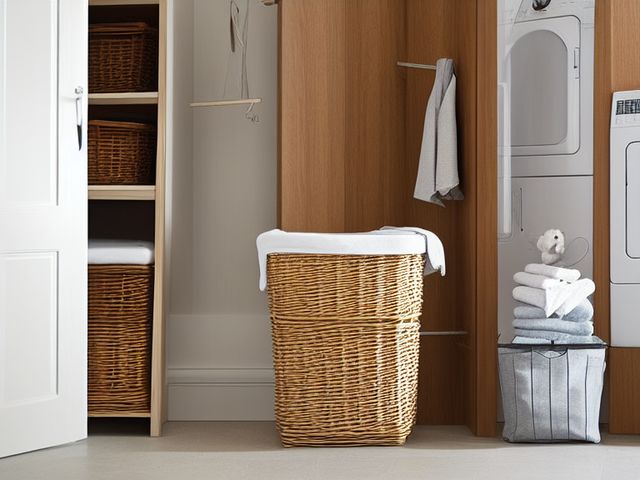
Common items here
- Three bags, labeled by load: hot towels, cold darks, gentle
- A small dish on the shelf, for pocket finds
- A mesh bag inside the drum, for the gentle load
Check these before you start
- FallA hamper standing in the walking line between the door and the machines, or resting on a stair tread while you go back for the rest.
- Fall, cut, or crushReaching blind into a bag of work clothes where a utility knife, a razor blade or a pocketful of screws came home in a trouser pocket.
Which of these is true here?
Match what you are actually seeing in the sorting hampers to why it keeps happening, then start at the pass that fixes that, not the top of the list.
Dirty clothes end up on the floor rather than in a bag
- The bags are behind a door or across the room from where clothes come off. Confirm in 30 seconds: Stand where you use it and count the steps to where it is kept. More than two is the wrong cabinet. If that checks out, start at Straighten.
- The nearest bag is too full to take anything more. Confirm in 30 seconds: Put back only what belongs here. If it still will not close, or still stacks four deep, the capacity is the problem, not the habit. If that checks out, start at Sort.
- Whoever drops them cannot reach the bag from standing height. Confirm in 30 seconds: Have the shortest person who uses this zone fetch what they need daily. If they climb, reach overhead, or ask for help, the height is wrong. If that checks out, start at Safety.
Loads have to be sorted again before they can go in the machine
- The bags are not labeled, so things go in the nearest one. Confirm in 30 seconds: Open the door and, without moving anything, name what is at the back. If you cannot, that stock is invisible. If that checks out, start at Straighten.
- There are more sorting streams than anybody honors. Confirm in 30 seconds: Count what you used in the past month. If the honest number is a third of what is stored here, the space is not too small. If that checks out, start at Sort.
- Two people sort by two different schemes. Confirm in 30 seconds: Do the shared task together, once. The argument that starts is the conflict, and it is a design problem, not a character problem. If that checks out, start at Standardize.
Coins, tissues and receipts come out of the machine with the wash
- There is no dish to empty pockets into at the hamper. Confirm in 30 seconds: Ask where one specific item lives. If two people answer differently, or nobody answers, it has no home. If that checks out, start at Straighten.
- The dish is never emptied, so nobody uses it. Confirm in 30 seconds: Name the moment it happens. If the answer is "when I get round to it", there is no trigger and it will not survive a bad week. If that checks out, start at Sustain.
- Pockets are checked at the machine, by which point the load is already in. Confirm in 30 seconds: Fetch it once and count the movements. More than two and the storage is charging you rent every time. If that checks out, start at Straighten.
Only have 15 minutes? Cut the sorting streams to the three this household will actually honor, label those three bags, stand them clear of the walking line, and put an empty dish on the shelf for pockets. Victory: Three labeled bags, none above half full, bare floor in front of the washer door, and a dish holding only today's pocket contents.
The six passes, in order
Work them in this order. Sorting after you have arranged things means arranging things you were about to remove.
This zone's full kit list is below, after the method. Skim it first if you would rather gather everything before you start.
Sort
Decide what stays. Everything else leaves the zone now.
Empty every hamper and see what a real week actually produces: whites, darks, towels, delicates, work clothes. Any stream that never fills on its own gets merged into another, and the spare hampers you were holding for those streams leave the room.
What to store it in, now that you know what you are keeping
Bins and shelves are for what Sort left behind, not a stand-in for it. Buying storage before sorting means buying a container for things you have not yet decided to keep.
Only if it applies to the sorting hampers: 5 more
Not every home needs these for the sorting hampers. Each one is here because some do, and the reason is next to it.
- Drying Rack Air-dry delicate or non-dryer items, in the Straighten, Standardize and Sustain passes. Do not overload; anchor wall-mounted or tall systems where required.
- Chemical Storage Bin ×2 Separate and contain household chemicals, in the Straighten, Standardize and Sustain passes. Do not overload; anchor wall-mounted or tall systems where required.
- Broom and Tool Wall Clips Secure cleaning tools vertically, in the Straighten, Standardize and Sustain passes. Do not overload; anchor wall-mounted or tall systems where required.
- Leak Tray Protect cabinets and expose plumbing leaks, in the Straighten, Standardize and Sustain passes. Do not overload; anchor wall-mounted or tall systems where required.
- Folding Laundry Basket ×3 Move clean laundry back to rooms, in the Straighten, Standardize and Sustain passes. Do not overload; anchor wall-mounted or tall systems where required.
Straighten
Give what stays a home, placed where the hand actually reaches.
One bag per stream, standing where clothes are actually taken off rather than where the bags happen to fit. Add a small dish on the shelf for pocket contents, because coins, hair ties and the occasional memory stick need somewhere to land that is not the drum.
Shine
Clean it, and use the cleaning to inspect what you cannot see when it is full.
Damp gym kit is what makes a hamper smell, not dirt. Wipe the inside of each bin while it is empty, and never let a wet towel spend the night in a lined bag with the lid down.
Surface by surface, all 5 of them, with what to use on each.
Safety
Make the zone safe for everybody who uses it, including the shortest person.
A hamper parked on a landing or at the top of a step is a fall you take with your arms full and your view blocked. Keep the bags out of the walking line entirely, and never carry a basket loaded higher than your eyeline.
Standardize
Write down the best way you know today, so it survives you forgetting.
Label each bag with the load it makes rather than the color it holds: hot towels, cold darks, gentle. Anyone in the house can then start a machine without asking which setting the bag wants.
Sustain
Attach the reset to something that already happens, so it keeps itself.
Pockets get checked as the item goes into the bag, not later at the machine, and every person does their own. The dish on the shelf is where a lip balm stops being a ruined load. Slip is a bag past half full, or a bag standing in the walking line, visible as you come through the door. Recovery is running that load now, because a bag past half full gets lifted rather than carried and ends up on the floor. This is the cheapest place in the house to catch an expensive mistake, and the price is two seconds a garment.
The kit this zone called for
Everything above assumed you had these already. Types of thing, not brands: anything you already own that does the job is the right one to use.
- Color-coded microfiber cloth set ×12 Shine Wash by use color; avoid fabric softener.
- Neutral pH multi-surface cleaner Shine, Sustain Verify surface compatibility; lock around children and pets.
- Compact vacuum with attachments Shine Use appropriate attachment.
- Keep, Relocate, Donate, Recycle, Trash container set ×5 Sort Do not block exits.
- Portable cleaning caddy Straighten, Shine, Sustain Secure chemicals from children and pets.
- Portable label maker Standardize, Sustain Follow surface and adhesive guidance.
- Removable write-on labels Standardize Test on delicate finishes.
Only if it applies to the sorting hampers: 3 more
- Floor Boundary Tape Safety, Standardize Install and use according to product instructions.
- Min-Max Inventory Label Standardize, Sustain Install and use according to product instructions.
- Floor-material-compatible cleaner Shine, Sustain Match cleaner to floor material.
The delicates bag that never fills
You sort into five streams because a care label once told you to, and one of those bags has been sitting a third full for three weeks while the thing you actually wanted washed waits inside it. The rule: a stream earns its own bag only if it has run as a full load, by itself, in the last month. Everything that fails that test merges into cold and gentle with a mesh bag inside the drum. Sorting is only worth doing when it produces a load you can run today, and a bag that waits three weeks is not sorting, it is a small pile of clothes you have taken out of circulation.
Cleaning it properly, surface by surface
Work down, not across. Whatever comes off a high surface lands on the one below it, so cleaning the floor first means cleaning it twice.
Carry these in with you. Color-coded microfiber cloth set; Neutral pH multi-surface cleaner; Compact vacuum with attachments; Portable cleaning caddy; Floor-material-compatible cleaner.
- The shelf and its small dish
Empty the dish, wipe the shelf with a damp microfiber, and clear anything sitting there older than today. - The three sorting bags, inside and out
Tip each bag empty, vacuum the crumbs and grit from the bottom seam, wipe the inside walls with neutral pH cleaner on a cloth, and wipe the outside where hands grab it. Let each one air fully before it lines up again. - The washable bag liners
Pull any washable liner out and launder it, because that is what actually holds the smell. Dry it right through before it goes back in the bag. - The lids, rims, and the frame the bags stand in
Wipe the lid rims and the frame or stand where damp and lint settle unseen, and dry them off. - The walking-line floor in front of the washer
Vacuum the strip of bare floor between the door and the machines, then mop it with the floor-material-compatible cleaner so no detergent film leaves it slick.
How to clean anything else in the house, surface by surface.
Inspect as you clean. Cleaning is the only time you see the zone empty, so use it.
- Soft dark spotting or a musty note in a bag seam is mold starting in the weave. Flag it.
- A liner that has torn, or a bag bottom that has gone soft and damp. Note it.
- A frayed carry strap or handle on a bag you haul up the stairs loaded. Flag it before it lets go.
- The small dish holding a button battery, a coin, or a screw that rode in on a pocket. Flag it.
The standard that keeps it fixed
Every bag is a load, labeled by wash setting, and emptied before it passes half full.
Reset trigger. when you undress at the end of the day
How much the sorting hampers can actually hold
Three labeled bags standing clear of the walking line, each below half full, a small dish on the shelf holding nothing older than today, and bare floor in front of the washer door.
Below half full is a laundry-frequency test, not a bag-size test. A bag that is regularly over half means the wash is running less often than the household produces clothes, and a fourth bag would only postpone the same evening. Three streams is also a ceiling: a household will honor two or three sorting decisions at the hamper and will quietly stop honouring five. Run the honest count.
When this does not describe your sorting hampers
The passes above describe the ordinary case. Plenty of real households are not ordinary, and the fix is not to skip the method, it is to run it against a different starting shape.
- Hampers live in bedrooms, not in the laundry room
- Then this zone is the arrival point, not the collection point, and the sorting decision has already been made upstairs. Keep the three labeled bags here anyway and make the bedroom hampers single and unsorted, because a sorting decision asked twice is a sorting decision made badly in both places.
- Small children, or anybody who dresses themselves at a low height
- One bag has to be reachable from their standing height, or clothes will land on the floor beside it and the bare-floor rule loses every time. Height beats labels for anyone who cannot yet read the labels.
The rest of the laundry room
Each of these is one session on its own.
- The Washer and Dryer
- The Detergent and Treatment Zone
- The Sorting and Hamper Zone, you are here
- The Folding Surface
- The Hanging and Air-Dry Zone
- The Utility and Cleaning Zone
The Laundry Room in full, with what each of the 6 zones is for
The laundry room as a deck of 67 cards: the frictions people report in each zone, the root cause behind each one, and the timed action that clears it. Free to read or print.
Related reading
- Is the everyday item in this zone actually the easy one to reach?
- Does something in this zone actually get used somewhere else?
- Why the standard above names one home per category
- Found a duplicate of something in this zone?
- Moving three things to get to the one you need?
Questions people ask about this zone
- How long does it take to reset the sorting hampers?
- One session: 30-45 min, most of it deciding how many sorting streams your household will genuinely honor.
- What does a finished sorting hampers look like?
- Three labeled bags standing clear of the walking line, each below half full, a small dish on the shelf holding nothing older than today, and bare floor in front of the washer door.
- What is the hardest call to make in the sorting hampers?
- You sort into five streams because a care label once told you to, and one of those bags has been sitting a third full for three weeks while the thing you actually wanted washed waits inside it. The rule: a stream earns its own bag only if it has run as a full load, by itself, in the last month. Everything that fails that test merges into cold and gentle with a mesh bag inside the drum. Sorting is only worth doing when it produces a load you can run today, and a bag that waits three weeks is not sorting, it is a small pile of clothes you have taken out of circulation.
- How do you keep the sorting hampers from getting cluttered again?
- Every bag is a load, labeled by wash setting, and emptied before it passes half full, when you undress at the end of the day.
- What do you need to clean the sorting hampers?
- Color-coded microfiber cloth set; Neutral pH multi-surface cleaner; Compact vacuum with attachments; Portable cleaning caddy; Floor-material-compatible cleaner.
- What do you clean first in the sorting hampers?
- The shelf and its small dish. Empty the dish, wipe the shelf with a damp microfiber, and clear anything sitting there older than today.
- Is there a fall risk in the sorting hampers?
- A hamper standing in the walking line between the door and the machines, or resting on a stair tread while you go back for the rest.
- Is there a fall, cut, or crush risk in the sorting hampers?
- Reaching blind into a bag of work clothes where a utility knife, a razor blade or a pocketful of screws came home in a trouser pocket.
- Why does the sorting hampers do this: Dirty clothes end up on the floor rather than in a bag?
- The bags are behind a door or across the room from where clothes come off, so start at Straighten; The nearest bag is too full to take anything more, so start at Sort; Whoever drops them cannot reach the bag from standing height, so start at Safety.
- Why does the sorting hampers do this: Loads have to be sorted again before they can go in the machine?
- The bags are not labeled, so things go in the nearest one, so start at Straighten; There are more sorting streams than anybody honors, so start at Sort; Two people sort by two different schemes, so start at Standardize.
- Why does the sorting hampers do this: Coins, tissues and receipts come out of the machine with the wash?
- There is no dish to empty pockets into at the hamper, so start at Straighten; The dish is never emptied, so nobody uses it, so start at Sustain; Pockets are checked at the machine, by which point the load is already in, so start at Straighten.
When you want it off the screen
Carry The Sorting and Hamper Zone into the room
The method above is complete and free. The Whole House Print Pack puts The Sorting and Hamper Zone and the other 113 micro zones on 684 printable cards, so the steps you just read are not stuck behind a phone screen while your hands are full.
The Print Pack, 19 dollarsJust this zone, 4 dollarsOr draw a card free
The Sorting and Hamper Zone on its own is 4 dollars for 6 cards. All 114 micro zones is 19 dollars for 684. The whole house is the better buy; the single zone is here so you can take only what you are working on.
If The Sorting and Hamper Zone keeps fighting back, the real problem usually sits somewhere else in the room. A one hour virtual consult is 250 dollars: we find the function, the friction and the root cause together, and you keep a written standard for the space.
See what a consult covers, 250 dollars
Not ready to pay for that either? Ask which zone first, free