Kids Bedroom micro zone
The Dresser Drawers, Kids Bedroom
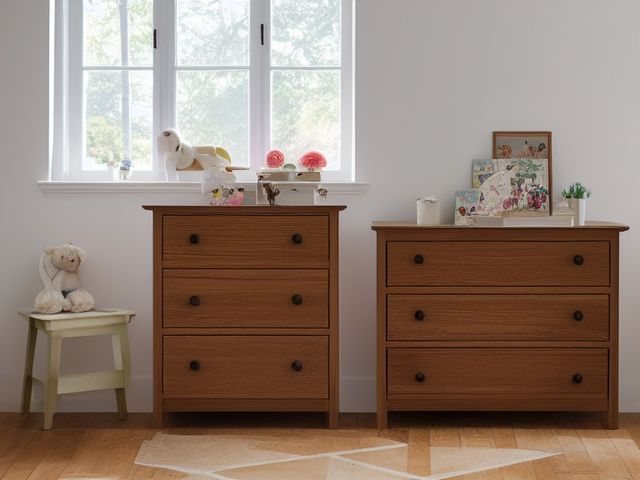
The dresser drawers, in the Kids Bedroom. Folded everyday clothes a child can get themselves dressed from without asking. Five drawers, one category each, each with a picture label on the drawer front. Socks and underwear standing upright in rows so every pair is visible from above. Every drawer closes with one push, no pressing down. Dresser strapped to the wall, nothing on top of it worth climbing for.
One session: 45-75 min, most of it in Straighten, because refolding upright is the slow part.
The short version
- Sort. One drawer at a time, tipped out onto the bed
- Straighten. File fold upright so the drawer reads like a card index
- Shine. Pull the drawers right out of the carcass, vacuum the inside of the frame
- Safety. A chest of drawers with two drawers open is a climbing frame
- Standardize. A picture label on each drawer front showing what is inside
- Sustain. Refolding happens straight out of the laundry basket and into the drawer standing
Each step in full, with what to have on hand and what done looks like, below.
Where it is
Kids Bedroom
6 micro zones, one session each
- 1The Bed and Sleep Zone
- 2The Toy Storage Zone
- 3The Study Desk
- 4The Clothing Closet
- 5The Dresser Drawers
- 6The School and Activity Launch Zone
What done looks like
Folded everyday clothes a child can get themselves dressed from without asking.
- Five drawers, one category each, each with a picture label on the drawer front
- Socks and underwear standing upright in rows so every pair is visible from above
- Every drawer closes with one push, no pressing down
- Dresser strapped to the wall, nothing on top of it worth climbing for
What done looks like
Five drawers, one category each, each with a picture label on the drawer front. Socks and underwear standing upright in rows so every pair is visible from above. Every drawer closes with one push, no pressing down. Dresser strapped to the wall, nothing on top of it worth climbing for.
Common items here
- Socks and underwear, standing upright
- Folded shirts
- Folded pants
- A picture label on each drawer
What belongs, and what strays in
Belongs here:
- Five drawers, one category each, picture label on the front
- Socks and underwear standing upright in rows, every pair visible from above
- Nothing on top of the dresser worth climbing for
Strays in and should leave:
- A single sock with no pair
- Underwear with dead elastic
- Pyjama bottoms that stop above the ankle
Check these before you start
- Fall, cut, or crushAn unanchored chest of drawers tipping forward when the drawers are opened and climbed. Fix an anti tip strap to a wall stud and keep the dresser top bare of anything worth climbing for.
- FallA jammed drawer that needs a hard yank, which pulls the child backwards off balance when it finally gives.
Which of these is true here?
Match what you are actually seeing in the dresser drawers to why it keeps happening, then start at the pass that fixes that, not the top of the list.
A drawer needs a hard yank to open because it's overstuffed, and it comes free suddenly enough to pull the child backwards off balance
- A jammed drawer that gives suddenly when it finally opens is a fall risk that outranks how full the drawer looks. Confirm in 30 seconds: Look for the four: a blade your hand would meet, weight above shoulder height, heat beside something that burns, and an unsafe placement near a child's reach. If that checks out, start at Safety.
- Eleven shirts in a drawer sized for the wash rhythm is more than that drawer's own job needs. Confirm in 30 seconds: Count what you used in the past month. If the honest number is a third of what is stored here, the space is not too small. If that checks out, start at Sort.
- Nobody's actually counted the days between washes and set a real quantity the way the arithmetic test calls for. Confirm in 30 seconds: Pick up one piece. If your first thought is a verb (pay, sign, call, decide) rather than a place, it needs a decision, not a home. If that checks out, start at Sort.
The chest of drawers has no anti-tip strap fitted, and a tablet sits on top where a child is tempted to climb for it using the open drawers as steps
- An unanchored chest of drawers with something worth climbing for on top is a safety constraint independent of how full the drawers are. Confirm in 30 seconds: Look for the four: a blade your hand would meet, weight above shoulder height, heat beside something that burns, and an unsafe placement near a child's reach. If that checks out, start at Safety.
- There's no agreed rule yet that the dresser top stays bare of anything a child would want to climb for. Confirm in 30 seconds: Ask two people in the house to describe this zone when it is finished. Two different answers means there is no standard to keep. If that checks out, start at Standardize.
- Fitting the anti-tip strap has been on the list for so long that the unstrapped dresser stopped reading as urgent. Confirm in 30 seconds: Ask someone who does not live here to name what looks out of place. If they see it instantly and you had stopped noticing, this is the cause. If that checks out, start at Sort.
A drawer that used to close with one push now needs a press, and the socks inside are lying flat instead of standing upright, because the last laundry load went in stacked on top rather than filed in
- Refolding isn't actually happening straight out of the laundry basket the way the sustain rule calls for. Confirm in 30 seconds: Name the moment it happens. If the answer is "when I get round to it", there is no trigger and it will not survive a bad week. If that checks out, start at Sustain.
- Whoever put this load away isn't necessarily the person who owns this drawer, so the standard slips without anyone noticing it was theirs to keep. Confirm in 30 seconds: Ask who resets this zone. If the honest answer is "whoever gets to it" or two names with no agreement, there is no owner. If that checks out, start at Sustain.
- Two different people run this drawer two different ways, one filing upright and one stacking flat. Confirm in 30 seconds: Do the shared task together, once. The argument that starts is the conflict, and it is a design problem, not a character problem. If that checks out, start at Standardize.
Only have 15 minutes? Open every drawer right now and push on it once without leaning. Any drawer that needs a press to close gets emptied onto the bed immediately, and anything with dead elastic, no pair, or a hem that now stops above the ankle comes out for good. Refile what's left standing upright before you move to the next drawer. Victory: Every drawer closes with a single push, socks and underwear stand upright rather than lying flat, and nothing with a broken pair, dead elastic or the wrong size is back in a drawer.
The six passes, in order
Work them in this order. Sorting after you have arranged things means arranging things you were about to remove.
This zone's full kit list is below, after the method. Skim it first if you would rather gather everything before you start.
Sort
Decide what stays. Everything else leaves the zone now.
One drawer at a time, tipped out onto the bed. Out go the single socks with no pair, the underwear with dead elastic, and the pyjama bottoms that now stop above the ankle. Do not open the next drawer until this one is back in.
What to store it in, now that you know what you are keeping
Bins and shelves are for what Sort left behind, not a stand-in for it. Buying storage before sorting means buying a container for things you have not yet decided to keep.
Only if it applies to the dresser drawers: 6 more
Not every home needs these for the dresser drawers. Each one is here because some do, and the reason is next to it.
- Folding Laundry Basket ×3 Move clean laundry back to rooms, in the Straighten, Standardize and Sustain passes. Do not overload; anchor wall-mounted or tall systems where required.
- Laundry Hamper Sorter Separate laundry by household method, in the Straighten, Standardize and Sustain passes. Do not overload; anchor wall-mounted or tall systems where required.
- Drawer Divider Set Create visible subcategories in shallow drawers, in the Straighten, Standardize and Sustain passes. Do not overload; anchor wall-mounted or tall systems where required.
- Small Clear Lidded Bin ×4 Contain small loose items with visibility, in the Straighten, Standardize and Sustain passes. Do not overload; anchor wall-mounted or tall systems where required.
- Toy Bin with Picture Label ×4 Support independent child cleanup, in the Straighten, Standardize and Sustain passes. Do not overload; anchor wall-mounted or tall systems where required.
- Front-Facing Book Bin ×2 Display children's books for easy access, in the Straighten, Standardize and Sustain passes. Do not overload; anchor wall-mounted or tall systems where required.
Straighten
Give what stays a home, placed where the hand actually reaches.
File fold upright so the drawer reads like a card index and the child sees every shirt without excavating. Dividers, or two shoebox lids, stop the rows falling sideways the first time the drawer gets yanked.
Shine
Clean it, and use the cleaning to inspect what you cannot see when it is full.
Pull the drawers right out of the carcass, vacuum the inside of the frame, and wipe the runners. That grit is where the drawer that sticks, and then gets slammed, comes from.
Surface by surface, all 6 of them, with what to use on each.
Safety
Make the zone safe for everybody who uses it, including the shortest person.
A chest of drawers with two drawers open is a climbing frame, and it tips forward onto the child climbing it. Strap it to a wall stud with an anti tip bracket. Then take the tablet or the toy off the dresser top, because anything a child wants up there is an invitation to climb for it.
Standardize
Write down the best way you know today, so it survives you forgetting.
A picture label on each drawer front showing what is inside, socks on the socks drawer, so the child both finds and returns without reading. Same category in the same drawer forever, even when that means one drawer stays half empty.
Sustain
Attach the reset to something that already happens, so it keeps itself.
Refolding happens straight out of the laundry basket and into the drawer standing up, never stacked flat on the bed for later. A child of seven can own two of the five drawers outright. The signal is a drawer needing a press to close, or socks lying flat instead of standing, which means the last load went in on top rather than in. Recovery is one drawer refiled upright, ten minutes. The bed defeats this zone, because a stack on it is invisible until bedtime, and by bedtime it is going on the floor.
The kit this zone called for
Everything above assumed you had these already. Types of thing, not brands: anything you already own that does the job is the right one to use.
- Color-coded microfiber cloth set ×12 Shine Wash by use color; avoid fabric softener.
- Neutral pH multi-surface cleaner Shine, Sustain Verify surface compatibility; lock around children and pets.
- Compact vacuum with attachments Shine Use appropriate attachment.
- Keep, Relocate, Donate, Recycle, Trash container set ×5 Sort Do not block exits.
- Portable cleaning caddy Straighten, Shine, Sustain Secure chemicals from children and pets.
- Portable label maker Standardize, Sustain Follow surface and adhesive guidance.
- Removable write-on labels Standardize Test on delicate finishes.
Only if it applies to the dresser drawers: 2 more
- Small detail brush set Shine Use surface-safe bristles.
- Anti-tip anchors and hardware Safety Install to manufacturer and wall-type requirements.
How many shirts is enough
The real problem in this dresser is not folding, it is that there are eleven t-shirts in a drawer that only closes if you lean on it, and an overstuffed drawer is exactly why a child pulls the whole stack out to find one thing. Stop deciding garment by garment and set the number by arithmetic instead. Count the days between washes, add two, and that is your quantity for socks, underwear and shirts. Everything above the number goes, starting with whatever you would not choose on a normal morning. The test is mechanical, and you can run it in front of the child without an argument: if the drawer does not close with one push, you have not finished sorting.
Cleaning it properly, surface by surface
Shine the dresser by pulling the drawers right out of the carcass and cleaning the frame inside. The grit in the runners is where a sticking, slammed drawer comes from, so this is the pass that keeps every drawer closing with one push.
Work down, not across. Whatever comes off a high surface lands on the one below it, so cleaning the floor first means cleaning it twice.
Carry these in with you. Compact vacuum with attachments; Small detail brush set; Color-coded microfiber cloth set; Neutral pH multi-surface cleaner; Portable cleaning caddy.
- The dresser top
Clear it to bare, wipe the top with the neutral pH cleaner, and dry it. Nothing worth climbing for goes back up, so this stays a clean, empty surface. - The drawer fronts, picture labels and knobs
Wipe each front with a damp cloth, going gently around the taped picture labels. Work the detail brush around the knobs and into the seam where the front meets the drawer box. - The drawer interiors
Pull each drawer fully out, tip the lint and grit into the bin, vacuum the corners, and wipe the base. Dry it before the folded clothes go back, standing socks and underwear upright as you refill. - The carcass frame inside
With the drawers out, vacuum the inside of the empty frame where dust and stray socks collect at the back, and wipe the interior shelves the drawers slide over. - The runners and tracks
Vacuum each runner, then work the detail brush along it to clear the grit that jams the glide. Wipe the runner clean and check the drawer closes flush before you load it. - The sides and the floor behind the dresser
Wipe the exposed sides, then vacuum the dust and lost items in the gap behind and under the dresser with the crevice tool while you have it pulled out.
How to clean anything else in the house, surface by surface.
Inspect as you clean. Cleaning is the only time you see the zone empty, so use it.
- A cracked or bowing drawer base, or a splinter lifting on a hand-hole edge, found as you empty and wipe each drawer.
- A knob or handle screw working loose, felt as you wipe around it.
- An anti-tip strap gone slack or its wall screw backing out, or a drawer front rubbing because a runner is bent, noticed while the dresser is pulled out. Flag it.
- A musty smell or a damp corner inside a drawer that means clothes went back not fully dry.
The standard that keeps it fixed
One category per drawer, file folded upright, quantities set by the wash rhythm, and every drawer closes with a single push.
Reset trigger. Clothes folded upright and put straight into the drawer as the laundry comes out of the basket.
How much the dresser drawers can actually hold
Five drawers, one category each with a picture label on the front, socks and underwear standing upright in rows, every drawer closing with one push, and the dresser strapped to the wall.
If a drawer has to be pressed down to close, that category has outgrown it. Thin the category rather than cramming it, because a drawer a child cannot close is a drawer they stop using. Run the honest count.
When this does not describe your dresser drawers
The passes above describe the ordinary case. Plenty of real households are not ordinary, and the fix is not to skip the method, it is to run it against a different starting shape.
- A toddler just learning to dress themselves
- Two drawers rather than five, holding only the categories they choose from. Everything else moves higher and out of the picture-label system until they are ready for it.
- A child with sensory sensitivities about clothing
- Let the categories follow feel rather than garment type: the soft ones together, and anything with tags or seams they cannot tolerate out of the drawer entirely. A category matching how the child actually decides beats one matching how a shop sorts clothes.
The rest of the kids bedroom
Each of these is one session on its own.
- The Bed and Sleep Zone
- The Toy Storage Zone
- The Study Desk
- The Clothing Closet
- The Dresser Drawers, you are here
- The School and Activity Launch Zone
The Kids Bedroom in full, with what each of the 6 zones is for
The kids bedroom as a deck of 69 cards: the frictions people report in each zone, the root cause behind each one, and the timed action that clears it. Free to read or print.
The same zone in another room
The kids bedroom is not the only room in this house with this zone. They do not do the same job, which is why each has its own page rather than one page pretending the rooms are interchangeable.
Zones that do the same job, elsewhere in the house
Different room, different name, same real job. Each one is its own page because the room around it changes what actually works.
Related reading
- This zone's safety pass, in full
- Before you buy storage for this zone
- Why this zone gets messy again
- Is mail piling up on this exact surface?
- Does everyone in the house agree what "done" looks like here?
Questions people ask about this zone
- How long does it take to reset the dresser drawers?
- One session: 45-75 min, most of it in Straighten, because refolding upright is the slow part.
- What does a finished dresser drawers look like?
- Five drawers, one category each, each with a picture label on the drawer front. Socks and underwear standing upright in rows so every pair is visible from above. Every drawer closes with one push, no pressing down. Dresser strapped to the wall, nothing on top of it worth climbing for.
- What is the hardest call to make in the dresser drawers?
- The real problem in this dresser is not folding, it is that there are eleven t-shirts in a drawer that only closes if you lean on it, and an overstuffed drawer is exactly why a child pulls the whole stack out to find one thing. Stop deciding garment by garment and set the number by arithmetic instead. Count the days between washes, add two, and that is your quantity for socks, underwear and shirts. Everything above the number goes, starting with whatever you would not choose on a normal morning. The test is mechanical, and you can run it in front of the child without an argument: if the drawer does not close with one push, you have not finished sorting.
- How do you keep the dresser drawers from getting cluttered again?
- One category per drawer, file folded upright, quantities set by the wash rhythm, and every drawer closes with a single push. Clothes folded upright and put straight into the drawer as the laundry comes out of the basket.
- What do you need to clean the dresser drawers?
- Compact vacuum with attachments; Small detail brush set; Color-coded microfiber cloth set; Neutral pH multi-surface cleaner; Portable cleaning caddy.
- What do you clean first in the dresser drawers?
- The dresser top. Clear it to bare, wipe the top with the neutral pH cleaner, and dry it. Nothing worth climbing for goes back up, so this stays a clean, empty surface.
- Is there a fall, cut, or crush risk in the dresser drawers?
- An unanchored chest of drawers tipping forward when the drawers are opened and climbed. Fix an anti tip strap to a wall stud and keep the dresser top bare of anything worth climbing for.
- Is there a fall risk in the dresser drawers?
- A jammed drawer that needs a hard yank, which pulls the child backwards off balance when it finally gives.
- Why does the dresser drawers do this: A drawer needs a hard yank to open because it's overstuffed, and it comes free suddenly enough to pull the child backwards off balance?
- A jammed drawer that gives suddenly when it finally opens is a fall risk that outranks how full the drawer looks, so start at Safety; Eleven shirts in a drawer sized for the wash rhythm is more than that drawer's own job needs, so start at Sort; Nobody's actually counted the days between washes and set a real quantity the way the arithmetic test calls for, so start at Sort.
- Why does the dresser drawers do this: The chest of drawers has no anti-tip strap fitted, and a tablet sits on top where a child is tempted to climb for it using the open drawers as steps?
- An unanchored chest of drawers with something worth climbing for on top is a safety constraint independent of how full the drawers are, so start at Safety; There's no agreed rule yet that the dresser top stays bare of anything a child would want to climb for, so start at Standardize; Fitting the anti-tip strap has been on the list for so long that the unstrapped dresser stopped reading as urgent, so start at Sort.
- Why does the dresser drawers do this: A drawer that used to close with one push now needs a press, and the socks inside are lying flat instead of standing upright, because the last laundry load went in stacked on top rather than filed in?
- Refolding isn't actually happening straight out of the laundry basket the way the sustain rule calls for, so start at Sustain; Whoever put this load away isn't necessarily the person who owns this drawer, so the standard slips without anyone noticing it was theirs to keep, so start at Sustain; Two different people run this drawer two different ways, one filing upright and one stacking flat, so start at Standardize.
When you want it off the screen
Carry The Dresser Drawers into the room
The method above is complete and free. The Whole House Print Pack puts The Dresser Drawers and the other 113 micro zones on 684 printable cards, so the steps you just read are not stuck behind a phone screen while your hands are full.
The Print Pack, 19 dollarsJust this zone, 4 dollarsOr draw a card free
The Dresser Drawers on its own is 4 dollars for 6 cards. All 114 micro zones is 19 dollars for 684. The whole house is the better buy; the single zone is here so you can take only what you are working on.
If The Dresser Drawers keeps fighting back, the real problem usually sits somewhere else in the room. A one hour virtual consult is 250 dollars: we find the function, the friction and the root cause together, and you keep a written standard for the space.
See what a consult covers, 250 dollars
Not ready to pay for that either? Ask which zone first, free