Kids Bedroom micro zone
The School and Activity Launch Zone
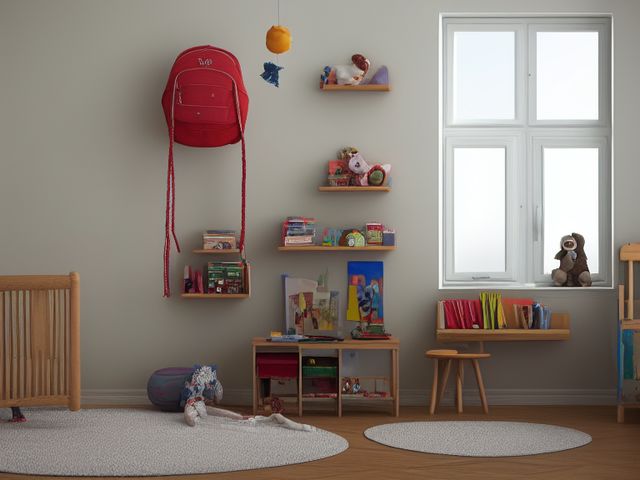
The backpack station, in the Kids Bedroom. The square meter by the bedroom door where tomorrow morning gets assembled the night before. Backpack hanging on its hook at child height, packed and zipped. Shoes side by side directly underneath it. Signed forms in the front pocket rather than on the kitchen counter. Sports bag on the second hook, instrument case upright against the wall. Floor completely clear.
One session: 15-30 min, most of it in Standardize, since the checklist is what does the real work.
The short version
- Sort. Empty the backpack completely every Friday, turned upside down
- Straighten. Hook, then shoes, then bag, along the wall in the order they get grabbed
- Shine. Wipe the lunchbox seals and the inside of the water bottle lid
- Safety. A bag left in a dark doorway at seven in the morning is the trip
- Standardize. A five line checklist taped beside the hook at the child's eye level
- Sustain. The launch zone gets packed while the bath is running, every school night
Each step in full, with what to have on hand and what done looks like, below.
Where it is
Kids Bedroom
6 micro zones, one session each
- 1The Bed and Sleep Zone
- 2The Toy Storage Zone
- 3The Study Desk
- 4The Clothing Closet
- 5The Dresser Drawers
- 6The School and Activity Launch Zone
What done looks like
The square meter by the bedroom door where tomorrow morning gets assembled the night before.
- Backpack hanging on its hook at child height, packed and zipped
- Shoes side by side directly underneath it
- Signed forms in the front pocket rather than on the kitchen counter
- Sports bag on the second hook, instrument case upright against the wall
+ 1 more on this page
What done looks like
Backpack hanging on its hook at child height, packed and zipped. Shoes side by side directly underneath it. Signed forms in the front pocket rather than on the kitchen counter. Sports bag on the second hook, instrument case upright against the wall. Floor completely clear.
Common items here
- A backpack on its hook
- Shoes underneath
- Signed forms in the front pocket
- A sports bag or instrument case
What belongs, and what strays in
Belongs here:
- Backpack on its hook at child height, packed and zipped
- Shoes side by side directly underneath it
- Signed forms in the front pocket
- Sports bag on the second hook, instrument case upright against the wall
Strays in and should leave:
- Leftover lunch left in the backpack
- A dead permission slip or a newsletter from weeks ago
- Damp sports kit put back in the bag instead of the wash basket
Check these before you start
- FallBags, shoes and an instrument case left on the floor in the doorway, right in the line everyone walks at seven in the morning.
- Poison, choke, or strangleLoose medication in a backpack pocket, reachable by a younger sibling and easy to forget entirely. Keep an inhaler or epipen in one named pocket, checked when the bag is packed.
Which of these is true here?
Match what you are actually seeing in the backpack station to why it keeps happening, then start at the pass that fixes that, not the top of the list.
The backpack sits unzipped and half in the doorway most mornings instead of hanging packed on its hook, so it becomes the thing everyone's foot finds at seven o'clock
- A bag left on the floor in the doorway everyone walks at seven in the morning is a fall risk independent of whose turn it was to hang it up. Confirm in 30 seconds: Look for the four: a blade your hand would meet, weight above shoulder height, heat beside something that burns, and an unsafe placement near a child's reach. If that checks out, start at Safety.
- Packing isn't actually anchored to the bath running the way the sustain rule calls for, so it happens whenever, if at all. Confirm in 30 seconds: Name the moment it happens. If the answer is "when I get round to it", there is no trigger and it will not survive a bad week. If that checks out, start at Sustain.
- It's genuinely unclear some nights whether the child or an adult is the one who packs and hangs the bag. Confirm in 30 seconds: Ask who resets this zone. If the honest answer is "whoever gets to it" or two names with no agreement, there is no owner. If that checks out, start at Sustain.
A signed form goes missing on a Wednesday because it never made it into the backpack's front pocket, and by Thursday nobody can say where it went
- A form has no single defined destination beyond somewhere in the bag, so it lands wherever the hand let go of it. Confirm in 30 seconds: Ask where one specific item lives. If two people answer differently, or nobody answers, it has no home. If that checks out, start at Straighten.
- The five line checklist by the hook has no line for forms specifically, only bag, shoes, lunch and kit. Confirm in 30 seconds: Ask two people in the house to describe this zone when it is finished. Two different answers means there is no standard to keep. If that checks out, start at Standardize.
- Forms going missing has happened often enough that nobody flags it as a real gap in the checklist anymore. Confirm in 30 seconds: Ask someone who does not live here to name what looks out of place. If they see it instantly and you had stopped noticing, this is the cause. If that checks out, start at Sort.
An inhaler ends up loose in a side pocket instead of the one named pocket it's supposed to live in, hard to find fast at the school gate and easy for a younger sibling to reach
- Medication loose in a side pocket a younger sibling can reach is a safety constraint that outranks which pocket was quickest at packing time. Confirm in 30 seconds: Look for the four: a blade your hand would meet, weight above shoulder height, heat beside something that burns, and an unsafe placement near a child's reach. If that checks out, start at Safety.
- Whoever packed the bag that morning didn't specifically check the named pocket, so it drifted to wherever was quickest. Confirm in 30 seconds: Ask who resets this zone. If the honest answer is "whoever gets to it" or two names with no agreement, there is no owner. If that checks out, start at Sustain.
- Different people pack this bag on different days, and each one has their own idea of where the medication actually goes. Confirm in 30 seconds: Do the shared task together, once. The argument that starts is the conflict, and it is a design problem, not a character problem. If that checks out, start at Standardize.
Only have 15 minutes? Check the hook right now: if the backpack isn't hanging there zipped, empty it onto the floor, sort tomorrow's real needs back in, and hang it up. Confirm any inhaler, epipen or daily medication is in its one named pocket, and set the shoes directly underneath the hook before you finish. Victory: The backpack hangs zipped on its hook with shoes underneath, any medication sits in its one named pocket, and the floor by the door is completely clear.
The six passes, in order
Work them in this order. Sorting after you have arranged things means arranging things you were about to remove.
This zone's full kit list is below, after the method. Skim it first if you would rather gather everything before you start.
Sort
Decide what stays. Everything else leaves the zone now.
Empty the backpack completely every Friday, turned upside down. Out comes the leftover lunch, the dead permission slip and the newsletter from three weeks ago. Sports kit goes into the wash basket, never back into the bag damp.
What to store it in, now that you know what you are keeping
Bins and shelves are for what Sort left behind, not a stand-in for it. Buying storage before sorting means buying a container for things you have not yet decided to keep.
Only if it applies to the backpack station: 7 more
Not every home needs these for the backpack station. Each one is here because some do, and the reason is next to it.
- Bike Wall Rack Secure bicycles off the floor, in the Straighten, Standardize and Sustain passes. Do not overload; anchor wall-mounted or tall systems where required.
- Sports Ball Bin Contain loose balls and gear, in the Straighten, Standardize and Sustain passes. Do not overload; anchor wall-mounted or tall systems where required.
- Portable Project Tray ×2 Contain one active project and its parts, in the Straighten, Standardize and Sustain passes. Do not overload; anchor wall-mounted or tall systems where required.
- Folding Laundry Basket ×3 Move clean laundry back to rooms, in the Straighten, Standardize and Sustain passes. Do not overload; anchor wall-mounted or tall systems where required.
- Laundry Hamper Sorter Separate laundry by household method, in the Straighten, Standardize and Sustain passes. Do not overload; anchor wall-mounted or tall systems where required.
- Toy Bin with Picture Label ×4 Support independent child cleanup, in the Straighten, Standardize and Sustain passes. Do not overload; anchor wall-mounted or tall systems where required.
- Front-Facing Book Bin ×2 Display children's books for easy access, in the Straighten, Standardize and Sustain passes. Do not overload; anchor wall-mounted or tall systems where required.
Straighten
Give what stays a home, placed where the hand actually reaches.
Hook, then shoes, then bag, along the wall in the order they get grabbed. The instrument case stands upright against the wall where it cannot be trodden on, and the lunchbox gets its own small hook, so an empty hook at bedtime tells you it is still in the bag with yesterday's sandwich in it.
Shine
Clean it, and use the cleaning to inspect what you cannot see when it is full.
Wipe the lunchbox seals and the inside of the water bottle lid, which is where the mold actually grows. Turn the backpack over a bin and shake it, then wipe the base where the drink leaked in March.
Surface by surface, all 6 of them, with what to use on each.
Safety
Make the zone safe for everybody who uses it, including the shortest person.
A bag left in a dark doorway at seven in the morning is the trip that starts the day badly, so everything hangs and nothing rests on the floor. Then check the things that must never be forgotten: an inhaler, an epipen or a dose of medication belongs in one named pocket that is checked at packing, not remembered at the school gate.
Standardize
Write down the best way you know today, so it survives you forgetting.
A five line checklist taped beside the hook at the child's eye level, in pictures for a younger one and words for an older one. Bag, shoes, lunch, form, kit. Five lines and no more, because a longer list gets skipped.
Sustain
Attach the reset to something that already happens, so it keeps itself.
The launch zone gets packed while the bath is running, every school night, before anyone is tired enough to argue about it. The child runs the five line list taped at their eye height, three minutes. Slip reads from the doorway as a bag that is not zipped or a floor that is not bare. Recovery is running the five lines once more before bed, rather than improvising at seven in the morning. Skipping it does not hurt the person who skipped it. The cost lands on whoever is driving, twelve hours later.
The kit this zone called for
Everything above assumed you had these already. Types of thing, not brands: anything you already own that does the job is the right one to use.
- Color-coded microfiber cloth set ×12 Shine Wash by use color; avoid fabric softener.
- Neutral pH multi-surface cleaner Shine, Sustain Verify surface compatibility; lock around children and pets.
- Compact vacuum with attachments Shine Use appropriate attachment.
- Keep, Relocate, Donate, Recycle, Trash container set ×5 Sort Do not block exits.
- Portable cleaning caddy Straighten, Shine, Sustain Secure chemicals from children and pets.
- Portable label maker Standardize, Sustain Follow surface and adhesive guidance.
- Removable write-on labels Standardize Test on delicate finishes.
Who actually packs the bag
You have been packing it, because they are slow and you are not, and every morning proves you right. That is the decision worth reversing. Hand it over properly: the child packs against the five line list, you check the list rather than the bag, and you never silently repack it afterwards. When a form goes missing on Wednesday, the fix is a line added to the list, not you quietly doing it for them. Hold that, and remember the rule from the book. An audit checks the home, not the household. What it finds is always a system to fix, never a person to blame. It will cost you a few genuinely bad weeks, and it buys you every school morning after that.
Cleaning it properly, surface by surface
Shine this corner where the grime actually lives: the lunchbox seals and the water bottle lid, then the base of the backpack. Turn the bag out, wash what touches food, and finish with the small patch of floor. The bottle lid is where the mold you cannot see is growing.
Work down, not across. Whatever comes off a high surface lands on the one below it, so cleaning the floor first means cleaning it twice.
Carry these in with you. Food-area degreaser; Color-coded microfiber cloth set; Compact vacuum with attachments; Neutral pH multi-surface cleaner; Floor-material-compatible cleaner; Portable cleaning caddy; Small detail brush set.
- The hooks and the wall behind them
Wipe each hook and the wall patch behind it, where a wet bag has left a mark. Work top to bottom so drips land on floor you have yet to clean. - The backpack, base and pockets
Turn it over a bin and shake out the crumbs and paper. Wipe the base with a dab of degreaser where a drink leaked and set, and turn each pocket out to clear the grit before it goes back on the hook. - The lunchbox and its seals
Wash the box, and run the detail brush with a little degreaser into the seal groove and the hinge where grease and crumbs pack in. Rinse and dry fully, seal open, before it goes back. - The water bottle and its lid
Scrub the lid threads and the drinking valve with the detail brush, because that is where the mold grows unseen. Rinse well and stand it open to dry, never capped wet. - The shoes underneath and the instrument or sports case
Knock the grit off the shoes outdoors or into the bin and wipe the soles. Wipe down the instrument case and the sports bag, and air the sports bag if it went away damp. - The square of floor under the hooks
Vacuum the patch under and around the hooks, then damp mop it with the floor-material-compatible cleaner if it is a hard floor, so the lane everyone walks at seven in the morning starts clean and clear.
How to clean anything else in the house, surface by surface.
Inspect as you clean. Cleaning is the only time you see the zone empty, so use it.
- Mold in the water bottle valve or along the lunchbox seal, or a lingering sour smell, found as you brush and rinse them.
- A hook screw working loose or pulling out of the wall, felt as you wipe the hook and hang the weight back on it.
- A frayed backpack strap, a split base seam, or a broken zip pull, noticed while you turn the bag out.
- A damp patch or a water stain on the floor, or a mildew smell in the sports bag, spotted as you clear and mop the corner.
The standard that keeps it fixed
Bag on the hook, shoes underneath, forms in the front pocket, and the five line checklist taped beside the hook at the child's eye level.
Reset trigger. Bag packed and hung while the bath is running, every school night.
How much the backpack station can actually hold
One hook at child height holding the packed backpack, shoes directly underneath it, a second hook for the sports bag, the instrument case upright against the wall, and clear floor.
If the wall will not take the hooks the morning needs, the launch zone is in the wrong square meter. Move it to where the child actually leaves from rather than where the wall happens to be convenient. Run the honest count.
When this does not describe your backpack station
The passes above describe the ordinary case. Plenty of real households are not ordinary, and the fix is not to skip the method, it is to run it against a different starting shape.
- Several children leaving at the same time
- One named hook column each, spaced so two children can stand at them at once. A shared launch wall where the bags touch is where the morning argument starts.
- The child leaves from the front door rather than the bedroom
- Then this zone belongs in the entryway or mudroom and the bedroom keeps only the packing. Decide which room owns it, because the failure here is almost always two half-zones in two rooms instead of one that works.
The rest of the kids bedroom
Each of these is one session on its own.
- The Bed and Sleep Zone
- The Toy Storage Zone
- The Study Desk
- The Clothing Closet
- The Dresser Drawers
- The School and Activity Launch Zone, you are here
The Kids Bedroom in full, with what each of the 6 zones is for
The kids bedroom as a deck of 69 cards: the frictions people report in each zone, the root cause behind each one, and the timed action that clears it. Free to read or print.
Zones that do the same job, elsewhere in the house
Different room, different name, same real job. Each one is its own page because the room around it changes what actually works.
Related reading
- Why this zone gets messy again
- This zone's safety pass, in full
- Does more than one person use this zone?
- Why the standard above names one home per category
- Have you stopped noticing the clutter in this zone?
Questions people ask about this zone
- How long does it take to reset the backpack station?
- One session: 15-30 min, most of it in Standardize, since the checklist is what does the real work.
- What does a finished backpack station look like?
- Backpack hanging on its hook at child height, packed and zipped. Shoes side by side directly underneath it. Signed forms in the front pocket rather than on the kitchen counter. Sports bag on the second hook, instrument case upright against the wall. Floor completely clear.
- What is the hardest call to make in the backpack station?
- You have been packing it, because they are slow and you are not, and every morning proves you right. That is the decision worth reversing. Hand it over properly: the child packs against the five line list, you check the list rather than the bag, and you never silently repack it afterwards. When a form goes missing on Wednesday, the fix is a line added to the list, not you quietly doing it for them. Hold that, and remember the rule from the book. An audit checks the home, not the household. What it finds is always a system to fix, never a person to blame. It will cost you a few genuinely bad weeks, and it buys you every school morning after that.
- How do you keep the backpack station from getting cluttered again?
- Bag on the hook, shoes underneath, forms in the front pocket, and the five line checklist taped beside the hook at the child's eye level. Bag packed and hung while the bath is running, every school night.
- What do you need to clean the backpack station?
- Food-area degreaser; Color-coded microfiber cloth set; Compact vacuum with attachments; Neutral pH multi-surface cleaner; Floor-material-compatible cleaner; Portable cleaning caddy; Small detail brush set.
- What do you clean first in the backpack station?
- The hooks and the wall behind them. Wipe each hook and the wall patch behind it, where a wet bag has left a mark. Work top to bottom so drips land on floor you have yet to clean.
- Is there a fall risk in the backpack station?
- Bags, shoes and an instrument case left on the floor in the doorway, right in the line everyone walks at seven in the morning.
- Is there a poison, choke, or strangle risk in the backpack station?
- Loose medication in a backpack pocket, reachable by a younger sibling and easy to forget entirely. Keep an inhaler or epipen in one named pocket, checked when the bag is packed.
- Why does the backpack station do this: The backpack sits unzipped and half in the doorway most mornings instead of hanging packed on its hook, so it becomes the thing everyone's foot finds at seven o'clock?
- A bag left on the floor in the doorway everyone walks at seven in the morning is a fall risk independent of whose turn it was to hang it up, so start at Safety; Packing isn't actually anchored to the bath running the way the sustain rule calls for, so it happens whenever, if at all, so start at Sustain; It's genuinely unclear some nights whether the child or an adult is the one who packs and hangs the bag, so start at Sustain.
- Why does the backpack station do this: A signed form goes missing on a Wednesday because it never made it into the backpack's front pocket, and by Thursday nobody can say where it went?
- A form has no single defined destination beyond somewhere in the bag, so it lands wherever the hand let go of it, so start at Straighten; The five line checklist by the hook has no line for forms specifically, only bag, shoes, lunch and kit, so start at Standardize; Forms going missing has happened often enough that nobody flags it as a real gap in the checklist anymore, so start at Sort.
- Why does the backpack station do this: An inhaler ends up loose in a side pocket instead of the one named pocket it's supposed to live in, hard to find fast at the school gate and easy for a younger sibling to reach?
- Medication loose in a side pocket a younger sibling can reach is a safety constraint that outranks which pocket was quickest at packing time, so start at Safety; Whoever packed the bag that morning didn't specifically check the named pocket, so it drifted to wherever was quickest, so start at Sustain; Different people pack this bag on different days, and each one has their own idea of where the medication actually goes, so start at Standardize.
When you want it off the screen
Carry The School and Activity Launch Zone into the room
The method above is complete and free. The Whole House Print Pack puts The School and Activity Launch Zone and the other 113 micro zones on 684 printable cards, so the steps you just read are not stuck behind a phone screen while your hands are full.
The Print Pack, 19 dollarsJust this zone, 4 dollarsOr draw a card free
The School and Activity Launch Zone on its own is 4 dollars for 6 cards. All 114 micro zones is 19 dollars for 684. The whole house is the better buy; the single zone is here so you can take only what you are working on.
If The School and Activity Launch Zone keeps fighting back, the real problem usually sits somewhere else in the room. A one hour virtual consult is 250 dollars: we find the function, the friction and the root cause together, and you keep a written standard for the space.
See what a consult covers, 250 dollars
Not ready to pay for that either? Ask which zone first, free