Guest Bedroom micro zone
The Guest Closet
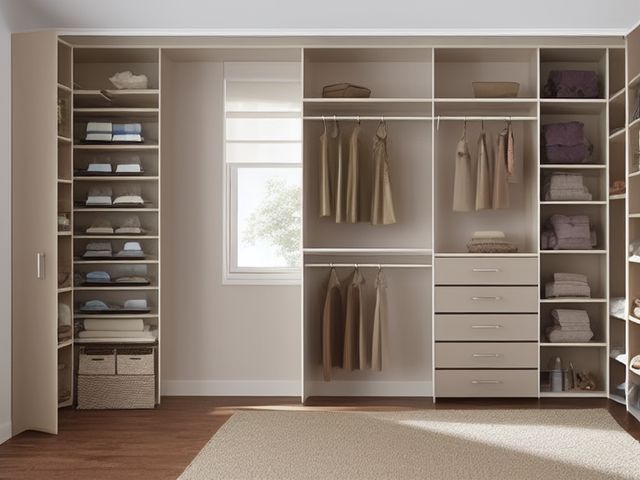
The closet, in the Guest Bedroom. Hanging space for someone else's clothes, plus whatever household storage this room has honestly agreed to carry. At least a forearm's width of clear rod with six matching empty hangers on it, a clear floor square big enough for an open suitcase, household bins on the shelf in labeled lidded boxes with nothing loose above head height, and a strip of tape on the rod marking where the guest section ends.
One session: 60-90 min, most of it in Sort, and the household storage is the slow part, not the hanging space.
The short version
- Sort. Take everything out and put it on the bed
- Straighten. Give the guest the end of the rod nearest the door and nearest the light
- Shine. Wipe the rod with a damp cloth
- Safety. Anything stored above the rod sits over the head of whoever is reaching
- Standardize. Mark the guest boundary physically with a strip of tape on the rod
- Sustain. Every time you take a seasonal bin down from this closet you check the taped
Each step in full, with what to have on hand and what done looks like, below.
Where it is
Guest Bedroom
5 micro zones, one session each
- 1The Guest Bed and Linens
- 2The Guest Nightstand
- 3The Guest Dresser
- 4The Guest Closet
- 5The Guest Welcome and Work Surface
What done looks like
Hanging space for someone else's clothes, plus whatever household storage this room has honestly agreed to carry.
- At least a forearm's width of clear rod with six matching empty hangers on it
- A clear floor square big enough for an open suitcase
- Household bins on the shelf in labeled lidded boxes with nothing loose above head height
- A strip of tape on the rod marking where the guest section ends
What done looks like
At least a forearm's width of clear rod with six matching empty hangers on it, a clear floor square big enough for an open suitcase, household bins on the shelf in labeled lidded boxes with nothing loose above head height, and a strip of tape on the rod marking where the guest section ends.
Common items here
- Six matching empty hangers
- A clear floor square for an open suitcase
- Labeled, lidded household bins
- A tape marker for the guest section
What belongs, and what strays in
Belongs here:
- A forearm's width of clear rod with six matching empty hangers
- A clear floor square sized for an open suitcase
- Household overflow in labeled, lidded bins, nothing loose above head height
- A tape marker on the rod showing where the guest section ends
Strays in and should leave:
- Holiday decorations crowding the guest section
- A wedding dress in a zipped bag with no place of its own
- A box of old phones
- Paperwork from an address you no longer live at
Check these before you start
- Fall, cut, or crushHeavy boxes stored above the rod, directly over the head and hands of anyone reaching in for a hanger, in a closet nobody uses often enough to notice a bin creeping toward the shelf edge.
- FallSuitcases and loose bins on the closet floor, in the dark stretch of room a guest crosses barefoot on the way to the light switch.
Which of these is true here?
Match what you are actually seeing in the closet to why it keeps happening, then start at the pass that fixes that, not the top of the list.
A box on this shelf has been sealed since a previous address, and nobody can say what's inside without opening it
- Opening it feels like it could cost an afternoon, so it keeps getting put off. Confirm in 30 seconds: Pick up one piece. If your first thought is a verb (pay, sign, call, decide) rather than a place, it needs a decision, not a home. If that checks out, start at Sort.
- This closet gets opened for a guest, not for a household chore, so nothing ever naturally prompts opening that box. Confirm in 30 seconds: Name the moment it happens. If the answer is "when I get round to it", there is no trigger and it will not survive a bad week. If that checks out, start at Sustain.
- It's been sitting on that shelf so long it doesn't register as a task anymore, just part of the shelf. Confirm in 30 seconds: Ask someone who does not live here to name what looks out of place. If they see it instantly and you had stopped noticing, this is the cause. If that checks out, start at Sort.
A box of old phones or paperwork from a previous address is on this shelf with no named person or occasion attached to it
- None of it has a next use, it's just here because nowhere else claimed it. Confirm in 30 seconds: Ask where one specific item lives. If two people answer differently, or nobody answers, it has no home. If that checks out, start at Straighten.
- There's more of this kind of thing than any real future use could need. Confirm in 30 seconds: Count what you used in the past month. If the honest number is a third of what is stored here, the space is not too small. If that checks out, start at Sort.
- Sorting it by who would actually use it takes a decision I keep deferring. Confirm in 30 seconds: Pick up one piece. If your first thought is a verb (pay, sign, call, decide) rather than a place, it needs a decision, not a home. If that checks out, start at Sort.
Heavy boxes sit on the shelf above the rod, or a suitcase and loose bins are left on the closet floor in the dark stretch a guest crosses barefoot
- This is a real falling-object and trip risk the moment someone reaches for a hanger or walks this floor in the dark. Confirm in 30 seconds: Look for the four: a blade your hand would meet, weight above shoulder height, heat beside something that burns, and an unsafe placement near a child's reach. If that checks out, start at Safety.
- Nobody checks this shelf often enough to notice a bin has crept toward the edge. Confirm in 30 seconds: Ask who resets this zone. If the honest answer is "whoever gets to it" or two names with no agreement, there is no owner. If that checks out, start at Sustain.
- The floor square for a suitcase was never actually marked, so bins spread into it by default. Confirm in 30 seconds: Ask two people in the house to describe this zone when it is finished. Two different answers means there is no standard to keep. If that checks out, start at Standardize.
Only have 15 minutes? Take everything out and put it on the bed. This closet is where the house keeps holiday decorations, a wedding dress in a zipped bag, a box of old phones, and paperwork from two addresses ago. Sort by whether a named person will use it in a named situation, and route the rest out. Victory: At least a forearm's width of clear rod carries six matching empty hangers, and the floor square for a suitcase is clear.
The six passes, in order
Work them in this order. Sorting after you have arranged things means arranging things you were about to remove.
This zone's full kit list is below, after the method. Skim it first if you would rather gather everything before you start.
Sort
Decide what stays. Everything else leaves the zone now.
Take everything out and put it on the bed. This closet is where the house keeps holiday decorations, a wedding dress in a zipped bag, a box of old phones, and paperwork from two addresses ago. Sort by whether a named person will use it in a named situation, and route the rest out.
What to store it in, now that you know what you are keeping
Bins and shelves are for what Sort left behind, not a stand-in for it. Buying storage before sorting means buying a container for things you have not yet decided to keep.
Only if it applies to the closet: 9 more
Not every home needs these for the closet. Each one is here because some do, and the reason is next to it.
- Slim Non-Slip Hanger Set ×30 Maximize hanging capacity without crowding, in the Straighten, Standardize and Sustain passes. Do not overload; anchor wall-mounted or tall systems where required.
- Open Front Bin Medium ×4 Provide one-motion access to medium items, in the Straighten, Standardize and Sustain passes. Do not overload; anchor wall-mounted or tall systems where required.
- Shelf Divider ×4 Separate vertical stacks and shelf categories, in the Straighten, Standardize and Sustain passes. Do not overload; anchor wall-mounted or tall systems where required.
- Matching Hanger Set ×30 Standardize hanging storage and reduce visual noise, in the Straighten, Standardize and Sustain passes. Do not overload; anchor wall-mounted or tall systems where required.
- Woven Basket Small ×2 Contain soft or decorative daily-use items, in the Straighten, Standardize and Sustain passes. Do not overload; anchor wall-mounted or tall systems where required.
- Medium Clear Lidded Bin ×4 Contain medium items on shelves or in closets, in the Straighten, Standardize and Sustain passes. Do not overload; anchor wall-mounted or tall systems where required.
- Over-Door Hook Rack Add reversible vertical storage, in the Straighten, Standardize and Sustain passes. Do not overload; anchor wall-mounted or tall systems where required.
- Shoe Rack Contain active footwear and preserve floor paths, in the Straighten, Standardize and Sustain passes. Do not overload; anchor wall-mounted or tall systems where required.
- Towel Shelf Basket ×3 Contain towels and linen sets, in the Straighten, Standardize and Sustain passes. Do not overload; anchor wall-mounted or tall systems where required.
Straighten
Give what stays a home, placed where the hand actually reaches.
Give the guest the end of the rod nearest the door and nearest the light, put the household bins at the far end, and use matching hangers throughout so the empty six read as an offer rather than as leftovers.
Shine
Clean it, and use the cleaning to inspect what you cannot see when it is full.
Wipe the rod with a damp cloth, because a rod nobody touches grows a fuzz that transfers straight onto a dark shoulder, then vacuum the floor corners where dust gathers undisturbed for months.
Surface by surface, all 5 of them, with what to use on each.
Safety
Make the zone safe for everybody who uses it, including the shortest person.
Anything stored above the rod sits over the head of whoever is reaching for a hanger. Move heavy boxes down to floor level and keep only light, lidded, labeled bins on the top shelf, with nothing stacked so the top item overhangs the edge.
Standardize
Write down the best way you know today, so it survives you forgetting.
Mark the guest boundary physically with a strip of tape on the rod or a hanger stop, so the line is visible from the doorway and does not depend on anyone remembering it.
Sustain
Attach the reset to something that already happens, so it keeps itself.
Every time you take a seasonal bin down from this closet you check the taped line and count the empty hangers before shutting the door, which costs the length of standing up. Six matching hangers past the tape is the number, so five is the signal and you read it without moving anything. Recovery is walking the stray garment back to its own room, not renegotiating the line. This closet does two jobs at once, and the boundary between them only survives because it is taped rather than remembered.
The kit this zone called for
Everything above assumed you had these already. Types of thing, not brands: anything you already own that does the job is the right one to use.
- Compact vacuum with attachments Shine Use appropriate attachment.
- Keep, Relocate, Donate, Recycle, Trash container set ×5 Sort Do not block exits.
- Portable cleaning caddy Straighten, Shine, Sustain Secure chemicals from children and pets.
- Portable label maker Standardize, Sustain Follow surface and adhesive guidance.
- Removable write-on labels Standardize Test on delicate finishes.
Only if it applies to the closet: 2 more
- Stable household step stool Safety Use on level surfaces only.
- Shelf Location Label Set Standardize, Sustain Install and use according to product instructions.
The box you have not opened since the move
There are two or three boxes on that shelf that were sealed at a previous address and have traveled unopened ever since. You keep them because opening one feels like it might cost an afternoon, and you keep meaning to have that afternoon. Do it standing here, now, with one box. If you can name a specific person and a specific occasion for what is inside, it earns a labeled home. If you find yourself saying we might need it, that is not a use, that is a delayed decision wearing a use's clothes. For anything you truly cannot face, write today's date on the lid in marker and put it back. If a year passes and you have not opened it again, it leaves unopened, and you will not remember what was in it.
Cleaning it properly, surface by surface
A closet nobody opens for months grows a life of its own in the corners. Clean the rod so it stops marking dark shoulders, and get right into the still, undisturbed corners where dust and damp settle in.
Work down, not across. Whatever comes off a high surface lands on the one below it, so cleaning the floor first means cleaning it twice.
Carry these in with you. Compact vacuum with attachments; Portable cleaning caddy; Color-coded microfiber cloth set; Neutral pH multi-surface cleaner.
- The top shelf and the lidded storage bins
Work from the top. Lift each labeled bin down, wipe the dust off its lid with a cloth barely damp with neutral pH cleaner, and dust the shelf itself before the bins go back. Check the lids sit flush so nothing settles inside. - The hanging rod and the hangers
Run a damp cloth along the full length of the rod. A rod nobody touches grows a soft fuzz that transfers straight onto a dark jacket shoulder, so do not skip the ends. Wipe the six spare hangers while you are there. - The back wall and upper corners
Dust the back wall and sweep the upper corners for cobwebs with the vacuum nozzle or a dry cloth wrapped on a long reach, taking in the corner where the wall meets the shelf. - The door track or hinges
If the doors slide, run a detail brush or the vacuum nozzle along the bottom track to clear the grit that makes them stick. If they are hinged, wipe the hinge edges where dust cakes. - The floor, corners, and skirting
Move the suitcase out and vacuum the whole floor, working the nozzle hard into the corners where dust has gathered undisturbed for months. Finish along the skirting inside the door.
How to clean anything else in the house, surface by surface.
Inspect as you clean. Cleaning is the only time you see the zone empty, so use it.
- Flag a soft musty smell or a damp patch on the back wall, especially where the closet backs onto an outside wall that sweats.
- Flag soft, buckled cardboard on a stored bin, the first sign moisture is sitting on the shelf.
- As you wipe the rod, flag a bracket that is pulling from the wall or a rod that has started to bow under the weight on it.
- Flag small holes in stored fabric or larvae casings in the corners, the signs of moths in a space that is opened too rarely to catch them.
- Flag a closet light that does not come on, since a dark closet is one a guest cleans out of by feel.
The standard that keeps it fixed
Six matching empty hangers past the tape line, a clear floor square for a suitcase, and every household bin lidded, labeled and below head height.
Reset trigger. When you fetch or return a seasonal bin, you count the six hangers before you close the door.
How much the closet can actually hold
A forearm's width of clear rod carrying six matching empty hangers, a clear floor square big enough for an open suitcase, household bins in labeled lidded boxes on the shelf, and nothing loose above head height.
If six hangers will not fit, household storage has taken the room's hospitality. Tape the rod to mark the guest's share and keep the household behind the line, because an unmarked boundary only ever moves one way. Run the honest count.
When this does not describe your closet
The passes above describe the ordinary case. Plenty of real households are not ordinary, and the fix is not to skip the method, it is to run it against a different starting shape.
- This closet is the household's main storage and genuinely cannot be shared
- Say so and solve it elsewhere. A labeled garment rack, or six hangers on the back of the door, is a more honest welcome than a rod a guest has to excavate and will not dare to.
- Long-stay guests, or a lodger
- The tape line moves permanently and the household bins move out. A room somebody lives in needs its closet to be theirs, and anything short of that turns into a weekly negotiation nobody enjoys.
The rest of the guest bedroom
Each of these is one session on its own.
- The Guest Bed and Linens
- The Guest Nightstand
- The Guest Dresser
- The Guest Closet, you are here
- The Guest Welcome and Work Surface
The Guest Bedroom in full, with what each of the 5 zones is for
The guest bedroom as a deck of 57 cards: the frictions people report in each zone, the root cause behind each one, and the timed action that clears it. Free to read or print.
The same zone in another room
The guest bedroom is not the only room in this house with this zone. They do not do the same job, which is why each has its own page rather than one page pretending the rooms are interchangeable.
Zones that do the same job, elsewhere in the house
Different room, different name, same real job. Each one is its own page because the room around it changes what actually works.
- The Clothing Closet in the kids bedroom
- The Baby Clothing Zone in the nursery
- The Hanging and Air-Dry Zone in the laundry room
Related reading
- Does everyone in the house agree what "done" looks like here?
- Is mail piling up on this exact surface?
- Why this zone gets messy again
- Before you buy storage for this zone
- Why the standard above names one home per category
Questions people ask about this zone
- How long does it take to reset the closet?
- One session: 60-90 min, most of it in Sort, and the household storage is the slow part, not the hanging space.
- What does a finished closet look like?
- At least a forearm's width of clear rod with six matching empty hangers on it, a clear floor square big enough for an open suitcase, household bins on the shelf in labeled lidded boxes with nothing loose above head height, and a strip of tape on the rod marking where the guest section ends.
- What is the hardest call to make in the closet?
- There are two or three boxes on that shelf that were sealed at a previous address and have traveled unopened ever since. You keep them because opening one feels like it might cost an afternoon, and you keep meaning to have that afternoon. Do it standing here, now, with one box. If you can name a specific person and a specific occasion for what is inside, it earns a labeled home. If you find yourself saying we might need it, that is not a use, that is a delayed decision wearing a use's clothes. For anything you truly cannot face, write today's date on the lid in marker and put it back. If a year passes and you have not opened it again, it leaves unopened, and you will not remember what was in it.
- How do you keep the closet from getting cluttered again?
- Six matching empty hangers past the tape line, a clear floor square for a suitcase, and every household bin lidded, labeled and below head height. When you fetch or return a seasonal bin, you count the six hangers before you close the door.
- What do you need to clean the closet?
- Compact vacuum with attachments; Portable cleaning caddy; Color-coded microfiber cloth set; Neutral pH multi-surface cleaner.
- What do you clean first in the closet?
- The top shelf and the lidded storage bins. Work from the top. Lift each labeled bin down, wipe the dust off its lid with a cloth barely damp with neutral pH cleaner, and dust the shelf itself before the bins go back. Check the lids sit flush so nothing settles inside.
- Is there a fall, cut, or crush risk in the closet?
- Heavy boxes stored above the rod, directly over the head and hands of anyone reaching in for a hanger, in a closet nobody uses often enough to notice a bin creeping toward the shelf edge.
- Is there a fall risk in the closet?
- Suitcases and loose bins on the closet floor, in the dark stretch of room a guest crosses barefoot on the way to the light switch.
- Why does the closet do this: A box on this shelf has been sealed since a previous address, and nobody can say what's inside without opening it?
- Opening it feels like it could cost an afternoon, so it keeps getting put off, so start at Sort; This closet gets opened for a guest, not for a household chore, so nothing ever naturally prompts opening that box, so start at Sustain; It's been sitting on that shelf so long it doesn't register as a task anymore, just part of the shelf, so start at Sort.
- Why does the closet do this: A box of old phones or paperwork from a previous address is on this shelf with no named person or occasion attached to it?
- None of it has a next use, it's just here because nowhere else claimed it, so start at Straighten; There's more of this kind of thing than any real future use could need, so start at Sort; Sorting it by who would actually use it takes a decision I keep deferring, so start at Sort.
- Why does the closet do this: Heavy boxes sit on the shelf above the rod, or a suitcase and loose bins are left on the closet floor in the dark stretch a guest crosses barefoot?
- This is a real falling-object and trip risk the moment someone reaches for a hanger or walks this floor in the dark, so start at Safety; Nobody checks this shelf often enough to notice a bin has crept toward the edge, so start at Sustain; The floor square for a suitcase was never actually marked, so bins spread into it by default, so start at Standardize.
When you want it off the screen
Carry The Guest Closet into the room
The method above is complete and free. The Whole House Print Pack puts The Guest Closet and the other 113 micro zones on 684 printable cards, so the steps you just read are not stuck behind a phone screen while your hands are full.
The Print Pack, 19 dollarsJust this zone, 4 dollarsOr draw a card free
The Guest Closet on its own is 4 dollars for 6 cards. All 114 micro zones is 19 dollars for 684. The whole house is the better buy; the single zone is here so you can take only what you are working on.
If The Guest Closet keeps fighting back, the real problem usually sits somewhere else in the room. A one hour virtual consult is 250 dollars: we find the function, the friction and the root cause together, and you keep a written standard for the space.
See what a consult covers, 250 dollars
Not ready to pay for that either? Ask which zone first, free