Room
Guest Bedroom: no daily user, which is exactly why it fills up
The guest bedroom is the only room in the house with no daily user, which is exactly why it fills up. Nothing here objects when you set a box down, so the room quietly absorbs whatever the rest of the house could not decide about, and then you excavate it every time someone visits. Start with the closet rather than the bed, because the closet is where the overflow actually lives, and the bed goes quickly once the room around it is honest.
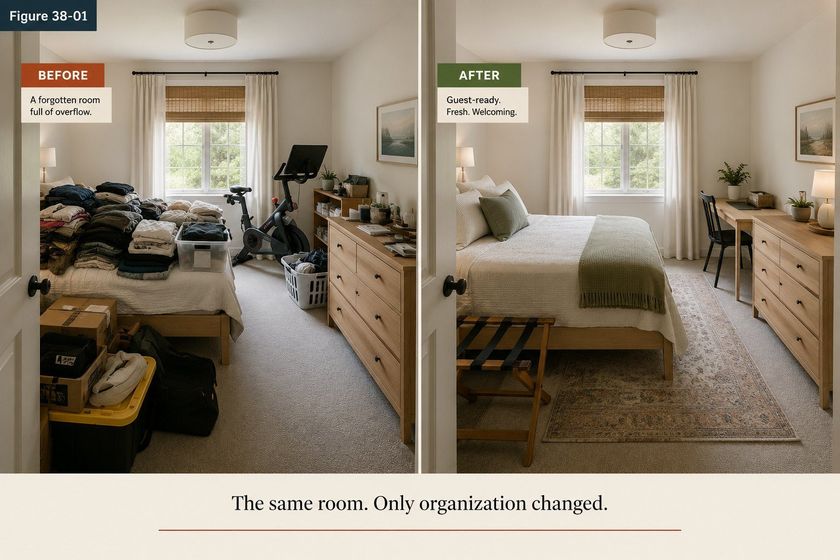
The 5 micro zones
A micro zone is one session, not a whole day. Finish one before you start the next.
Added together, the 5 sessions below come to about 3 to 4.5 hours for the whole guest bedroom. That is not one long day. Each session finishes on its own, so stopping after the first still leaves the room better than it was.
Start here. Open the closet first and pull everything onto the bed. You cannot judge how much room a visitor actually has while half of it is hidden behind a closet door, and working on the bed forces you to finish before anyone can sleep in here.
The micro zones of this room
Guest Bedroom
5 zones. Finish one before you start the next.
- 1The Guest Bed and Linens30-45 min
- 2The Guest Nightstand15-30 min
- 3The Guest Dresser30-45 min
- 4The Guest Closet60-90 min
- 5The Guest Welcome and Work Surface30-45 min
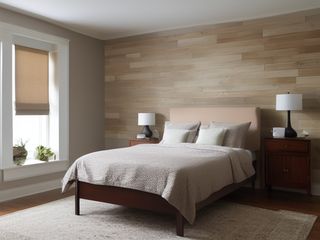 The Guest Bed and Linens (30-45 min)
A bed a visitor can get into tonight without you touching anything first.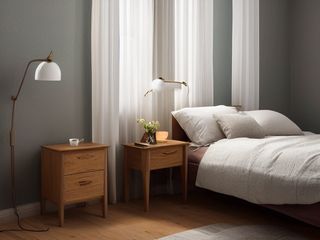 The Guest Nightstand (15-30 min)
The handful of things a guest needs in the middle of the night without knocking on your door.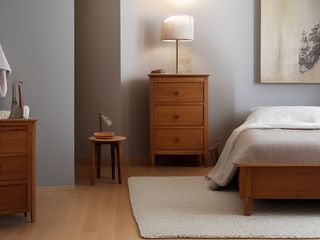 The Guest Dresser (30-45 min)
Somewhere a guest can unpack, so they stop living out of a half open suitcase on the floor.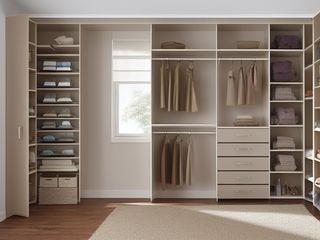 The Guest Closet (60-90 min)
Hanging space for someone else's clothes, plus whatever household storage this room has honestly agreed to carry.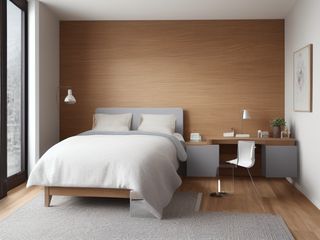 The Guest Welcome and Work Surface (30-45 min)
Where a guest lands the suitcase, charges a laptop, and answers the email they came to this room to escape.
Illustrations of each zone finished. Not photographs of real homes.
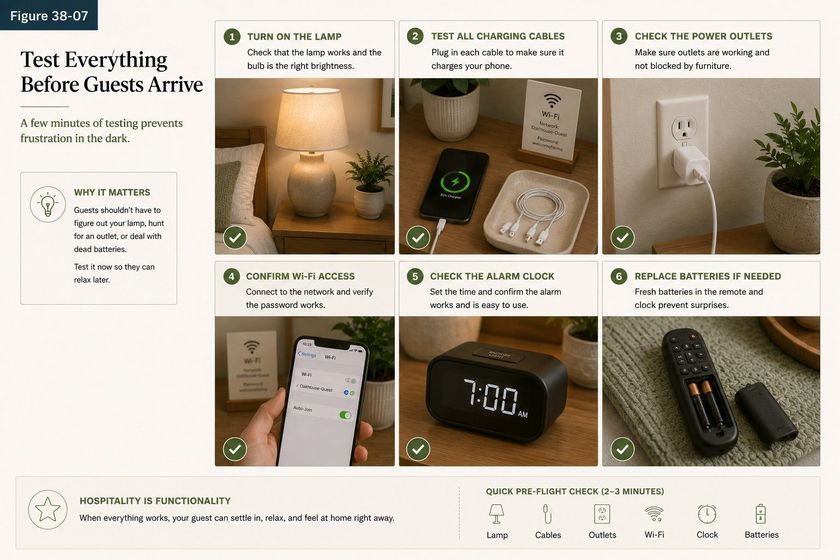
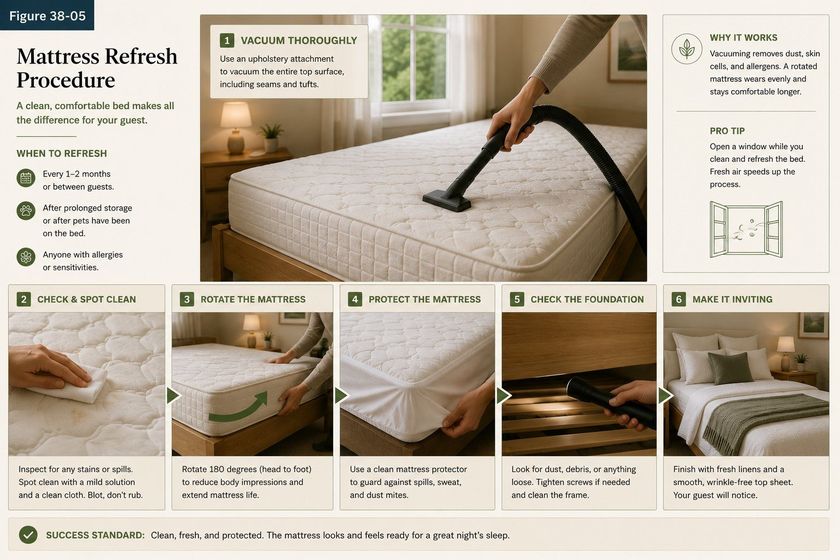
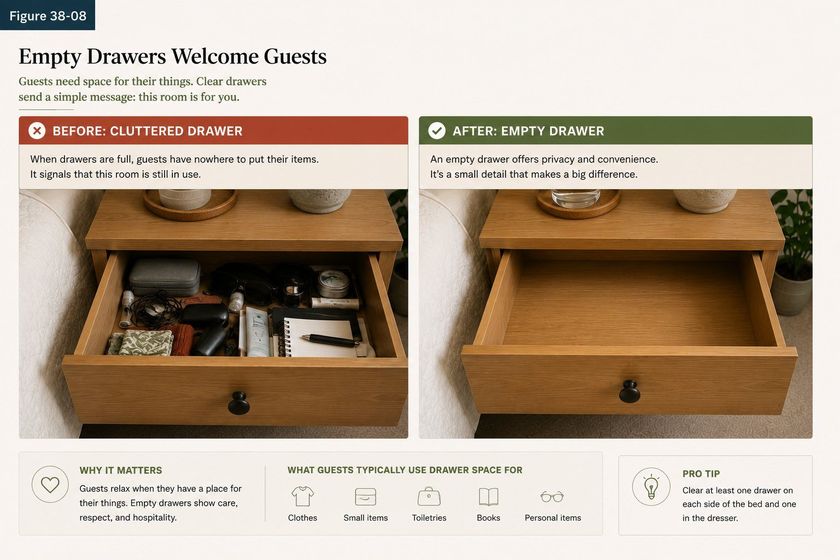
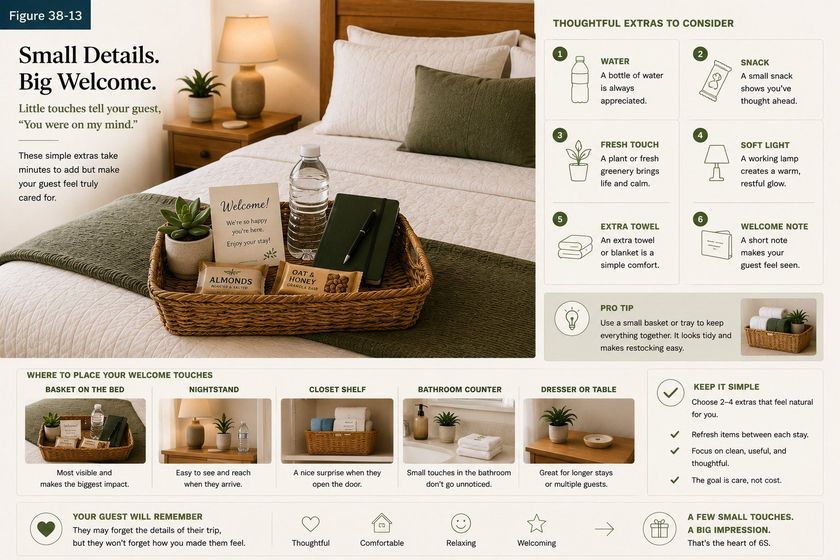
The kit for the whole guest bedroom
Every zone below draws from this. These are types of thing, not brands, and anything you already own that does the job is the right one to use. Each zone page names the smaller list that zone actually needs.
- Color-coded microfiber cloth set ×12 Wipe, dust, and dry surfaces, in the Shine pass. Wash by use color; avoid fabric softener.
- Neutral pH multi-surface cleaner Routine cleaning of sealed surfaces, in the Shine and Sustain passes. Verify surface compatibility; lock around children and pets.
- Compact vacuum with attachments Remove dust, crumbs, and debris, in the Shine pass. Use appropriate attachment.
- Keep, Relocate, Donate, Recycle, Trash container set ×5 Support rapid item routing during Sort, in the Sort pass. Do not block exits.
- Portable cleaning caddy Transport and contain cleaning inputs, in the Straighten, Shine and Sustain passes. Secure chemicals from children and pets.
- Portable label maker Create durable standardized labels, in the Standardize and Sustain passes. Follow surface and adhesive guidance.
- Removable write-on labels Create temporary or adjustable visual controls, in the Standardize pass. Test on delicate finishes.
For this room
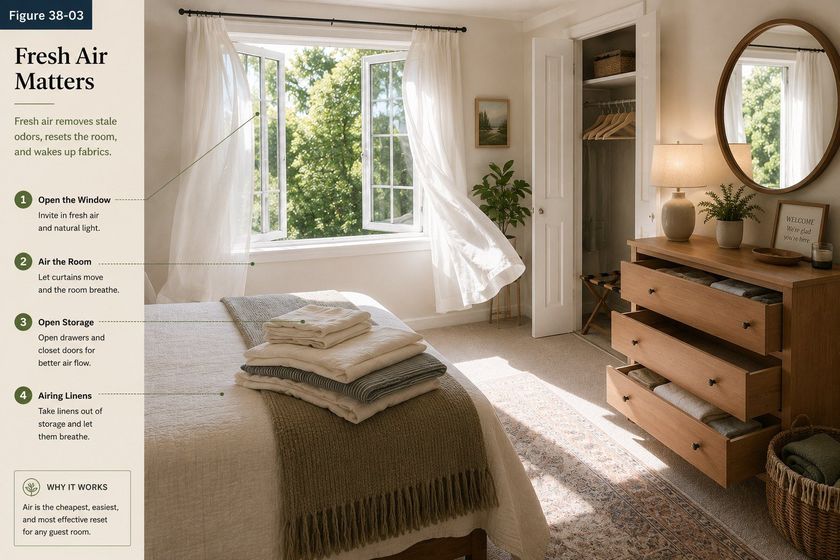
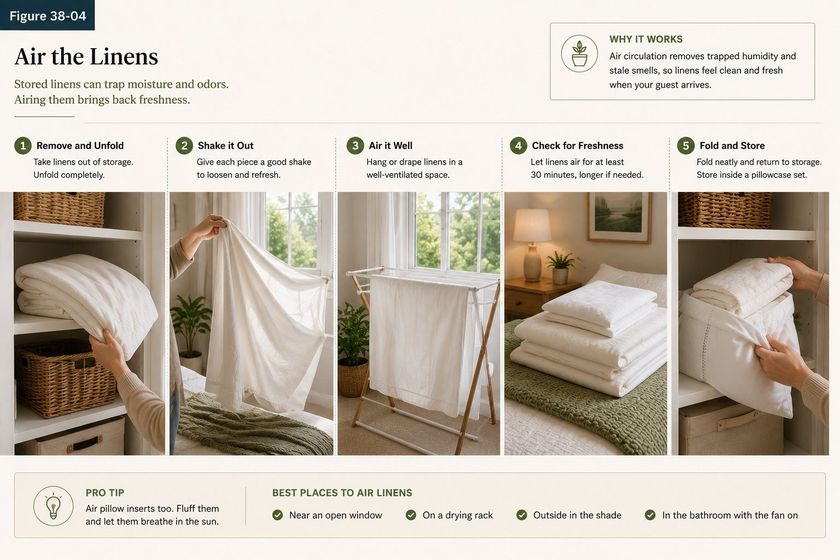
- Cleaning note. Linen that has sat folded since spring smells of the cupboard it sat in, even though it is clean. Wash the set that goes on the bed the week a guest arrives, and open the window while you make it up.
- The trap. Almost every object in this room arrived while you were carrying something else and had somewhere to be. That is why so little of it has ever been decided about, and why this room needs a line drawn between what belongs to a visitor and what the household has stashed here, not a tidy-up.
The guest bedroom deck
The same zones as a deck of 57 cards you can read here or print: what each zone is for, the frictions people actually report in it, the root cause behind each one, and the timed action that clears it. Free, no account. Read the guest bedroom deck.
When you want it off the screen
The whole Guest Bedroom on cards you can carry
Everything above is free and stays free. The Guest Bedroom Pack puts these 5 micro zones on 30 printable cards, nine to a page, plus the standards sheet for the room. It is for the part where you are stood in here with wet hands and would rather not be holding a phone.
The Guest Bedroom Pack, 9 dollarsOr all twenty rooms, 19 dollarsOr draw a card free
The Guest Bedroom on its own is 9 dollars for 30 cards. All 114 micro zones is 19 dollars for 684, which is more cards for the money by a wide margin. The room pack is here because you came for the guest bedroom, not for the house.
Or have somebody run it with you. A one hour virtual consult is 250 dollars: we work out what the guest bedroom is supposed to do, what is stopping it and which zone to start on, and you keep a written plan.
See what a consult covers, 250 dollars
Not ready to pay for that either? Ask which zone first, free
The other rooms
The same six passes, room by room. Every one of these is broken into its own micro zones.
All 20 rooms and 114 micro zones on one page