Living Room micro zone
The Media Center
The media center, in the Living Room. Keep the television, sound and consoles working, cool and cabled so a fault is findable. Every cable labeled at both ends, running in one bundle to a single labeled power strip. Nothing plugged in that serves a device you no longer own, a clear hand's gap of air around the amplifier and console vents, and every game controller and remote in one bin instead of four locations.
One session: 45-75 min, most of it behind the unit, sorting cables and working out what is still plugged into what.
The short version
- Sort. Unplug and lay out every cable, then name the device each one serves
- Straighten. Bundle the cables by device path with velcro ties
- Shine. Vacuum the dust off the console and amplifier vents
- Safety. Heat and power are the two hazards behind this unit: keep the vents unblocked
- Standardize. Label both ends of a cable the day it goes
- Sustain. The rule fires on an event rather than a clock
Each step in full, with what to have on hand and what done looks like, below.
Where it is
Living Room
6 micro zones, one session each
- 1The Sofa and Seating
- 2The Coffee Table
- 3The Media Center
- 4The Bookshelves and Display
- 5The Side Tables and Lighting
- 6The Floor and Circulation Path
What done looks like
Keep the television, sound and consoles working, cool and cabled so a fault is findable.
- Every cable labeled at both ends, running in one bundle to a single labeled power strip
- Nothing plugged in that serves a device you no longer own, a clear hand's gap of air around the amplifier and console vents, and every game controller and remote in one bin instead of four locations
What done looks like
Every cable labeled at both ends, running in one bundle to a single labeled power strip. Nothing plugged in that serves a device you no longer own, a clear hand's gap of air around the amplifier and console vents, and every game controller and remote in one bin instead of four locations.
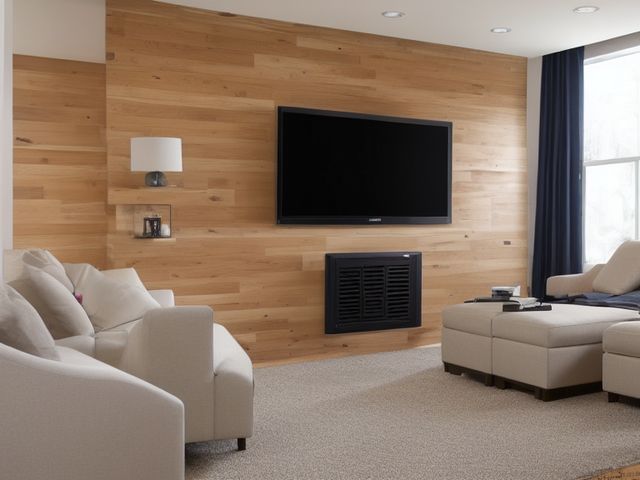
Common items here
- The television, sound system and consoles
- One labeled power strip
- Cables, labeled at both ends and bundled by device
- Every controller and remote, in one bin
What belongs, and what strays in
Belongs here:
- The television, sound system and consoles, with a clear hand's gap of air around the vents
- One labeled power strip
- Cables, labeled at both ends and bundled by device
- Every controller and remote, in one bin instead of four locations
Strays in and should leave:
- Composite leads for a connection this setup no longer uses
- A disc player nobody has loaded in a year
- A streaming stick from two televisions ago
- A charger with the old connector
Check these before you start
- Burn or fireBlocked console and amplifier vents, dust packed on the back of the television, and one power strip plugged into another are the fire risks here, and all three are hidden behind the unit.
- Fall, cut, or crushAn unanchored television on a low unit tips forward when a child pulls on the edge or climbs the shelf below it.
- Water and electricityDrinks set on top of the console or on the floor beside the power strip put liquid directly over live connections.
Which of these is true here?
Match what you are actually seeing in the media center to why it keeps happening, then start at the pass that fixes that, not the top of the list.
There's a coil of cables behind the television unit, and nobody can say which device half of them actually belong to
- Cables never get labeled when they go in, so a year later nobody remembers what any of them are for. Confirm in 30 seconds: Ask two people in the house to describe this zone when it is finished. Two different answers means there is no standard to keep. If that checks out, start at Standardize.
- Old devices got swapped out over the years, but their cables never left with them. Confirm in 30 seconds: Count what you used in the past month. If the honest number is a third of what is stored here, the space is not too small. If that checks out, start at Sort.
- Reaching behind the heavy unit to check is enough hassle that it just doesn't happen. Confirm in 30 seconds: Have the shortest person who uses this zone fetch what they need daily. If they climb, reach overhead, or ask for help, the height is wrong. If that checks out, start at Safety.
The remote and every game controller are stashed in three different spots, and at least one has slid down behind the unit again
- The bin used to sit on top of the unit, exactly where things slide straight off the back. Confirm in 30 seconds: Stand where you use it and count the steps to where it is kept. More than two is the wrong cabinet. If that checks out, start at Straighten.
- Everybody who plays has their own idea of where their controller goes back to. Confirm in 30 seconds: Do the shared task together, once. The argument that starts is the conflict, and it is a design problem, not a character problem. If that checks out, start at Standardize.
- Nobody notices a remote's batteries are dying until the television stops responding mid-show. Confirm in 30 seconds: Find the last one of something you use daily. If nothing tells you it is the last one, you will find out at the worst possible moment. If that checks out, start at Standardize.
Dust has built up thick behind the console and amplifier vents, and nobody's checked whether it's actually blocking the airflow
- It's tucked behind the unit where you genuinely can't see it without pulling everything out. Confirm in 30 seconds: Open the door and, without moving anything, name what is at the back. If you cannot, that stock is invisible. If that checks out, start at Straighten.
- Reaching back there to actually clean it costs more effort than the rest of the room combined, so it gets skipped. Confirm in 30 seconds: Time how long it actually takes to reach and wipe the surface. If it requires moving something first, that cost is why it is skipped. If that checks out, start at Shine.
- There's no scheduled moment that reminds anyone to check behind the unit. Confirm in 30 seconds: Name the moment it happens. If the answer is "when I get round to it", there is no trigger and it will not survive a bad week. If that checks out, start at Sustain.
Only have 15 minutes? Unplug and lay out every cable, then name the device each one serves. The composite leads, the disc player nobody has loaded in a year, the streaming stick from two televisions ago and the charger with the old connector all leave. Discs and games get one decision each: sell, lend, or recycle. Victory: Every remaining cable is labeled at both ends and runs to a device you can name.
The six passes, in order
Work them in this order. Sorting after you have arranged things means arranging things you were about to remove.
This zone's full kit list is below, after the method. Skim it first if you would rather gather everything before you start.
Sort
Decide what stays. Everything else leaves the zone now.
Unplug and lay out every cable, then name the device each one serves. The composite leads, the disc player nobody has loaded in a year, the streaming stick from two televisions ago and the charger with the old connector all leave. Discs and games get one decision each: sell, lend, or recycle.
What to store it in, now that you know what you are keeping
Bins and shelves are for what Sort left behind, not a stand-in for it. Buying storage before sorting means buying a container for things you have not yet decided to keep.
Only if it applies to the media center: 5 more
Not every home needs these for the media center. Each one is here because some do, and the reason is next to it.
- Magazine File ×4 Contain manuals, papers, slim books, or activity books, in the Straighten, Standardize and Sustain passes. Do not overload; anchor wall-mounted or tall systems where required.
- Board Game Component Bags Keep game pieces complete, in the Straighten, Standardize and Sustain passes. Do not overload; anchor wall-mounted or tall systems where required.
- Cable Management Kit Secure and label device cords, in the Straighten, Standardize and Sustain passes. Do not overload; anchor wall-mounted or tall systems where required.
- Controller Dock Charge and contain game controllers, in the Straighten, Standardize and Sustain passes. Do not overload; anchor wall-mounted or tall systems where required.
- Remote Control Tray Create one visible home for controls, in the Straighten, Standardize and Sustain passes. Do not overload; anchor wall-mounted or tall systems where required.
Straighten
Give what stays a home, placed where the hand actually reaches.
Bundle the cables by device path with velcro ties so one console can be pulled out without disturbing the sound bar. Controllers and remotes get one ventilated bin, set at the height of whoever plays, not on top of the unit where they slide behind it.
Shine
Clean it, and use the cleaning to inspect what you cannot see when it is full.
Vacuum the dust off the console and amplifier vents and the whole back panel of the television, because dust is what turns a warm device into a hot one. Wipe the screen with a dry microfiber cloth only, never a spray.
Surface by surface, all 7 of them, with what to use on each.
Safety
Make the zone safe for everybody who uses it, including the shortest person.
Heat and power are the two hazards behind this unit: keep the vents unblocked, never run one power strip into another, and look at every cable for a cracked or scorched section as you handle it. Anchor the television to the wall or to the unit, because a screen tipping off the front edge is the single worst thing this room can do to a child.
Standardize
Write down the best way you know today, so it survives you forgetting.
Label both ends of a cable the day it goes in and label the strip's outlets to match, so a cable that belongs to nothing is obvious at a glance. See Chapter 14, visual controls.
Sustain
Attach the reset to something that already happens, so it keeps itself.
The rule fires on an event rather than a clock: nothing gets switched on until its cable is labeled at both ends, by whoever plugged it in. Two minutes with a marker while the bundle is already in your hand. Slip is one unnamed cable at the strip, worth chasing because an unnamed cable usually feeds something the house no longer owns. Recovery is tracing that single cable, not pulling the bundle apart. This zone can go a year unchanged and lose its whole standard in one evening, when a console arrives at Christmas.
The kit this zone called for
Everything above assumed you had these already. Types of thing, not brands: anything you already own that does the job is the right one to use.
- Color-coded microfiber cloth set ×12 Shine Wash by use color; avoid fabric softener.
- Neutral pH multi-surface cleaner Shine, Sustain Verify surface compatibility; lock around children and pets.
- Compact vacuum with attachments Shine Use appropriate attachment.
- Keep, Relocate, Donate, Recycle, Trash container set ×5 Sort Do not block exits.
- Portable cleaning caddy Straighten, Shine, Sustain Secure chemicals from children and pets.
- Portable label maker Standardize, Sustain Follow surface and adhesive guidance.
- Removable write-on labels Standardize Test on delicate finishes.
Only if it applies to the media center: 3 more
- Cord Label Set Standardize, Sustain Install and use according to product instructions.
- Surge Protector with Overload Protection Straighten, Safety Install and use according to product instructions.
- Shelf Location Label Set Standardize, Sustain Install and use according to product instructions.
The dead electronics shelf
Somewhere in this unit is a working device nobody has switched on in a year, and a box of cables kept because they might fit something. You have avoided this because the devices cost real money and letting them go feels like admitting the money is gone. The money is already gone. The rule: power each device on now. If it does not boot, or it boots and nobody in the house asks for it within the month, it goes to recycling or resale this week. For a cable, name the device it serves out loud before you finish picking it up, or it leaves, because an unnamed cable will still be unnamed next year.
Cleaning it properly, surface by surface
Dust is what turns a warm device into a hot one, so the real work here is the vents and the back panel, not the screen. Work top down, brush the dust out of every slot, and touch the screen with a dry cloth only.
Work down, not across. Whatever comes off a high surface lands on the one below it, so cleaning the floor first means cleaning it twice.
Carry these in with you. Portable cleaning caddy; Compact vacuum with attachments (brush head); Color-coded microfiber cloth set; Neutral pH multi-surface cleaner; Small detail brush for the vent slots (not in this zone's list).
- The top of the unit
Start on the top surface with a cloth just damp with neutral pH cleaner. This is the ledge where dust settles thickest. - The television screen
Wipe the screen with a dry microfiber cloth only, in slow straight passes. Never spray anything onto a screen and never reach for a paper towel, which scratches the coating. - The television back panel and bezel
Vacuum the whole back panel and the bezel with a brush head, working the dust out of the ridges. This is the dust that turns a warm set into a hot one. - The console and amplifier vent slots
Brush and vacuum every vent slot on the top and back of each device. If dust has matted solid in a slot, loosen it with a soft detail brush first, then lift it away with the vacuum. - The shelf surfaces and front edges
Wipe each shelf and its front edge with the damp cloth, moving devices forward rather than wiping around them. - The cable bundle, power strip and floor behind
Wipe the cable bundle and the outside of the power strip with a barely damp cloth, keeping moisture away from the socket faces, and dry it. Then vacuum the floor behind the unit where dust and pet hair pack in against the wall. - The controllers and remotes
Wipe the grips, buttons and thumbstick collars with a barely damp cloth and dry them. This is the grime you hand from person to person.
How to clean anything else in the house, surface by surface.
Inspect as you clean. Cleaning is the only time you see the zone empty, so use it.
- A hot-plastic or scorched smell around the back panel, strongest near the amplifier
- A power strip, plug, or socket face that is warm to the touch or browning at the edges
- A console or amplifier fan that has grown noticeably louder than it used to run
- Dust matted into a solid felt across a vent slot rather than loose enough to lift
- A cable sheath gone stiff or tacky with heat where it bends behind the unit
The standard that keeps it fixed
Every cable is labeled at both ends and every device has clear air on its vents.
Reset trigger. When the credits roll and you switch the television off, the controllers go back in their bin on the way out of the room.
How much the media center can actually hold
One labeled power strip, every cable labeled at both ends and bundled by device path, a hand's gap of air at every vent, and one ventilated bin holding every controller and remote in the house.
If one strip will not carry the devices, the answer is a second strip on a second circuit, not a strip plugged into a strip. Daisy-chaining is the arrangement that starts a fire. Run the honest count.
When this does not describe your media center
The passes above describe the ordinary case. Plenty of real households are not ordinary, and the fix is not to skip the method, it is to run it against a different starting shape.
- Everything is wall mounted
- Cable labeling matters more rather than less, because the run is hidden and a fault is harder to trace. Label both ends before anything enters the wall channel, and photograph the back of the unit before you close it up.
- The media wall is also the home office
- Separate the two power paths and label them separately. The thing you must be able to do is unplug the games console without taking down a machine somebody is working on.
The rest of the living room
Each of these is one session on its own.
- The Sofa and Seating
- The Coffee Table
- The Media Center, you are here
- The Bookshelves and Display
- The Side Tables and Lighting
- The Floor and Circulation Path
The Living Room in full, with what each of the 6 zones is for
The living room as a deck of 69 cards: the frictions people report in each zone, the root cause behind each one, and the timed action that clears it. Free to read or print.
Zones that do the same job, elsewhere in the house
Different room, different name, same real job. Each one is its own page because the room around it changes what actually works.
Related reading
- A charger for a connector nothing in the house uses anymore?
- Does this zone keep running out of something?
- Is one spot in this zone always the one you skip?
- Is the everyday item in this zone actually the easy one to reach?
- Does something in this zone actually get used somewhere else?
Questions people ask about this zone
- How long does it take to reset the media center?
- One session: 45-75 min, most of it behind the unit, sorting cables and working out what is still plugged into what.
- What does a finished media center look like?
- Every cable labeled at both ends, running in one bundle to a single labeled power strip. Nothing plugged in that serves a device you no longer own, a clear hand's gap of air around the amplifier and console vents, and every game controller and remote in one bin instead of four locations.
- What is the hardest call to make in the media center?
- Somewhere in this unit is a working device nobody has switched on in a year, and a box of cables kept because they might fit something. You have avoided this because the devices cost real money and letting them go feels like admitting the money is gone. The money is already gone. The rule: power each device on now. If it does not boot, or it boots and nobody in the house asks for it within the month, it goes to recycling or resale this week. For a cable, name the device it serves out loud before you finish picking it up, or it leaves, because an unnamed cable will still be unnamed next year.
- How do you keep the media center from getting cluttered again?
- Every cable is labeled at both ends and every device has clear air on its vents. When the credits roll and you switch the television off, the controllers go back in their bin on the way out of the room.
- What do you need to clean the media center?
- Portable cleaning caddy; Compact vacuum with attachments (brush head); Color-coded microfiber cloth set; Neutral pH multi-surface cleaner; Small detail brush for the vent slots (not in this zone's list).
- What do you clean first in the media center?
- The top of the unit. Start on the top surface with a cloth just damp with neutral pH cleaner. This is the ledge where dust settles thickest.
- Is there a burn or fire risk in the media center?
- Blocked console and amplifier vents, dust packed on the back of the television, and one power strip plugged into another are the fire risks here, and all three are hidden behind the unit.
- Is there a fall, cut, or crush risk in the media center?
- An unanchored television on a low unit tips forward when a child pulls on the edge or climbs the shelf below it.
- Is there a water and electricity risk in the media center?
- Drinks set on top of the console or on the floor beside the power strip put liquid directly over live connections.
- Why does the media center do this: There's a coil of cables behind the television unit, and nobody can say which device half of them actually belong to?
- Cables never get labeled when they go in, so a year later nobody remembers what any of them are for, so start at Standardize; Old devices got swapped out over the years, but their cables never left with them, so start at Sort; Reaching behind the heavy unit to check is enough hassle that it just doesn't happen, so start at Safety.
- Why does the media center do this: The remote and every game controller are stashed in three different spots, and at least one has slid down behind the unit again?
- The bin used to sit on top of the unit, exactly where things slide straight off the back, so start at Straighten; Everybody who plays has their own idea of where their controller goes back to, so start at Standardize; Nobody notices a remote's batteries are dying until the television stops responding mid-show, so start at Standardize.
- Why does the media center do this: Dust has built up thick behind the console and amplifier vents, and nobody's checked whether it's actually blocking the airflow?
- It's tucked behind the unit where you genuinely can't see it without pulling everything out, so start at Straighten; Reaching back there to actually clean it costs more effort than the rest of the room combined, so it gets skipped, so start at Shine; There's no scheduled moment that reminds anyone to check behind the unit, so start at Sustain.
When you want it off the screen
Carry The Media Center into the room
The method above is complete and free. The Whole House Print Pack puts The Media Center and the other 113 micro zones on 684 printable cards, so the steps you just read are not stuck behind a phone screen while your hands are full.
The Print Pack, 19 dollarsJust this zone, 4 dollarsOr draw a card free
The Media Center on its own is 4 dollars for 6 cards. All 114 micro zones is 19 dollars for 684. The whole house is the better buy; the single zone is here so you can take only what you are working on.
If The Media Center keeps fighting back, the real problem usually sits somewhere else in the room. A one hour virtual consult is 250 dollars: we find the function, the friction and the root cause together, and you keep a written standard for the space.
See what a consult covers, 250 dollars
Not ready to pay for that either? Ask which zone first, free