Family Room micro zone
The Toy and Play Zone
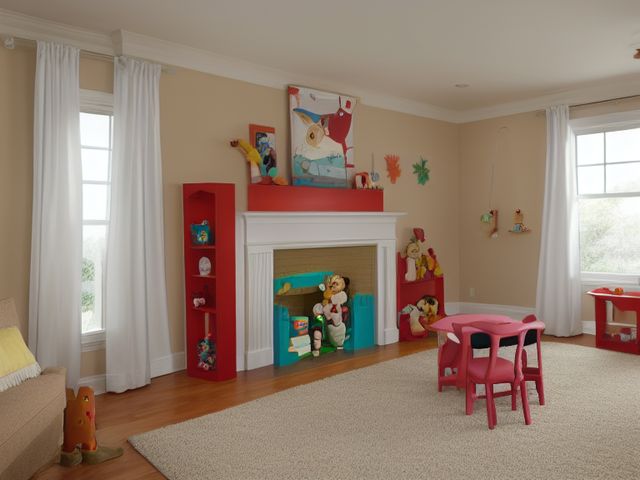
The toy storage, in the Family Room. Hold the toys that are in active rotation, at a height and in a form where a child can put them away without an adult. Five or six open bins with no lids on the lowest shelf, one category each, a photo of the contents taped to the front face where a child looking down sees it, the play mat rolled against the wall, and enough clear floor that two children can build without moving anything first.
One session: 60-90 min, most of it in Sort, once every bin is tipped out onto the mat.
The short version
- Sort. Tip every bin out onto the mat and make four piles: played with this month
- Straighten. One category per open bin, no lids, all on the lowest shelf: blocks, vehicles
- Shine. Wash hard plastic toys in mild soapy water and dry them fully
- Safety. For any child under three in the house
- Standardize. Photo labels on the bin fronts
- Sustain. Pickup is bought, not asked
Each step in full, with what to have on hand and what done looks like, below.
Where it is
Family Room
6 micro zones, one session each
- 1The Primary Media Zone
- 2The Toy and Play Zone
- 3The Board Game and Puzzle Zone
- 4The Blanket and Comfort Zone
- 5The Charging and Device Zone
- 6The Craft and Activity Zone
What done looks like
Hold the toys that are in active rotation, at a height and in a form where a child can put them away without an adult.
- Five or six open bins with no lids on the lowest shelf, one category each
- A photo of the contents taped to the front face where a child looking down sees it
- The play mat rolled against the wall
- Enough clear floor that two children can build without moving anything first
What done looks like
Five or six open bins with no lids on the lowest shelf, one category each, a photo of the contents taped to the front face where a child looking down sees it, the play mat rolled against the wall, and enough clear floor that two children can build without moving anything first.
Common items here
- Five or six open bins, one category each
- Picture labels on the front face
- The play mat, rolled against the wall
What belongs, and what strays in
Belongs here:
- Five or six open bins with no lids, one category each, on the lowest shelf
- A photo of the contents taped to the front face, where a child looking down sees it
- The play mat, rolled against the wall
- Enough clear floor that two children can build without moving anything first
Strays in and should leave:
- A toy with a cracked seam, a corroded battery compartment, or a missing wheel
- Anything outgrown
- A toy missing its other half
- Anything broken, still waiting in the bin instead of repaired or gone
Check these before you start
- Poison, choke, or strangleMarbles, small figure accessories, and the wheels that snap off toy vehicles land on a floor a crawling child also uses. Anything that fits through a toilet paper tube does not belong in a floor-height bin here.
- Fall, cut, or crushCracked hard plastic makes edges sharp enough to cut a knee, and a low shelf loaded heavy at the top will come over when a toddler pulls themselves up on it.
Which of these is true here?
Match what you are actually seeing in the toy storage to why it keeps happening, then start at the pass that fixes that, not the top of the list.
A large, loud toy a relative gave takes up its own space on the shelf, and no child has reached for it without being pointed at it in months
- It's kept for the giver, not for a child who plays with it, and letting go of it feels disloyal. Confirm in 30 seconds: Ask if you would buy this again today for what it does. If the answer is no but you still cannot decide, the hold is sentimental. If that checks out, start at Sort.
- Nobody's actually run the honest week test to see whether a child reaches for it unprompted, so the question keeps getting deferred. Confirm in 30 seconds: Pick up one piece. If your first thought is a verb (pay, sign, call, decide) rather than a place, it needs a decision, not a home. If that checks out, start at Sort.
- It's sat in the same spot so long it doesn't register as unused clutter anymore, just furniture. Confirm in 30 seconds: Ask someone who does not live here to name what looks out of place. If they see it instantly and you had stopped noticing, this is the cause. If that checks out, start at Sort.
The bins on the shelf are crammed two deep with toys that belong in the overflow bins in the closet, not on this shelf at all
- The overflow is stored right here on the play shelf instead of the closet, so the shelf never gets down to five or six real choices. Confirm in 30 seconds: Stand where you use it and count the steps to where it is kept. More than two is the wrong cabinet. If that checks out, start at Straighten.
- A bin crammed two deep hides half of what's inside it from a child looking down at the label. Confirm in 30 seconds: Open the door and, without moving anything, name what is at the back. If you cannot, that stock is invisible. If that checks out, start at Straighten.
- There's no trigger that says a bin gets swapped in from the closet by name and the old one goes back out, so overflow just keeps arriving here instead. Confirm in 30 seconds: Name the moment it happens. If the answer is "when I get round to it", there is no trigger and it will not survive a bad week. If that checks out, start at Sustain.
A wheel snapped off a toy vehicle and a handful of small figure accessories are loose on the floor a crawling child also uses
- Pieces small enough to fit through a toilet paper tube ended up on a floor a crawling child can reach, and that outranks anything else about this shelf. Confirm in 30 seconds: Look for the four: a blade your hand would meet, weight above shoulder height, heat beside something that burns, and an unsafe placement near a child's reach. If that checks out, start at Safety.
- Nobody's agreed that a cracked or broken toy comes off the shelf the moment it's noticed, so it just stays in rotation. Confirm in 30 seconds: Ask two people in the house to describe this zone when it is finished. Two different answers means there is no standard to keep. If that checks out, start at Standardize.
- Nobody specifically checks this shelf and floor for a broken edge or a stray small part between resets. Confirm in 30 seconds: Ask who resets this zone. If the honest answer is "whoever gets to it" or two names with no agreement, there is no owner. If that checks out, start at Sustain.
Only have 15 minutes? Pull every toy off the shelf and run the two-question sort in the open: does a child actually reach for this without being pointed at it, and is it in one piece with no small part loose enough to choke on. Anything nobody has chosen in the last honest week, and anything cracked or missing a piece that could be swallowed, comes off the shelf today. Victory: Only toys a child actually chooses remain on the shelf, none of them cracked or missing a small part, sorted into five or six open bins a child can see into from standing height.
The six passes, in order
Work them in this order. Sorting after you have arranged things means arranging things you were about to remove.
This zone's full kit list is below, after the method. Skim it first if you would rather gather everything before you start.
Sort
Decide what stays. Everything else leaves the zone now.
Tip every bin out onto the mat and make four piles: played with this month, broken, missing its other half, and outgrown. Anything with a cracked seam, a corroded battery compartment, or a missing wheel gets repaired today or leaves today, because it will not get repaired later.
What to store it in, now that you know what you are keeping
Bins and shelves are for what Sort left behind, not a stand-in for it. Buying storage before sorting means buying a container for things you have not yet decided to keep.
Only if it applies to the toy storage: 7 more
Not every home needs these for the toy storage. Each one is here because some do, and the reason is next to it.
- Open Front Bin Small ×4 Provide one-motion access to frequently used items, in the Straighten, Standardize and Sustain passes. Do not overload; anchor wall-mounted or tall systems where required.
- Open Front Bin Medium ×4 Provide one-motion access to medium items, in the Straighten, Standardize and Sustain passes. Do not overload; anchor wall-mounted or tall systems where required.
- Board Game Component Bags Keep game pieces complete, in the Straighten, Standardize and Sustain passes. Do not overload; anchor wall-mounted or tall systems where required.
- Controller Dock Charge and contain game controllers, in the Straighten, Standardize and Sustain passes. Do not overload; anchor wall-mounted or tall systems where required.
- Medium Clear Lidded Bin ×4 Contain medium items on shelves or in closets, in the Straighten, Standardize and Sustain passes. Do not overload; anchor wall-mounted or tall systems where required.
- Toy Bin with Picture Label ×4 Support independent child cleanup, in the Straighten, Standardize and Sustain passes. Do not overload; anchor wall-mounted or tall systems where required.
- Front-Facing Book Bin ×2 Display children's books for easy access, in the Straighten, Standardize and Sustain passes. Do not overload; anchor wall-mounted or tall systems where required.
Straighten
Give what stays a home, placed where the hand actually reaches.
One category per open bin, no lids, all on the lowest shelf: blocks, vehicles, dolls and figures, pretend food, art toys. A lid is one more step than a four-year-old will take at the end of a play session.
Shine
Clean it, and use the cleaning to inspect what you cannot see when it is full.
Wash hard plastic toys in mild soapy water and dry them fully, because a damp block goes back into a closed bin and stays damp. Fabric dolls and soft blocks go through the machine in a wash bag, and the play mat gets lifted so you can vacuum the crumbs underneath it.
Surface by surface, all 8 of them, with what to use on each.
Safety
Make the zone safe for everybody who uses it, including the shortest person.
For any child under three in the house, hold each small part against the middle of a toilet paper tube. If it passes through, that toy belongs in the older child's room, not in a bin at floor height in the shared room. Keep the tallest bin below the child's shoulder so nothing gets pulled down onto a face.
Standardize
Write down the best way you know today, so it survives you forgetting.
Photo labels on the bin fronts, and one printed picture of the finished shelf taped at child eye height on the wall beside it. Match the picture is an instruction a five-year-old can follow without an adult refereeing.
Sustain
Attach the reset to something that already happens, so it keeps itself.
Pickup is bought, not asked for. The story starts when the mat is empty, so the children clear while an adult holds the book, five minutes in a room this size. The bins are a gauge a child can read, because a bin that will not take its category back with the lid off has outgrown the shelf. Recovery is rotating one whole category into the closet for a month, which is not a purge and is worth saying out loud. Volume arrives in bursts here: two birthdays and a Christmas, without one untidy day.
The kit this zone called for
Everything above assumed you had these already. Types of thing, not brands: anything you already own that does the job is the right one to use.
- Color-coded microfiber cloth set ×12 Shine Wash by use color; avoid fabric softener.
- Neutral pH multi-surface cleaner Shine, Sustain Verify surface compatibility; lock around children and pets.
- Compact vacuum with attachments Shine Use appropriate attachment.
- Keep, Relocate, Donate, Recycle, Trash container set ×5 Sort Do not block exits.
- Portable cleaning caddy Straighten, Shine, Sustain Secure chemicals from children and pets.
- Portable label maker Standardize, Sustain Follow surface and adhesive guidance.
- Removable write-on labels Standardize Test on delicate finishes.
Only if it applies to the toy storage: 1 more
- Shelf Location Label Set Standardize, Sustain Install and use according to product instructions.
The gift nobody plays with
There is a large, loud, expensive thing in this room that a relative gave, and no child has chosen it unprompted in months. You keep it because of the giver, and every time you sort this zone you move it two feet and put it back. The rule that settles this: the shelf belongs to the child, not to the giver. Run one honest week, touch nothing, and watch whether any child reaches for it without being pointed at it. If none does, it goes. If you are genuinely worried about being asked, take one photograph of the child playing with it, send that photo to the person who gave it, then donate it while the good will is intact. Keeping an unloved toy on the lowest shelf does not honor anybody. It costs a bin that a favorite toy currently does not have.
Cleaning it properly, surface by surface
Everything here goes in a small mouth or under a bare knee, so clean means genuinely clean and genuinely dry. Work from the top of the shelf down to the mat, and lift the mat, because that is where the crumbs hide.
Work down, not across. Whatever comes off a high surface lands on the one below it, so cleaning the floor first means cleaning it twice.
Carry these in with you. Color-coded microfiber cloth set; Compact vacuum with attachments; Neutral pH multi-surface cleaner; Portable cleaning caddy; Mesh wash bag (not in this zone's list, needed for soft toys in the machine).
- The top of the shelf unit and its top edges
Dust the top surface and edges with a dry microfiber cloth first, working left to right so nothing drops onto shelves you have already done. - The bin front faces and the photo labels
Wipe the front face of each open bin and its taped photo with a barely damp cloth, then dry, so a child looking down still reads the picture. - The shelf boards the bins sit on
Lift each bin out and wipe the board beneath it with neutral pH cleaner, then dry it before the bin returns, since spills and crumbs collect under the bins where you never look. - The open bin interiors
Empty each bin, wash the hard plastic inside and out in mild soapy water, rinse, and dry it completely before any toy returns, because a damp bin keeps a damp block damp. - The hard plastic toys and blocks
Wash in mild soapy water, rinse, and stand them to air dry fully before they go back into a closed bin. - The fabric dolls and soft blocks
Zip them into a mesh wash bag and run them through the machine, then dry them fully before they return to the shelf. - The play mat, both faces
Vacuum the top face, lift the mat rolled against the wall right off the floor, vacuum its underside and the floor beneath, then wipe a wipe-clean mat with neutral pH cleaner and let it dry before rolling it back. - The floor around and under the shelf
Vacuum the open floor and into the corners and the shelf's foot line, where small parts and crumbs collect out of sight.
How to clean anything else in the house, surface by surface.
Inspect as you clean. Cleaning is the only time you see the zone empty, so use it.
- A cracked hard plastic edge sharp enough to catch a knee, and any toy piece that has split or snapped.
- A small part or a wheel snapped off a vehicle found loose on the floor, which is choke sized on a floor a crawler shares.
- A soft, stained, or musty base inside a bin where a wet toy went back damp, an early sign of mildew.
- A shelf that rocks, or a bracket you feel move, when you lift the mat or a bin past it.
- A photo label peeling or faded off a bin front so the category no longer reads.
The standard that keeps it fixed
Five or six open bins on the lowest shelf, one category each, picture labels on the front face, nothing above shoulder height, and the overflow toys waiting in labeled bins in a closet rather than on this shelf.
Reset trigger. When the bedtime story is announced.
How much the toy storage can actually hold
Five or six open bins with no lids on the lowest shelf, one category each, and enough clear floor for two children to build without moving anything first.
If the toys will not fit in six bins, they are not all in rotation. Box the rest, date the box and swap, rather than adding a seventh bin, because a seventh category is one a child will not learn. Run the honest count.
When this does not describe your toy storage
The passes above describe the ordinary case. Plenty of real households are not ordinary, and the fix is not to skip the method, it is to run it against a different starting shape.
- One child, and older than about eight
- Fewer bins and larger categories, and the photo labels can come off. The photo is there for a child who cannot read yet, so leaving it up past its use makes the shelf feel as though it belongs to a younger child.
- The play zone sits inside a shared adult room
- The bins get lids and the zone gets a closing time. The standard stops being a tidy shelf and becomes a room that converts back in one trip, so what you measure is how long the conversion takes rather than how it looks mid-afternoon.
The rest of the family room
Each of these is one session on its own.
- The Primary Media Zone
- The Toy and Play Zone, you are here
- The Board Game and Puzzle Zone
- The Blanket and Comfort Zone
- The Charging and Device Zone
- The Craft and Activity Zone
The Family Room in full, with what each of the 6 zones is for
The family room as a deck of 69 cards: the frictions people report in each zone, the root cause behind each one, and the timed action that clears it. Free to read or print.
The same zone in another room
The family room is not the only room in this house with this zone. They do not do the same job, which is why each has its own page rather than one page pretending the rooms are interchangeable.
Related reading
- Found a duplicate of something in this zone?
- Have you stopped noticing the clutter in this zone?
- Does something in this zone actually get used somewhere else?
- Stuck on one item in this zone?
- Is mail piling up on this exact surface?
Questions people ask about this zone
- How long does it take to reset the toy storage?
- One session: 60-90 min, most of it in Sort, once every bin is tipped out onto the mat.
- What does a finished toy storage look like?
- Five or six open bins with no lids on the lowest shelf, one category each, a photo of the contents taped to the front face where a child looking down sees it, the play mat rolled against the wall, and enough clear floor that two children can build without moving anything first.
- What is the hardest call to make in the toy storage?
- There is a large, loud, expensive thing in this room that a relative gave, and no child has chosen it unprompted in months. You keep it because of the giver, and every time you sort this zone you move it two feet and put it back. The rule that settles this: the shelf belongs to the child, not to the giver. Run one honest week, touch nothing, and watch whether any child reaches for it without being pointed at it. If none does, it goes. If you are genuinely worried about being asked, take one photograph of the child playing with it, send that photo to the person who gave it, then donate it while the good will is intact. Keeping an unloved toy on the lowest shelf does not honor anybody. It costs a bin that a favorite toy currently does not have.
- How do you keep the toy storage from getting cluttered again?
- Five or six open bins on the lowest shelf, one category each, picture labels on the front face, nothing above shoulder height, and the overflow toys waiting in labeled bins in a closet rather than on this shelf. When the bedtime story is announced.
- What do you need to clean the toy storage?
- Color-coded microfiber cloth set; Compact vacuum with attachments; Neutral pH multi-surface cleaner; Portable cleaning caddy; Mesh wash bag (not in this zone's list, needed for soft toys in the machine).
- What do you clean first in the toy storage?
- The top of the shelf unit and its top edges. Dust the top surface and edges with a dry microfiber cloth first, working left to right so nothing drops onto shelves you have already done.
- Is there a poison, choke, or strangle risk in the toy storage?
- Marbles, small figure accessories, and the wheels that snap off toy vehicles land on a floor a crawling child also uses. Anything that fits through a toilet paper tube does not belong in a floor-height bin here.
- Is there a fall, cut, or crush risk in the toy storage?
- Cracked hard plastic makes edges sharp enough to cut a knee, and a low shelf loaded heavy at the top will come over when a toddler pulls themselves up on it.
- Why does the toy storage do this: A large, loud toy a relative gave takes up its own space on the shelf, and no child has reached for it without being pointed at it in months?
- It's kept for the giver, not for a child who plays with it, and letting go of it feels disloyal, so start at Sort; Nobody's actually run the honest week test to see whether a child reaches for it unprompted, so the question keeps getting deferred, so start at Sort; It's sat in the same spot so long it doesn't register as unused clutter anymore, just furniture, so start at Sort.
- Why does the toy storage do this: The bins on the shelf are crammed two deep with toys that belong in the overflow bins in the closet, not on this shelf at all?
- The overflow is stored right here on the play shelf instead of the closet, so the shelf never gets down to five or six real choices, so start at Straighten; A bin crammed two deep hides half of what's inside it from a child looking down at the label, so start at Straighten; There's no trigger that says a bin gets swapped in from the closet by name and the old one goes back out, so overflow just keeps arriving here instead, so start at Sustain.
- Why does the toy storage do this: A wheel snapped off a toy vehicle and a handful of small figure accessories are loose on the floor a crawling child also uses?
- Pieces small enough to fit through a toilet paper tube ended up on a floor a crawling child can reach, and that outranks anything else about this shelf, so start at Safety; Nobody's agreed that a cracked or broken toy comes off the shelf the moment it's noticed, so it just stays in rotation, so start at Standardize; Nobody specifically checks this shelf and floor for a broken edge or a stray small part between resets, so start at Sustain.
When you want it off the screen
Carry The Toy and Play Zone into the room
The method above is complete and free. The Whole House Print Pack puts The Toy and Play Zone and the other 113 micro zones on 684 printable cards, so the steps you just read are not stuck behind a phone screen while your hands are full.
The Print Pack, 19 dollarsJust this zone, 4 dollarsOr draw a card free
The Toy and Play Zone on its own is 4 dollars for 6 cards. All 114 micro zones is 19 dollars for 684. The whole house is the better buy; the single zone is here so you can take only what you are working on.
If The Toy and Play Zone keeps fighting back, the real problem usually sits somewhere else in the room. A one hour virtual consult is 250 dollars: we find the function, the friction and the root cause together, and you keep a written standard for the space.
See what a consult covers, 250 dollars
Not ready to pay for that either? Ask which zone first, free