Dining Room micro zone
The Beverage or Coffee Station
The beverage or coffee station, in the Dining Room. Make a drink and hand it over without crossing into the kitchen. Machine, grounds, mugs, then spoons and sugar running left to right along one liftable tray, mugs capped at the number of daily drinkers plus two, a marked fill line on the bean jar, and a hand's width of clear air behind the kettle.
One session: 30-45 min, the descaling cycle runs while you sort the tea boxes.
The short version
- Sort. Line up every tea box, syrup bottle, and pod sleeve and check the dates
- Straighten. Set the station in the order your hands actually move: machine, then grounds or pods
- Shine. Descale the machine on the interval its manual gives, lift the drip tray grate
- Safety. Water and electricity share this counter, so give the machine and kettle their own outlet
- Standardize. Mugs are capped at daily drinkers plus two, and the bean
- Sustain. The reset happens while the coffee is already brewing, by whoever is first
Each step in full, with what to have on hand and what done looks like, below.
Where it is
Dining Room
5 micro zones, one session each
- 1The Dining Table
- 2The Sideboard Surface
- 3The Sideboard Storage
- 4The China or Display Cabinet
- 5The Beverage or Coffee Station
What done looks like
Make a drink and hand it over without crossing into the kitchen.
- Machine, grounds, mugs, then spoons and sugar running left to right along one liftable tray
- Mugs capped at the number of daily drinkers plus two
- A marked fill line on the bean jar
- A hand's width of clear air behind the kettle
What done looks like
Machine, grounds, mugs, then spoons and sugar running left to right along one liftable tray, mugs capped at the number of daily drinkers plus two, a marked fill line on the bean jar, and a hand's width of clear air behind the kettle.
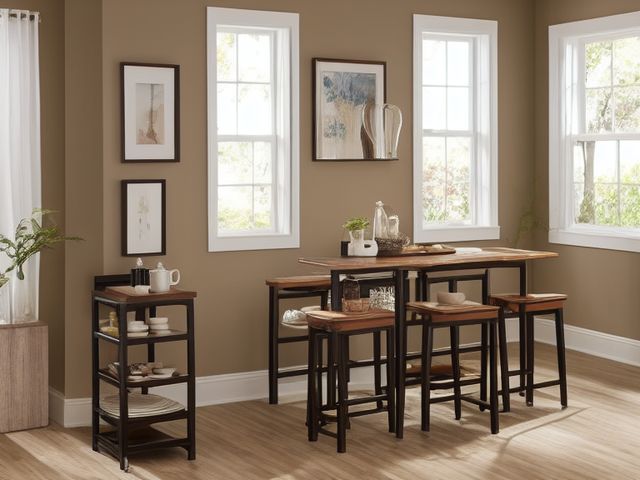
Common items here
- The machine
- Grounds or pods
- Mugs
- Spoons and sugar
- Tea boxes, syrup bottles, and travel mugs
What belongs, and what strays in
Belongs here:
- The machine, grounds, mugs, spoons and sugar, running left to right on one liftable tray
- Mugs, capped at the number of daily drinkers plus two
- A travel mug matched to its own lid
Strays in and should leave:
- A tea box, syrup bottle or pod sleeve past its date
- A travel mug with no lid to match it
- Promotional glassware you have never once poured into
Check these before you start
- Water and electricityThe machine, the kettle, and an open water jug share a small surface, and cords near the front edge get hooked by a sleeve. Keep the appliances on their own outlet and never top up a plugged-in machine over its base.
- Burn or fireA kettle boiling directly under a wall shelf drives steam into the underside of it, warping the shelf and dropping condensation onto the plug below.
- Poison, choke, or strangleWine and spirits on an open dining-room shelf sit unlatched at child height, which is rarely true of anything in the kitchen.
Which of these is true here?
Match what you are actually seeing in the beverage or coffee station to why it keeps happening, then start at the pass that fixes that, not the top of the list.
A bottle of wine and a couple of spirits sit open on a shelf at this station, within easy reach of a small child standing at the counter
- There's no latch or high shelf assigned for alcohol at this station, only in the kitchen. Confirm in 30 seconds: Ask where one specific item lives. If two people answer differently, or nobody answers, it has no home. If that checks out, start at Straighten.
- This station never got the same childproofing pass the kitchen did. Confirm in 30 seconds: Look for the four: a blade your hand would meet, weight above shoulder height, heat beside something that burns, and an unsafe placement near a child's reach. If that checks out, start at Safety.
- Moving the bottles higher keeps getting put off because it's a small job with no deadline. Confirm in 30 seconds: Name the moment it happens. If the answer is "when I get round to it", there is no trigger and it will not survive a bad week. If that checks out, start at Sustain.
The bean jar has run below its own marked fill line more than once with nobody noticing until the machine sputtered out mid-pour
- Topping the jar isn't tied to any specific moment, so it only happens when someone remembers. Confirm in 30 seconds: Name the moment it happens. If the answer is "when I get round to it", there is no trigger and it will not survive a bad week. If that checks out, start at Sustain.
- The fill line is marked but nobody's actually assigned to check it. Confirm in 30 seconds: Ask who resets this zone. If the honest answer is "whoever gets to it" or two names with no agreement, there is no owner. If that checks out, start at Sustain.
- This station runs low silently, nothing about it signals 'running out' before it's actually out. Confirm in 30 seconds: Find the last one of something you use daily. If nothing tells you it is the last one, you will find out at the worst possible moment. If that checks out, start at Standardize.
There are two ways to make a hot drink on this counter, and one of them hasn't earned its counter space in months but nobody's tested that
- Getting rid of a machine somebody might start using again feels premature. Confirm in 30 seconds: Pick up one piece. If your first thought is a verb (pay, sign, call, decide) rather than a place, it needs a decision, not a home. If that checks out, start at Sort.
- It's been part of the counter so long it doesn't register as extra anymore. Confirm in 30 seconds: Ask someone who does not live here to name what looks out of place. If they see it instantly and you had stopped noticing, this is the cause. If that checks out, start at Sort.
- There's no actual rule for how little use earns a machine its spot. Confirm in 30 seconds: Ask two people in the house to describe this zone when it is finished. Two different answers means there is no standard to keep. If that checks out, start at Standardize.
Only have 15 minutes? Line up every tea box, syrup bottle, and pod sleeve and check the dates, then open the travel mugs and match them to their lids. Anything past date, any mug missing its lid, and the promotional glassware you have never once poured into are out. Victory: Everything on the counter is in date, every travel mug has its matching lid, and no glassware sits here unused.
The six passes, in order
Work them in this order. Sorting after you have arranged things means arranging things you were about to remove.
This zone's full kit list is below, after the method. Skim it first if you would rather gather everything before you start.
Sort
Decide what stays. Everything else leaves the zone now.
Line up every tea box, syrup bottle, and pod sleeve and check the dates, then open the travel mugs and match them to their lids. Anything past date, any mug missing its lid, and the promotional glassware you have never once poured into are out.
Straighten
Give what stays a home, placed where the hand actually reaches.
Set the station in the order your hands actually move: machine, then grounds or pods, then mugs, then spoons and sugar, then the way out toward the table. Leave a hand's width behind the kettle so its steam is not hitting the underside of a shelf.
Shine
Clean it, and use the cleaning to inspect what you cannot see when it is full.
Descale the machine on the interval its manual gives, lift the drip tray grate and wash underneath it where mold starts, and get the sticky ring from under the syrup bottle. Rinse the kettle and look at the element for scale while you are there.
Surface by surface, all 7 of them, with what to use on each.
Safety
Make the zone safe for everybody who uses it, including the shortest person.
Water and electricity share this counter, so give the machine and kettle their own outlet, keep cords back from the edge where a sleeve can hook them, and never refill a plugged-in machine over its own base. If wine or spirits live here, they belong behind a latch or high up, not on an open shelf at a child's eye level.
Standardize
Write down the best way you know today, so it survives you forgetting.
Mugs are capped at daily drinkers plus two, and the bean or pod jar carries a marked fill line that tells you when to buy more. Everything sits on one tray you can lift with one hand, so the counter underneath cleans in a single wipe.
Sustain
Attach the reset to something that already happens, so it keeps itself.
The reset happens while the coffee is already brewing, by whoever is first up: wipe the tray, top the bean jar to its marked line. Forty seconds inside a wait that was happening anyway. Two signals need no touching, a jar below its line and mugs standing outside the tray because the cap has been passed. Recovery is one wipe and one refill, and the extra mug goes to the kitchen that day. Nothing else in this room is used every morning by somebody half awake, which is why the habit sits inside the brew.
The kit this zone called for
Everything above assumed you had these already. Types of thing, not brands: anything you already own that does the job is the right one to use.
- Color-coded microfiber cloth set ×12 Shine Wash by use color; avoid fabric softener.
- Neutral pH multi-surface cleaner Shine, Sustain Verify surface compatibility; lock around children and pets.
- Compact vacuum with attachments Shine Use appropriate attachment.
- Keep, Relocate, Donate, Recycle, Trash container set ×5 Sort Do not block exits.
- Portable cleaning caddy Straighten, Shine, Sustain Secure chemicals from children and pets.
- Portable label maker Standardize, Sustain Follow surface and adhesive guidance.
- Removable write-on labels Standardize Test on delicate finishes.
Only if it applies to the beverage or coffee station: 4 more
- Stable household step stool Safety Use on level surfaces only.
- Anti-tip anchors and hardware Safety Install to manufacturer and wall-type requirements.
- Water-resistant permanent labels Standardize, Sustain Avoid irreplaceable surfaces.
- Shelf Location Label Set Standardize, Sustain Install and use according to product instructions.
The second machine
There are at least two ways to make a hot drink on this counter, and one of them is kept for the person you meant to become. Do not settle it from memory, because memory is generous about the press you used enthusiastically for three weeks the summer you bought it. Put a sticky note on each machine and make a mark every time it produces a drink someone actually drinks. Give it one full week, weekend included. Any machine with fewer than three marks comes off the counter and goes into a cupboard for one more month, and if it is still unused at the end of that month it leaves the house. The same test settles the mug shelf: the mugs you reach past every single morning are not favorites, they are furniture.
Cleaning it properly, surface by surface
A drinks station runs on water and heat, so descale it, clear the sticky rings, and clean the hidden underside of the drip tray where mold starts. Cleaning it close is also how you catch a tired cord or a warping shelf.
Work down, not across. Whatever comes off a high surface lands on the one below it, so cleaning the floor first means cleaning it twice.
Carry these in with you. Food-area degreaser; Neutral pH multi-surface cleaner; Color-coded microfiber cloth set; Compact vacuum with attachments; Portable cleaning caddy; Descaling solution or white vinegar.
- The wall shelf and its underside
Wipe the top of the wall shelf and, more importantly, its underside above the kettle, where steam warps the board and drops condensation. Get the cloth right up to the wall. - The counter and the liftable tray
Lift the whole tray, wipe the counter beneath it, then wipe the tray itself, working food-area degreaser into the coffee splatter and drying after. - The machine, drip tray, and grate
Wipe the machine body with a barely damp cloth, keeping water off the buttons and the plug, then lift the drip tray grate out and wash under it in the sink, because that hidden well is where mold starts. Descale the machine on the interval its manual gives, since the supplies here do not cover that. - The kettle body and element
Unplug it, wipe the kettle body, rinse the inside, and look at the element for scale. Heavy scale wants a descaler, not a cloth. - The bean jar, grinder, and syrup bottles
Wipe the bean jar and its fill line, brush grounds out of the grinder throat with the machine off and unplugged, and lift the syrup bottle to clean the sticky ring welded to the shelf under it. - The mugs and their shelf
Wipe the mug shelf and the base of each mug where a coffee ring dries onto the shelf. - The cords and the air gap behind the kettle
Wipe each cord along its length and clear the hand's width of air behind the kettle so nothing sits against a hot wall.
How to clean anything else in the house, surface by surface.
Inspect as you clean. Cleaning is the only time you see the zone empty, so use it.
- As you run each cord through your hand, flag a cracked, frayed, or stiff section, and a plug or outlet face that has browned.
- Soft black mold in the seam of the drip tray or under the grate is worth flagging, not just wiping past.
- A shelf underside that is swelling, warping, or discoloring above the kettle is steam damage building. Flag it.
- Water pooling under the machine base when it should be dry can mean an inside seal is going. Flag it.
The standard that keeps it fixed
One tray, one outlet, use-order left to right, mugs capped at drinkers plus two, and a fill line on the jar.
Reset trigger. While the morning coffee brews, the tray gets wiped and the jar gets topped back to its line.
How much the beverage or coffee station can actually hold
One liftable tray holding machine, grounds, mugs, spoons and sugar in that order, mugs capped at the number of daily drinkers plus two, and a hand's width of clear air behind the kettle.
If the tray will not lift with everything on it, the station has grown past being a station. Take the least-used thing off rather than widening it, because the point of the tray is that the surface underneath can be cleaned in one movement. Run the honest count.
When this does not describe your beverage or coffee station
The passes above describe the ordinary case. Plenty of real households are not ordinary, and the fix is not to skip the method, it is to run it against a different starting shape.
- No room for a station outside the kitchen
- It becomes a tray that travels. Same order left to right, same mug cap, living on the kitchen counter and coming out to the sideboard only when people are sitting down.
- Guests make their own drinks here
- Label nothing for yourself and everything for them. A guest should find mugs, the machine's one instruction and the bin without opening a drawer. If a visitor has to ask where something is, the station is arranged for you rather than for them.
The rest of the dining room
Each of these is one session on its own.
- The Dining Table
- The Sideboard Surface
- The Sideboard Storage
- The China or Display Cabinet
- The Beverage or Coffee Station, you are here
The Dining Room in full, with what each of the 5 zones is for
The dining room as a deck of 61 cards: the frictions people report in each zone, the root cause behind each one, and the timed action that clears it. Free to read or print.
Related reading
- Why the standard above names one home per category
- Why this zone gets messy again
- Does this zone keep running out of something?
- Is mail piling up on this exact surface?
- This zone's safety pass, in full
Questions people ask about this zone
- How long does it take to reset the beverage or coffee station?
- One session: 30-45 min, the descaling cycle runs while you sort the tea boxes.
- What does a finished beverage or coffee station look like?
- Machine, grounds, mugs, then spoons and sugar running left to right along one liftable tray, mugs capped at the number of daily drinkers plus two, a marked fill line on the bean jar, and a hand's width of clear air behind the kettle.
- What is the hardest call to make in the beverage or coffee station?
- There are at least two ways to make a hot drink on this counter, and one of them is kept for the person you meant to become. Do not settle it from memory, because memory is generous about the press you used enthusiastically for three weeks the summer you bought it. Put a sticky note on each machine and make a mark every time it produces a drink someone actually drinks. Give it one full week, weekend included. Any machine with fewer than three marks comes off the counter and goes into a cupboard for one more month, and if it is still unused at the end of that month it leaves the house. The same test settles the mug shelf: the mugs you reach past every single morning are not favorites, they are furniture.
- How do you keep the beverage or coffee station from getting cluttered again?
- One tray, one outlet, use-order left to right, mugs capped at drinkers plus two, and a fill line on the jar. While the morning coffee brews, the tray gets wiped and the jar gets topped back to its line.
- What do you need to clean the beverage or coffee station?
- Food-area degreaser; Neutral pH multi-surface cleaner; Color-coded microfiber cloth set; Compact vacuum with attachments; Portable cleaning caddy; Descaling solution or white vinegar.
- What do you clean first in the beverage or coffee station?
- The wall shelf and its underside. Wipe the top of the wall shelf and, more importantly, its underside above the kettle, where steam warps the board and drops condensation. Get the cloth right up to the wall.
- Is there a water and electricity risk in the beverage or coffee station?
- The machine, the kettle, and an open water jug share a small surface, and cords near the front edge get hooked by a sleeve. Keep the appliances on their own outlet and never top up a plugged-in machine over its base.
- Is there a burn or fire risk in the beverage or coffee station?
- A kettle boiling directly under a wall shelf drives steam into the underside of it, warping the shelf and dropping condensation onto the plug below.
- Is there a poison, choke, or strangle risk in the beverage or coffee station?
- Wine and spirits on an open dining-room shelf sit unlatched at child height, which is rarely true of anything in the kitchen.
- Why does the beverage or coffee station do this: A bottle of wine and a couple of spirits sit open on a shelf at this station, within easy reach of a small child standing at the counter?
- There's no latch or high shelf assigned for alcohol at this station, only in the kitchen, so start at Straighten; This station never got the same childproofing pass the kitchen did, so start at Safety; Moving the bottles higher keeps getting put off because it's a small job with no deadline, so start at Sustain.
- Why does the beverage or coffee station do this: The bean jar has run below its own marked fill line more than once with nobody noticing until the machine sputtered out mid-pour?
- Topping the jar isn't tied to any specific moment, so it only happens when someone remembers, so start at Sustain; The fill line is marked but nobody's actually assigned to check it, so start at Sustain; This station runs low silently, nothing about it signals 'running out' before it's actually out, so start at Standardize.
- Why does the beverage or coffee station do this: There are two ways to make a hot drink on this counter, and one of them hasn't earned its counter space in months but nobody's tested that?
- Getting rid of a machine somebody might start using again feels premature, so start at Sort; It's been part of the counter so long it doesn't register as extra anymore, so start at Sort; There's no actual rule for how little use earns a machine its spot, so start at Standardize.
When you want it off the screen
Carry The Beverage or Coffee Station into the room
The method above is complete and free. The Whole House Print Pack puts The Beverage or Coffee Station and the other 113 micro zones on 684 printable cards, so the steps you just read are not stuck behind a phone screen while your hands are full.
The Print Pack, 19 dollarsJust this zone, 4 dollarsOr draw a card free
The Beverage or Coffee Station on its own is 4 dollars for 6 cards. All 114 micro zones is 19 dollars for 684. The whole house is the better buy; the single zone is here so you can take only what you are working on.
If The Beverage or Coffee Station keeps fighting back, the real problem usually sits somewhere else in the room. A one hour virtual consult is 250 dollars: we find the function, the friction and the root cause together, and you keep a written standard for the space.
See what a consult covers, 250 dollars
Not ready to pay for that either? Ask which zone first, free