Home Office micro zone
The Desk Drawers and Pedestal
The desk drawers, in the Home Office. Hold the small tools you reach for without looking, and the live files you touch weekly. A top drawer with a divided tray holding pens that all write, one stapler, one pair of scissors point-down in its own slot, and a deep pedestal drawer of hanging files with tabs all standing in one line.
One session: 30-45 min, quick once you commit, though the cable and charger sorting eats more of it than you expect.
The short version
- Sort. Tip the top drawer onto the cleared desk and test every pen on scrap paper
- Straighten. Daily hand tools live in the divided tray up top
- Shine. Vacuum the drawer bottoms, which collect eraser crumbs, loose staples and paperclip fuzz
- Safety. Scissors and the letter opener get their own slot
- Standardize. Write what each drawer front holds, in the words this house actually uses
- Sustain. When you sit down to pay the household bills
Each step in full, with what to have on hand and what done looks like, below.
Where it is
Home Office
6 micro zones, one session each
- 1The Primary Desk
- 2The Desk Drawers and Pedestal
- 3The File Storage
- 4The Bookshelf and Reference Zone
- 5The Printer and Scanning Station
- 6The Supply Cabinet
What done looks like
Hold the small tools you reach for without looking, and the live files you touch weekly.
- A top drawer with a divided tray holding pens that all write
- One stapler
- One pair of scissors point-down in its own slot
- A deep pedestal drawer of hanging files with tabs all standing in one line
What done looks like
A top drawer with a divided tray holding pens that all write, one stapler, one pair of scissors point-down in its own slot, and a deep pedestal drawer of hanging files with tabs all standing in one line.
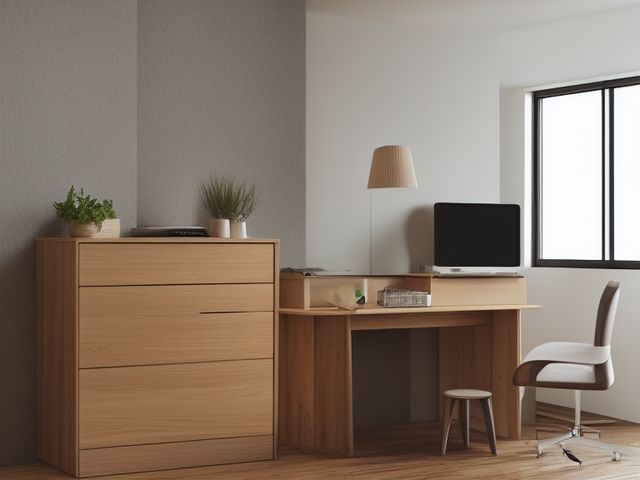
Common items here
- A divided tray: pens that all write, one stapler, scissors point-down
- Hanging files, tabs running in one line
- One spare of each connector type, coiled and banded
Check these before you start
- Fall, cut, or crushLoose scissors and a letter opener rolling free in a drawer you reach into without looking, and a pedestal that tips forward if you pull the loaded file drawer fully out while the top drawer is open.
Which of these is true here?
Match what you are actually seeing in the desk drawers to why it keeps happening, then start at the pass that fixes that, not the top of the list.
I test three pens before I find one that writes
- Dead pens go back into the drawer instead of the bin. Confirm in 30 seconds: Ask two people in the house to describe this zone when it is finished. Two different answers means there is no standard to keep. If that checks out, start at Standardize.
- Nobody feels it is their place to throw them out. Confirm in 30 seconds: Ask who resets this zone. If the honest answer is "whoever gets to it" or two names with no agreement, there is no owner. If that checks out, start at Sustain.
- There are far more pens than this office uses. Confirm in 30 seconds: Count what you used in the past month. If the honest number is a third of what is stored here, the space is not too small. If that checks out, start at Sort.
I cannot find a live file without pulling several out
- The tabs are at different positions along the folder. Confirm in 30 seconds: Open the door and, without moving anything, name what is at the back. If you cannot, that stock is invisible. If that checks out, start at Straighten.
- Files that are finished are still in the pedestal. Confirm in 30 seconds: Count what you used in the past month. If the honest number is a third of what is stored here, the space is not too small. If that checks out, start at Sort.
- Folders are labeled by department, not by what I would ask. Confirm in 30 seconds: Ask two people in the house to describe this zone when it is finished. Two different answers means there is no standard to keep. If that checks out, start at Standardize.
I have cut myself or caught my hand in this drawer
- Scissors and blades are loose in the tray rather than point-down in their own slots. Confirm in 30 seconds: Look for the four: a blade your hand would meet, weight above shoulder height, heat beside something that burns, and an unsafe placement near a child's reach. If that checks out, start at Safety.
- The drawer is so full things spring up when it opens. Confirm in 30 seconds: Put back only what belongs here. If it still will not close, or still stacks four deep, the capacity is the problem, not the habit. If that checks out, start at Sort.
- Nothing was ever agreed about where the sharp things live. Confirm in 30 seconds: Ask two people in the house to describe this zone when it is finished. Two different answers means there is no standard to keep. If that checks out, start at Standardize.
Only have 15 minutes? Empty the top drawer, test every pen on a scrap and bin the ones that skip, then put back only what writes into a divided tray with the scissors point-down in their own slot. Victory: Every pen in the drawer writes first time, and the scissors have a slot of their own.
The six passes, in order
Work them in this order. Sorting after you have arranged things means arranging things you were about to remove.
This zone's full kit list is below, after the method. Skim it first if you would rather gather everything before you start.
Sort
Decide what stays. Everything else leaves the zone now.
Tip the top drawer onto the cleared desk and test every pen on scrap paper. Dried highlighters, bent paperclips, loose staples, dead batteries, and chargers whose device you cannot point at in this house all go now.
What to store it in, now that you know what you are keeping
Bins and shelves are for what Sort left behind, not a stand-in for it. Buying storage before sorting means buying a container for things you have not yet decided to keep.
Only if it applies to the desk drawers: 5 more
Not every home needs these for the desk drawers. Each one is here because some do, and the reason is next to it.
- Document File Box ×2 Protect and organize household records, in the Straighten, Standardize and Sustain passes. Do not overload; anchor wall-mounted or tall systems where required.
- Portable Project Tray ×2 Contain one active project and its parts, in the Straighten, Standardize and Sustain passes. Do not overload; anchor wall-mounted or tall systems where required.
- Charging Dock Create one controlled device charging home, in the Straighten, Standardize and Sustain passes. Do not overload; anchor wall-mounted or tall systems where required.
- Drawer Divider Set Create visible subcategories in shallow drawers, in the Straighten, Standardize and Sustain passes. Do not overload; anchor wall-mounted or tall systems where required.
- Small Clear Lidded Bin ×4 Contain small loose items with visibility, in the Straighten, Standardize and Sustain passes. Do not overload; anchor wall-mounted or tall systems where required.
Straighten
Give what stays a home, placed where the hand actually reaches.
Daily hand tools live in the divided tray up top, hanging files fill the deep pedestal drawer, and the two never mix. The stapler does not end up riding on the folders, and no folder gets laid flat across the pens.
Shine
Clean it, and use the cleaning to inspect what you cannot see when it is full.
Vacuum the drawer bottoms, which collect eraser crumbs, loose staples and paperclip fuzz, then wipe the runners so the drawer closes without a shove. Lift the divided tray out and clean under it rather than around it, because that is where the ink and the pencil dust settle. Finish at the drawer fronts, wiping around the handles, which carry more hand marks than any other surface in the room.
Surface by surface, all 6 of them, with what to use on each.
Safety
Make the zone safe for everybody who uses it, including the shortest person.
Scissors and the letter opener get their own slot with points facing the back of the drawer, because you reach into this drawer blind while looking at the screen.
Standardize
Write down the best way you know today, so it survives you forgetting.
Write what each drawer front holds, in the words this house actually uses, so tape and stamps are found without pulling three drawers. One purpose per drawer, and the scissors keep a fixed slot point-down rather than floating among the pens. The test of a label is not whether you can read it. It is whether somebody else in the household can put a borrowed stapler back correctly without asking you where it goes.
Sustain
Attach the reset to something that already happens, so it keeps itself.
When you sit down to pay the household bills, put back into the drawers anything that migrated onto the desk that week. Five minutes inside a job already booked. Two signals are worth acting on: a pen that does not write on the first stroke, and file tabs that no longer run in one straight line. Recovery is testing the pen cup over the bin. Migration is the whole failure here, because scissors and tape leave for a job in another room and never make the return trip.
The kit this zone called for
Everything above assumed you had these already. Types of thing, not brands: anything you already own that does the job is the right one to use.
- Color-coded microfiber cloth set ×12 Shine Wash by use color; avoid fabric softener.
- Neutral pH multi-surface cleaner Shine, Sustain Verify surface compatibility; lock around children and pets.
- Compact vacuum with attachments Shine Use appropriate attachment.
- Keep, Relocate, Donate, Recycle, Trash container set ×5 Sort Do not block exits.
- Portable cleaning caddy Straighten, Shine, Sustain Secure chemicals from children and pets.
- Portable label maker Standardize, Sustain Follow surface and adhesive guidance.
- Removable write-on labels Standardize Test on delicate finishes.
Only if it applies to the desk drawers: 2 more
- Small detail brush set Shine Use surface-safe bristles.
- Surge Protector with Overload Protection Straighten, Safety Install and use according to product instructions.
The cable bag
Somewhere in the pedestal there is a bag or a drawer of cables, adapters, and wall bricks, and it survives because each individual cable is too cheap to think about and too specific to throw away. That decision cannot be made one cable at a time. Empty the whole lot onto the desk at once, pick up each cable, name the device it powers, and point at where that device physically is in this house. No device, no keep. Then keep exactly one spare of each connector type you still use daily, coil and band it, and take the rest to electronics recycling this week. Made in one batch at the cleared desk, it is a single sitting. Made one cable at a time, it never gets made at all.
Cleaning it properly, surface by surface
The mess in a desk drawer hides under the divider and in the runner track, not on top. Lift the tray right out, clear the grit that jams the slide, and the drawer will close with a fingertip again.
Work down, not across. Whatever comes off a high surface lands on the one below it, so cleaning the floor first means cleaning it twice.
Carry these in with you. Compact vacuum with attachments; Small detail brush set; Color-coded microfiber cloth set; Neutral pH multi-surface cleaner; Portable cleaning caddy.
- The divided pen tray and its slots
Lift the whole tray out and tip it over the bin, then run the small detail brush along each slot to sweep out eraser crumbs and dried ink. Wipe it with a barely damp microfiber cloth and let it dry before it goes back. - The top drawer bottom and corners
With the tray out, vacuum the drawer bottom and get the crevice tool right into the back corners where loose staples and paperclip fuzz collect. Wipe the base with neutral pH cleaner on a wrung-out cloth and dry it. - The drawer runners and slide track
Brush the grit out of both runner tracks with the detail brush, then wipe each runner clean and dry. Slide the drawer a few times to confirm it moves without a shove before you refill it. - The deep pedestal file drawer and its hanging rails
Lift the hanging folders out in a block, vacuum the drawer floor, and wipe the two side rails the folders hang from. Check the base is fully dry before the files return, since paper wicks any leftover damp. - The drawer fronts, pulls, and pedestal sides
Wipe the fronts and the handles where fingers grip, then run a cloth down the outside sides and the top of the pedestal where dust settles unseen against the desk. - The floor and casters under a rolling pedestal
Roll the pedestal clear, vacuum the patch of floor it sat on, and clear hair from its casters by hand so it tracks straight when you push it back.
How to clean anything else in the house, surface by surface.
Inspect as you clean. Cleaning is the only time you see the zone empty, so use it.
- As the drawer slides on its clean runner, flag any grinding or a drawer that no longer closes flush, since that points to a bent runner or a loose fixing.
- Look at the runner metal for rust bloom or a bent lip and flag it rather than forcing the drawer past it.
- Smell the deep file drawer while it is empty: a musty note means damp is reaching the paper, so flag it.
- Check the drawer pulls as you wipe them and flag a screw that has backed out or a handle that has gone loose in your hand.
The standard that keeps it fixed
One purpose per drawer, every pen in it writes, and the scissors live point-down in a fixed slot.
Reset trigger. When you sit down to pay the bills.
How much the desk drawers can actually hold
A top drawer with a divided tray holding only pens that write, one stapler and one pair of scissors point-down in its own slot, and a deep pedestal drawer of hanging files whose tabs all stand in one line.
If the hanging files will not stand with their tabs in one line without compressing, the pedestal is holding files that are no longer live. Live means touched weekly; everything else belongs in file storage, not in the drawer you open all day. Run the honest count.
When this does not describe your desk drawers
The passes above describe the ordinary case. Plenty of real households are not ordinary, and the fix is not to skip the method, it is to run it against a different starting shape.
- No pedestal, only shallow drawers
- Live files move to a single upright rack on the desk or the nearest shelf, kept to the width your hand can flick through in one pass. The top-drawer rule is unchanged, and it matters more, because shallow drawers silt up faster than deep ones.
- The drawers are shared with a partner or a child
- Divide by owner before dividing by kind: one drawer each, and the pen-that-writes test applied by whoever owns that drawer. A shared drawer with mixed ownership is where dead pens live longest, because nobody feels entitled to bin them.
The rest of the home office
Each of these is one session on its own.
- The Primary Desk
- The Desk Drawers and Pedestal, you are here
- The File Storage
- The Bookshelf and Reference Zone
- The Printer and Scanning Station
- The Supply Cabinet
The Home Office in full, with what each of the 6 zones is for
The home office as a deck of 66 cards: the frictions people report in each zone, the root cause behind each one, and the timed action that clears it. Free to read or print.
Zones that do the same job, elsewhere in the house
Different room, different name, same real job. Each one is its own page because the room around it changes what actually works.
- The Primary Desk in the home office
- The Study Desk in the kids bedroom
- The Guest Welcome and Work Surface in the guest bedroom
Related reading
- Does more than one person use this zone?
- Found a duplicate of something in this zone?
- Before you buy storage for this zone
- Still does not fit, even after the honest count?
- Does everyone in the house agree what "done" looks like here?
Questions people ask about this zone
- How long does it take to reset the desk drawers?
- One session: 30-45 min, quick once you commit, though the cable and charger sorting eats more of it than you expect.
- What does a finished desk drawers look like?
- A top drawer with a divided tray holding pens that all write, one stapler, one pair of scissors point-down in its own slot, and a deep pedestal drawer of hanging files with tabs all standing in one line.
- What is the hardest call to make in the desk drawers?
- Somewhere in the pedestal there is a bag or a drawer of cables, adapters, and wall bricks, and it survives because each individual cable is too cheap to think about and too specific to throw away. That decision cannot be made one cable at a time. Empty the whole lot onto the desk at once, pick up each cable, name the device it powers, and point at where that device physically is in this house. No device, no keep. Then keep exactly one spare of each connector type you still use daily, coil and band it, and take the rest to electronics recycling this week. Made in one batch at the cleared desk, it is a single sitting. Made one cable at a time, it never gets made at all.
- How do you keep the desk drawers from getting cluttered again?
- One purpose per drawer, every pen in it writes, and the scissors live point-down in a fixed slot. When you sit down to pay the bills.
- What do you need to clean the desk drawers?
- Compact vacuum with attachments; Small detail brush set; Color-coded microfiber cloth set; Neutral pH multi-surface cleaner; Portable cleaning caddy.
- What do you clean first in the desk drawers?
- The divided pen tray and its slots. Lift the whole tray out and tip it over the bin, then run the small detail brush along each slot to sweep out eraser crumbs and dried ink. Wipe it with a barely damp microfiber cloth and let it dry before it goes back.
- Is there a fall, cut, or crush risk in the desk drawers?
- Loose scissors and a letter opener rolling free in a drawer you reach into without looking, and a pedestal that tips forward if you pull the loaded file drawer fully out while the top drawer is open.
- Why does the desk drawers do this: I test three pens before I find one that writes?
- Dead pens go back into the drawer instead of the bin, so start at Standardize; Nobody feels it is their place to throw them out, so start at Sustain; There are far more pens than this office uses, so start at Sort.
- Why does the desk drawers do this: I cannot find a live file without pulling several out?
- The tabs are at different positions along the folder, so start at Straighten; Files that are finished are still in the pedestal, so start at Sort; Folders are labeled by department, not by what I would ask, so start at Standardize.
- Why does the desk drawers do this: I have cut myself or caught my hand in this drawer?
- Scissors and blades are loose in the tray rather than point-down in their own slots, so start at Safety; The drawer is so full things spring up when it opens, so start at Sort; Nothing was ever agreed about where the sharp things live, so start at Standardize.
When you want it off the screen
Carry The Desk Drawers and Pedestal into the room
The method above is complete and free. The Whole House Print Pack puts The Desk Drawers and Pedestal and the other 113 micro zones on 684 printable cards, so the steps you just read are not stuck behind a phone screen while your hands are full.
The Print Pack, 19 dollarsJust this zone, 4 dollarsOr draw a card free
The Desk Drawers and Pedestal on its own is 4 dollars for 6 cards. All 114 micro zones is 19 dollars for 684. The whole house is the better buy; the single zone is here so you can take only what you are working on.
If The Desk Drawers and Pedestal keeps fighting back, the real problem usually sits somewhere else in the room. A one hour virtual consult is 250 dollars: we find the function, the friction and the root cause together, and you keep a written standard for the space.
See what a consult covers, 250 dollars
Not ready to pay for that either? Ask which zone first, free